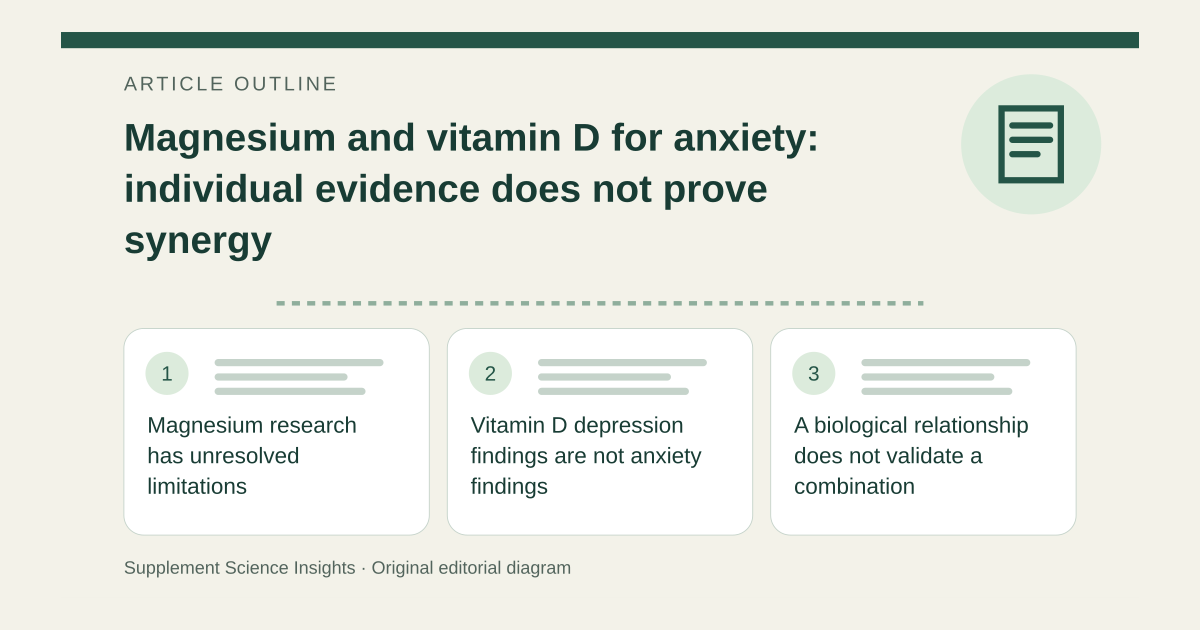
Magnesium research has unresolved limitations
A 2024 systematic review found possible improvements in some anxiety measures, but studies were generally small and varied in preparation, duration and participants. Some formulas contained other active ingredients. These findings do not establish that adding vitamin D increases the effect. [1]
Vitamin D depression findings are not anxiety findings
A separate 2024 systematic review evaluated depression and anxiety outcomes. It did not find a significant overall effect on anxiety symptoms, even though some depression findings were more favorable. One mental-health outcome should not be substituted for another. [2]
A biological relationship does not validate a combination
Both nutrients have physiological roles, but evidence about each ingredient or nutrient status does not establish synergy in a finished product. The inspected reviews do not provide a universal magnesium–vitamin D anxiety regimen. Combination benefit requires a suitable clinical comparison. [1][2]
Avoid escalating either nutrient without an indication
Excess supplemental magnesium can cause gastrointestinal effects and toxicity, especially with impaired kidney function. Excess vitamin D can cause high calcium and other serious problems. Count ingredients across products, and use clinician-directed replacement when a deficiency is identified. [3][4]
Keep anxiety care focused on function and symptoms
Imagine someone adds both nutrients while beginning therapy and changing sleep habits. Feeling better does not isolate the combination. Persistent anxiety that affects daily life deserves assessment and established care rather than reliance on an unvalidated nutrient stack. [5][1]
| Claim | Important limitation |
|---|---|
| Evidence for one nutrient | Not evidence of synergy |
| Depression improvement | Not the same as anxiety improvement |
| Low nutrient level | Needs individualized interpretation |
| Two nutrients are essential | Does not establish a treatment dose |
Sources for this article
- Examining the Effects of Supplemental Magnesium on Self-Reported Anxiety and Sleep Quality: A Systematic Review - PMC
Source consulted: 2026-09-21. This is a reference resource, not a claim that we conducted the studies or tested a product. - The effect of vitamin D supplementation on depression: a systematic review and dose–response meta-analysis of randomized controlled trials - PMC
Source consulted: 2026-09-21. This is a reference resource, not a claim that we conducted the studies or tested a product. - Magnesium - Health Professional Fact Sheet
Source consulted: 2026-09-21. This is a reference resource, not a claim that we conducted the studies or tested a product. - Vitamin D - Health Professional Fact Sheet
Source consulted: 2026-09-21. This is a reference resource, not a claim that we conducted the studies or tested a product. - Anxiety and Complementary Health Approaches | NCCIH
Source consulted: 2026-09-21. This is a reference resource, not a claim that we conducted the studies or tested a product.