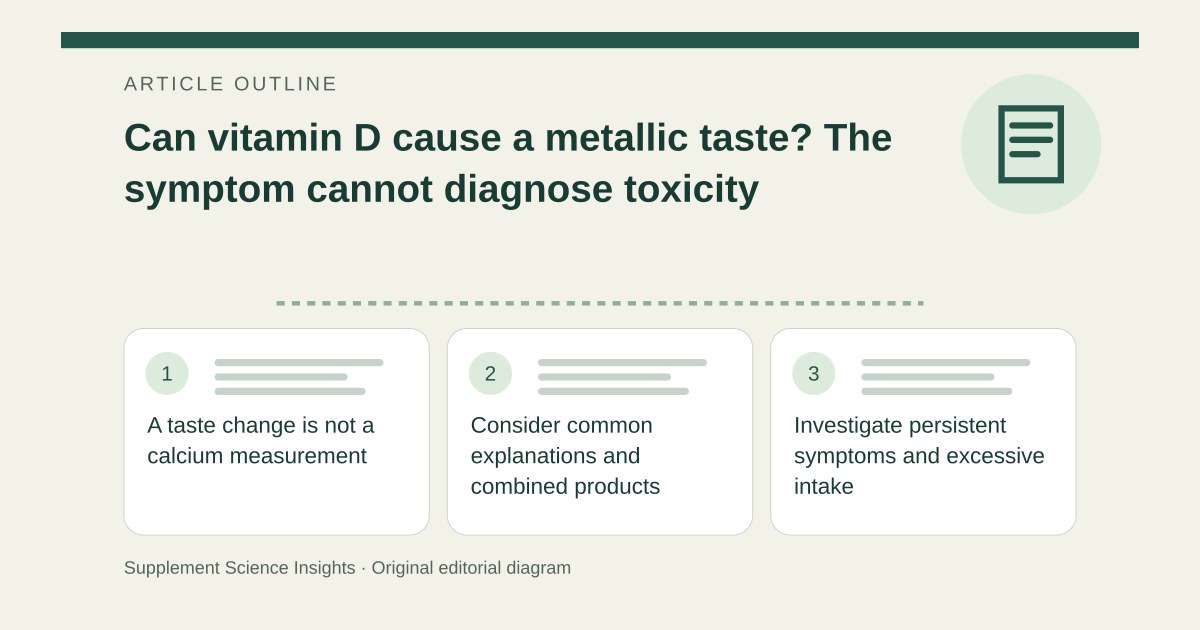
A taste change is not a calcium measurement
NHS describes hypercalcemia as a possible consequence of excessive colecalciferol, with warning symptoms including vomiting, confusion, bone or joint pain and an irregular heartbeat. A metallic taste alone cannot establish that complication or its cause. [1]
Consider common explanations and combined products
Gum disease, medicines, respiratory problems and indigestion can cause a metallic taste. Bring the actual vitamin D bottle and other supplements to a review, since combined products add more than one ingredient and repeated products may duplicate vitamin D. [2][3]
Investigate persistent symptoms and excessive intake
Imagine taking both a vitamin D capsule and a high-dose multivitamin. Add the vitamin D amounts and discuss possible excessive intake, especially if unwell. A clinician may check calcium and vitamin D status when indicated; guessing from the taste is not equivalent to testing. [1][3]
| Observation | Appropriate distinction |
|---|---|
| Metallic taste alone | Nonspecific symptom |
| Multiple vitamin D sources | Calculate the combined amount |
| Vomiting, confusion or irregular heartbeat | Seek medical assessment |
Sources for this article
- Side effects of colecalciferol - NHS
Source consulted: 2026-09-20. This is a reference resource, not a claim that we conducted the studies or tested a product. - Metallic taste - NHS
Source consulted: 2026-09-20. This is a reference resource, not a claim that we conducted the studies or tested a product. - Vitamin D - Health Professional Fact Sheet
Source consulted: 2026-09-20. This is a reference resource, not a claim that we conducted the studies or tested a product.