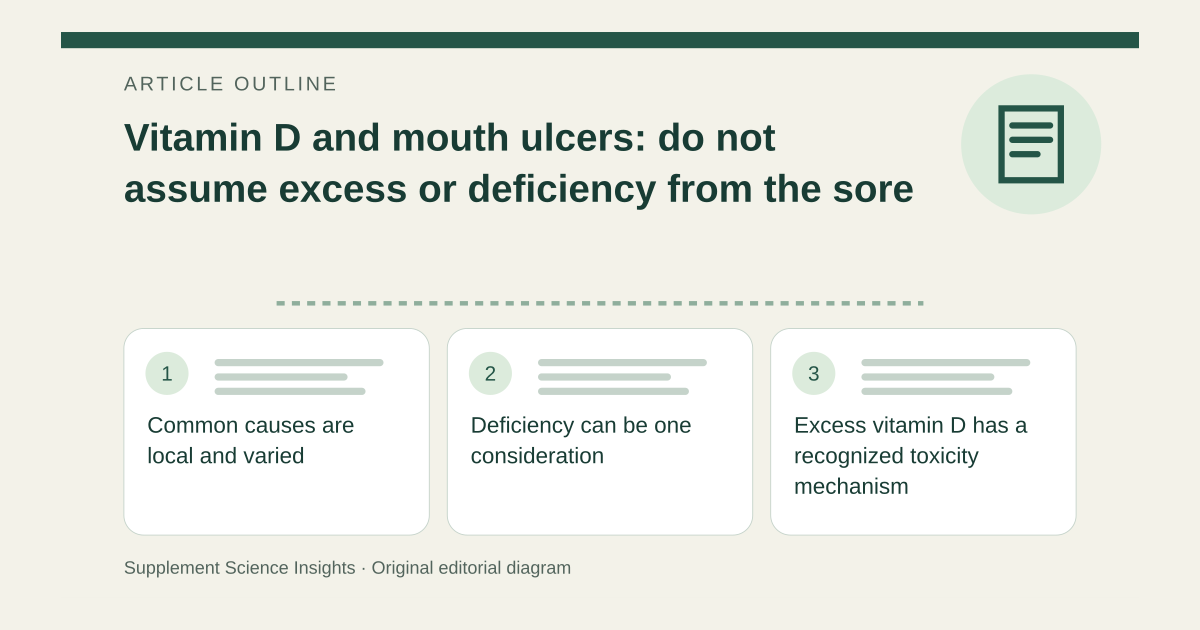
Common causes are local and varied
NHS lists cheek biting, a sharp tooth, dental appliances, burns, irritation and other triggers. A sore beginning after a supplement may deserve a review of the preparation and timing, but that sequence alone does not establish vitamin D toxicity. [1]
Deficiency can be one consideration
The NHS page includes nutrient deficiencies among possible contributors to mouth ulcers. This is not a reason to diagnose a specific deficiency from the ulcer or take several high-dose nutrients. Recurrent ulcers and dietary or medical history help guide assessment. [1]
Excess vitamin D has a recognized toxicity mechanism
NIH describes excessive vitamin D causing high calcium, with possible nausea, thirst, frequent urination, weakness and other serious effects. The inspected summary does not establish mouth ulcers as a typical diagnostic marker of excess. Suspected overdose needs its own review rather than a conclusion based on one sore. [2][3]
Support healing and know when to seek care
Avoid foods or drinks that irritate the ulcer and consider pharmacist advice for symptom relief. NHS advises a dentist or clinician review for an ulcer lasting more than three weeks, unusual ulcers, bleeding or worsening redness and pain. A persistent sore should not be left untreated while testing vitamins. [1]
Bring the right details
Imagine ulcers recur after several different products while a rough filling also rubs the cheek. Record both the supplement exposure and local irritation. Dental assessment and any indicated nutritional review can proceed together without assuming one explanation in advance. [1][4]
| Detail | Why it matters |
|---|---|
| Location near a tooth or appliance | Possible local irritation |
| Diet or absorption concerns | May guide nutrient assessment |
| Very high vitamin D exposure | Separate toxicity review |
| More than three weeks | Needs dental or medical assessment |
Sources for this article
- Mouth ulcers - NHS
Source consulted: 2026-09-21. This is a reference resource, not a claim that we conducted the studies or tested a product. - Vitamin D - Health Professional Fact Sheet
Source consulted: 2026-09-21. This is a reference resource, not a claim that we conducted the studies or tested a product. - How and when to take colecalciferol - NHS
Source consulted: 2026-09-21. This is a reference resource, not a claim that we conducted the studies or tested a product. - Dietary Supplements: What You Need to Know
Source consulted: 2026-09-21. This is a reference resource, not a claim that we conducted the studies or tested a product.