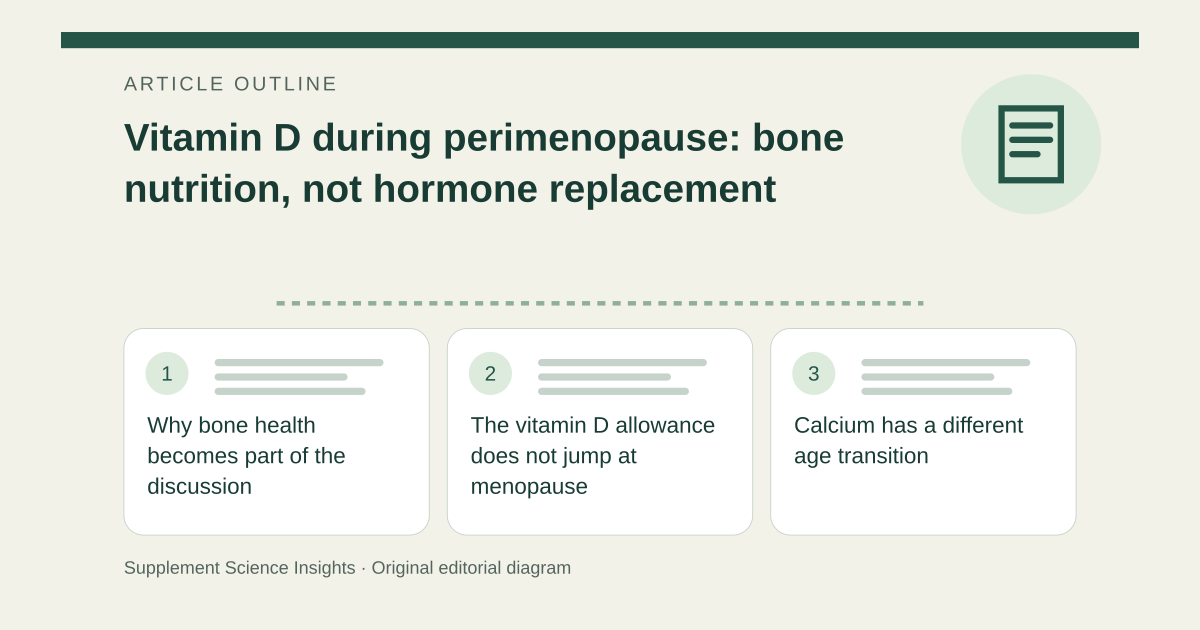
Why bone health becomes part of the discussion
ODS describes increased bone resorption as estrogen declines around menopause. Vitamin D and calcium support normal bone maintenance, but they address nutritional needs rather than replacing estrogen. Bone risk and bothersome symptoms can therefore require separate parts of a care plan. [1][2][3]
The vitamin D allowance does not jump at menopause
The US vitamin D RDA is 15 micrograms (600 IU) daily for adults through age 70 and 20 micrograms (800 IU) after 70. These are total-intake targets, not instructions to add that amount on top of existing food and supplements. An individual deficiency-treatment plan can differ. [2]
Calcium has a different age transition
The US calcium RDA for women is 1,000 mg daily at ages 19–50 and 1,200 mg from age 51. Count food sources first when considering a gap. More supplement is not automatically better, and a nutrient plan does not by itself establish treatment for osteoporosis or hot flushes. [1][3]
Separate an intake gap from a symptom claim
Imagine a 52-year-old has been taking a multivitamin with 600 IU vitamin D and asks whether night sweats require extra vitamin D. Review total intake and any reason to investigate deficiency, but discuss night sweats as a menopause symptom with its own treatment options. The nutritional allowance is not a hot-flush dose. [2][3]
| Question | Relevant next step |
|---|---|
| Is total nutrient intake adequate? | Review diet and existing supplements |
| Are night sweats disruptive? | Discuss symptom-specific treatment |
Sources for this article
- Calcium - Health Professional Fact Sheet
Source consulted: 2026-09-20. This is a reference resource, not a claim that we conducted the studies or tested a product. - Vitamin D - Health Professional Fact Sheet
Source consulted: 2026-09-20. This is a reference resource, not a claim that we conducted the studies or tested a product. - Hormone Replacement Therapies Can Help Women with Bothersome Menopausal Symptoms | FDA
Source consulted: 2026-09-20. This is a reference resource, not a claim that we conducted the studies or tested a product.