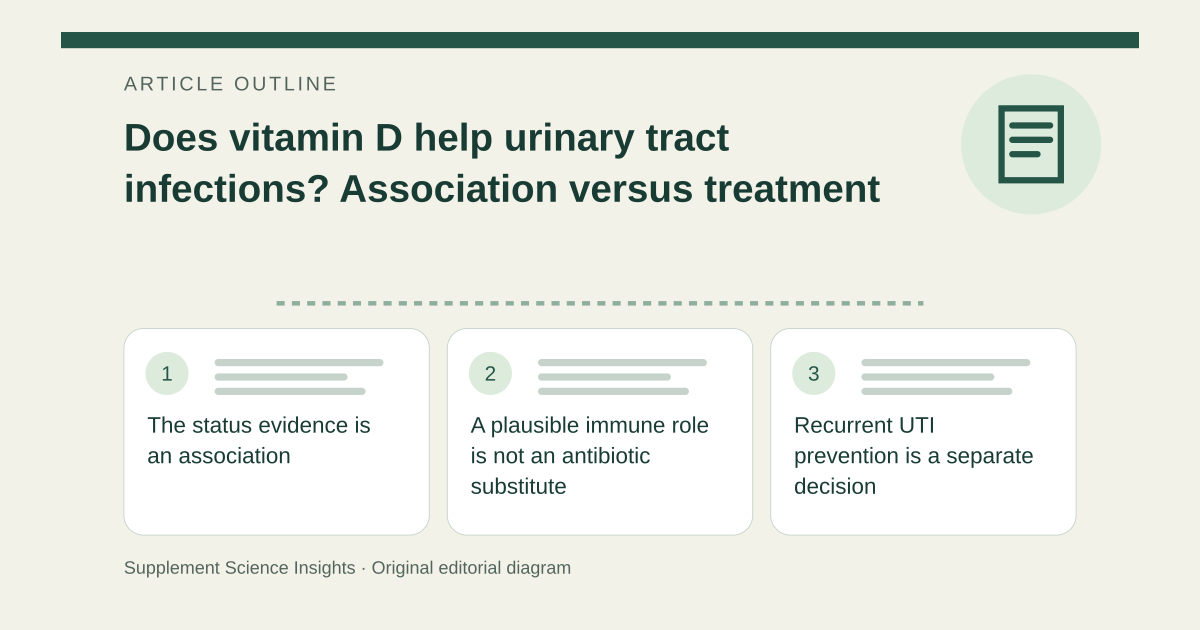
The status evidence is an association
A 2021 systematic review found lower vitamin D levels in children with UTI than in healthy controls. Its main comparison was blood status between groups. That design cannot show that giving vitamin D cures an infection, nor can childhood findings automatically define treatment for adults. [1]
A plausible immune role is not an antibiotic substitute
Vitamin D participates in immune function, which helps explain the research interest. However, an active UTI can require condition-specific treatment, including antibiotics when indicated. Do not wait for a vitamin D supplement response while urinary symptoms or systemic illness worsen. [2][3]
Recurrent UTI prevention is a separate decision
NICE describes preventive approaches selected according to the patient and recurrence pattern. The inspected guidance does not establish a general vitamin D prevention dose. A low nutrient result can be treated without assuming that it explains every recurrence or replaces evaluation of other risk factors. [4][2]
Recognize when symptoms need prompt care
NHS advises assessment for higher-risk situations and concerning symptoms, including fever, shaking chills or pain in the back under the ribs. Children, pregnant people and other higher-risk patients should not rely on self-directed supplements for suspected infection. [3]
Keep the two outcomes separate
Imagine deficiency treatment normalizes a child's vitamin D result but urinary infections recur. That does not justify repeatedly increasing the dose. Continue the nutritional plan as directed while the recurrent infections receive their own clinical investigation and prevention strategy. [2][3][4]
| Evidence or situation | Meaning |
|---|---|
| Low D in children with UTI | Association, not proof of cure |
| Immune mechanism | Rationale for research |
| Active urinary symptoms | Need infection assessment |
| Recurrent episodes | Require a prevention plan beyond a nutrient result |
Sources for this article
- Serum Vitamin D Level and the Risk of Urinary Tract Infection in Children: A Systematic Review and Meta-Analysis - PMC
Source consulted: 2026-09-21. This is a reference resource, not a claim that we conducted the studies or tested a product. - Vitamin D - Health Professional Fact Sheet
Source consulted: 2026-09-21. This is a reference resource, not a claim that we conducted the studies or tested a product. - Urinary tract infections (UTIs) - NHS
Source consulted: 2026-09-21. This is a reference resource, not a claim that we conducted the studies or tested a product. - Recommendations | Urinary tract infection (recurrent): antimicrobial prescribing | Guidance | NICE
Source consulted: 2026-09-21. This is a reference resource, not a claim that we conducted the studies or tested a product.