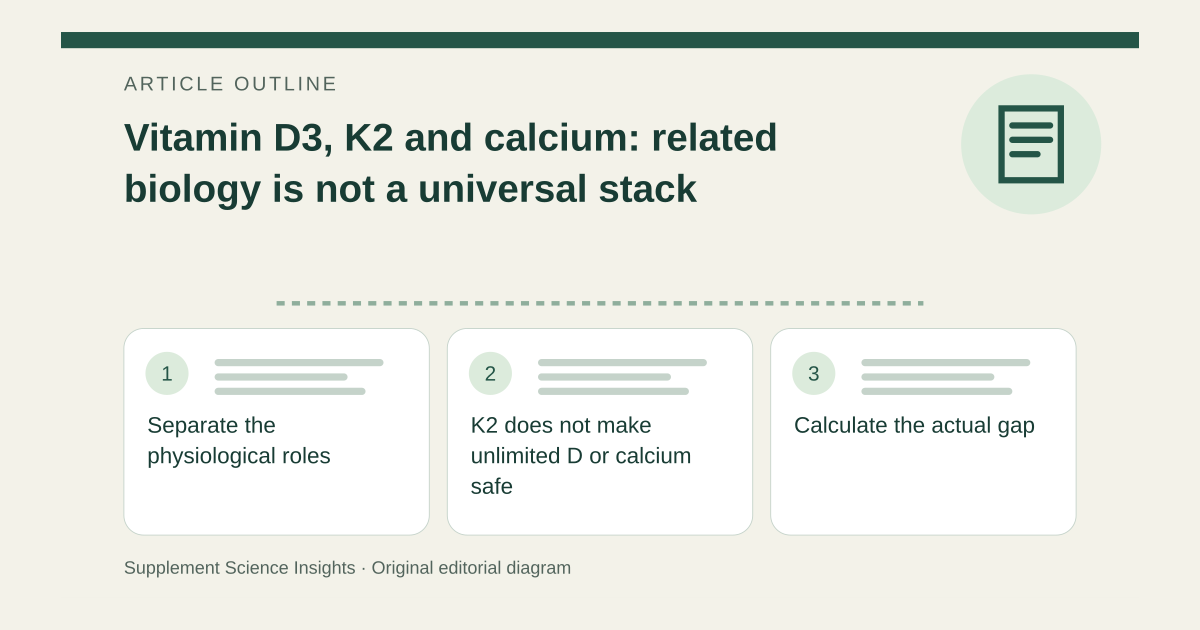
Separate the physiological roles
Vitamin D supports calcium absorption. Calcium contributes to bone structure and other functions. Vitamin K is needed for activation of certain proteins, including proteins involved in bone metabolism. Naming these roles does not establish that a retail combination prevents fractures or benefits every person taking it. [1][2][3]
K2 does not make unlimited D or calcium safe
Excess vitamin D can produce hypercalcemia, and excess calcium intake raises its own concerns. Adding K2 is not a demonstrated safeguard that makes high doses harmless. Vitamin K also has an important interaction with warfarin, so a K2-containing product must be included in medication review. [2][1][3]
Calculate the actual gap
Imagine a person already consumes substantial calcium from food and takes a multi with vitamin D. Before adding a D3-K2-calcium product, count the overlap and identify a remaining need. The product’s printed ratio is a formulation choice, not a personalized requirement. Osteoporosis treatment should not be replaced with a self-selected nutrient combination. [1][2][3]
| Illustrative situation | Relevant distinction |
|---|---|
| Food plus calcium supplement | Count total calcium |
| Vitamin D in several products | Count total vitamin D |
| Warfarin use | Review vitamin K changes |
Sources for this article
- Calcium - Health Professional Fact Sheet
Source consulted: 2026-09-20. This is a reference resource, not a claim that we conducted the studies or tested a product. - Vitamin D - Health Professional Fact Sheet
Source consulted: 2026-09-20. This is a reference resource, not a claim that we conducted the studies or tested a product. - Vitamin K - Health Professional Fact Sheet
Source consulted: 2026-09-20. This is a reference resource, not a claim that we conducted the studies or tested a product.