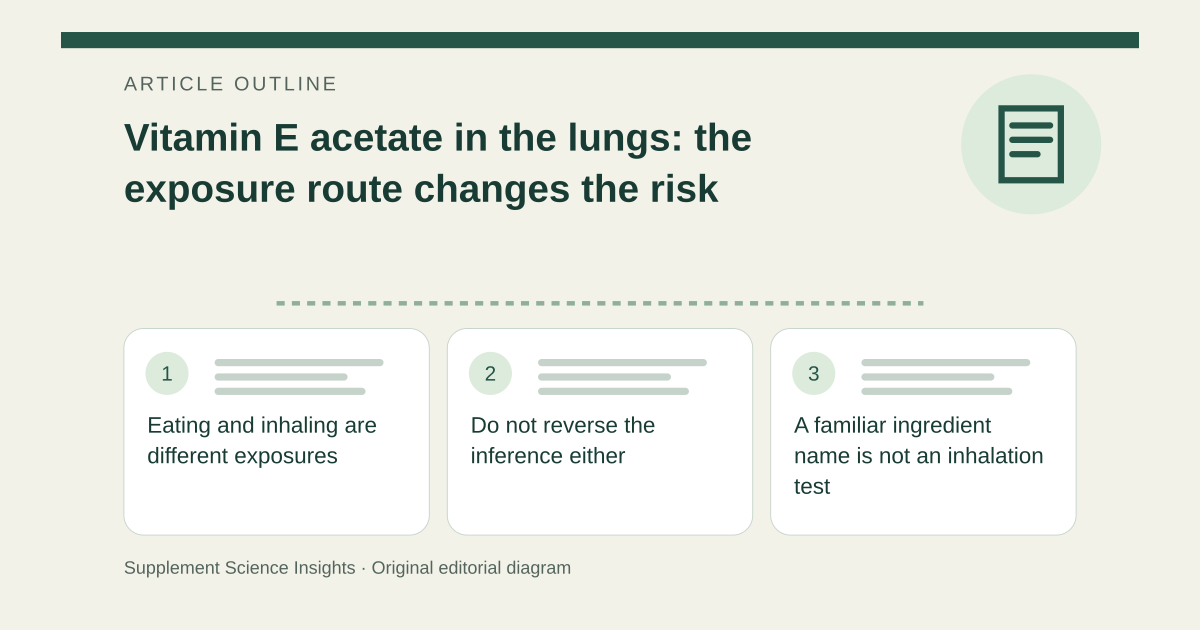
Eating and inhaling are different exposures
CDC describes vitamin E acetate used to dilute THC-containing vaping products as strongly linked to e-cigarette or vaping product use-associated lung injury, or EVALI. Its laboratory investigation examined vaping aerosols and bronchoalveolar lavage fluid collected from affected patients. [1]
Those findings concern exposure through the lungs. A substance used in foods, supplements or cosmetics cannot be assumed safe for aerosolization simply because it has an acceptable use by another route. [1]
Do not reverse the inference either
The outbreak evidence does not mean that ordinary vitamin-E-containing foods produce the same lung injury. Ingredient form, route and preparation must remain attached to the conclusion. [1][2]
The term vitamin can create a misleading sense of universal safety. Nutritional essentiality answers why a nutrient is needed; it does not test what happens when a concentrated derivative reaches lung tissue. [1][2]
A familiar ingredient name is not an inhalation test
Imagine a vaping formulation cites vitamin E’s antioxidant role as reassurance. That citation does not assess the inhaled preparation and cannot override the evidence from lung-injury investigations.
| Detail | Interpretation |
|---|---|
| Dietary nutrient | Nutritional exposure |
| Vaping additive | Different route and preparation |
| EVALI investigation | Evidence specific to lung injury |
Sources for this article
- CDC: Tobacco Laboratory and the EVALI investigation
Source consulted: 2026-09-17. This is a reference resource, not a claim that we conducted the studies or tested a product. - Vitamin E - Health Professional Fact Sheet
Source consulted: 2026-09-17. This is a reference resource, not a claim that we conducted the studies or tested a product.