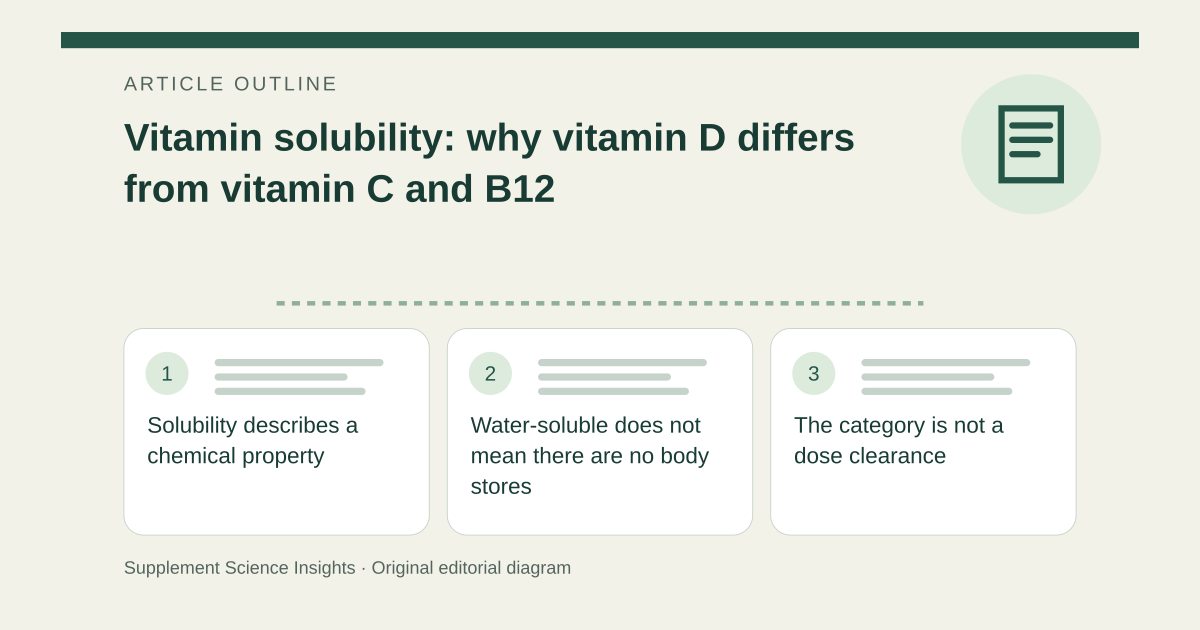
Solubility describes a chemical property
MedlinePlus groups A, D, E and K as fat-soluble vitamins and describes absorption aided by dietary fat. Vitamin C and the B vitamins belong to the water-soluble group. Vitamin D therefore is not reclassified as water-soluble because it appears in a drink or a water-based preparation. [1][2]
A formulation can change how an ingredient is delivered without changing which vitamin it is. The ingredient identity and the delivery system answer different questions. [1][2]
Water-soluble does not mean there are no body stores
A useful exception is vitamin B12, which is water-soluble but can be stored in the liver for years. General statements that all water-soluble vitamins immediately leave the body therefore overstate the category. [1][2]
Likewise, storage does not mean one can predict a personal depletion timeline from the words fat-soluble. Starting stores, intake, absorption and health circumstances matter. [1][2]
The category is not a dose clearance
ODS warns that excessive supplemental intake can cause adverse effects. A claim that excess always washes out should not be used to justify any dose of a water-soluble vitamin. Nutrient-specific limits and clinical context still apply. [1][2]
For fat-soluble vitamins, adding more fat or choosing a different delivery format does not establish a need for a larger amount. Absorption and whether supplementation is useful remain separate questions. [1][2]
The liquid around a vitamin does not rename it
Imagine vitamin D is sold in a flavored beverage. That describes the finished product, not a change in vitamin D’s classification. Assess the declared amount and evidence for the preparation rather than inferring a new safety profile from the format.
| Question | Relevant distinction |
|---|---|
| A, D, E, K | Fat-soluble vitamins |
| C and B vitamins | Water-soluble vitamins |
| B12 liver storage | An important exception to a simple storage rule |
Sources for this article
- MedlinePlus: Vitamins
Source consulted: 2026-09-17. This is a reference resource, not a claim that we conducted the studies or tested a product. - NIH ODS: Dietary Supplements — What You Need to Know
Source consulted: 2026-09-17. This is a reference resource, not a claim that we conducted the studies or tested a product.