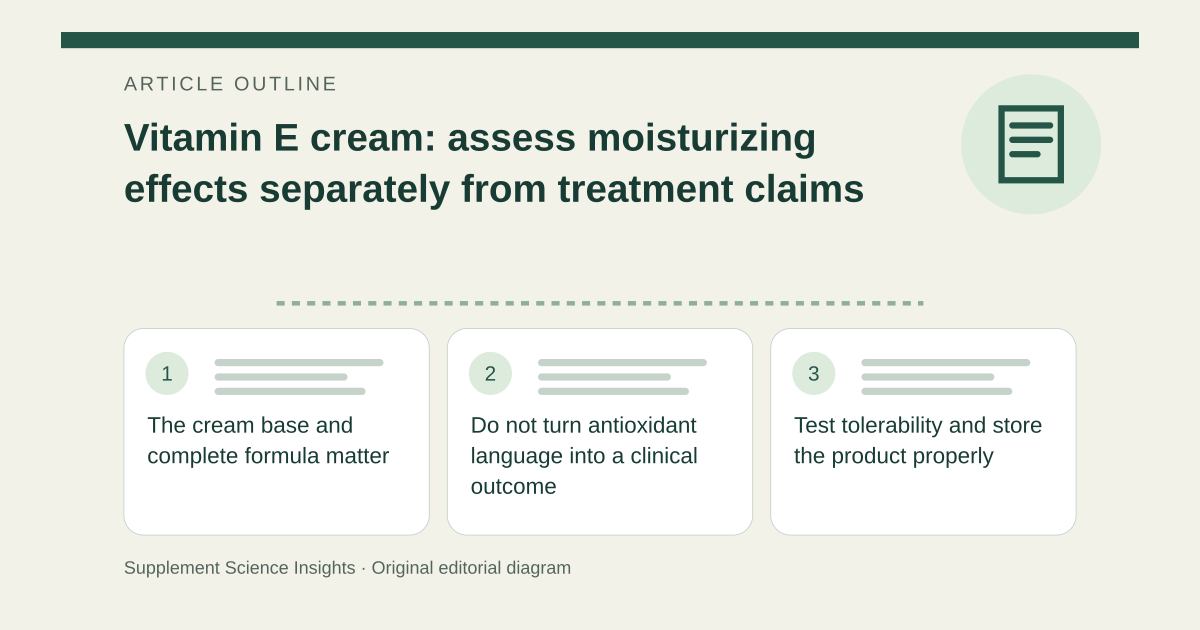
The cream base and complete formula matter
A product can moisturize because of its overall formulation. Vitamin E content alone does not tell you whether it contains fragrance or other ingredients that your skin tolerates. Use a preparation intended for the relevant body area and follow the directions instead of treating all vitamin E creams as one interchangeable treatment. [1][2]
Do not turn antioxidant language into a clinical outcome
Vitamin E has antioxidant roles, but a biochemical property is not a trial showing that a cream removes a particular skin problem. For example, AAD’s stretch-mark guidance does not support vitamin E as a reliable way to prevent or fade those scars. Each advertised outcome needs evidence for an appropriate preparation. [3][4]
Test tolerability and store the product properly
Imagine a cream feels soothing but later causes an itchy rash. Initial comfort does not rule out a reaction. AAD recommends testing new skin-care products on a small area and stopping a product that causes a reaction. Keep the packaging clean and follow storage directions; vitamin E on the label does not make the entire cream indefinitely stable. [1][2]
| Situation | What it means |
|---|---|
| Moisturizing feel | A skin-care effect |
| Scar-removal claim | Requires separate evidence |
| Vitamin E ingredient | Does not guarantee tolerability or shelf life |
Sources for this article
- How to test skin care products
Source consulted: 2026-09-20. This is a reference resource, not a claim that we conducted the studies or tested a product. - Shelf Life and Expiration Dating of Cosmetics | FDA
Source consulted: 2026-09-20. This is a reference resource, not a claim that we conducted the studies or tested a product. - Vitamin E - Health Professional Fact Sheet
Source consulted: 2026-09-20. This is a reference resource, not a claim that we conducted the studies or tested a product. - Stretch marks: Why they appear and how to get rid of them
Source consulted: 2026-09-20. This is a reference resource, not a claim that we conducted the studies or tested a product.