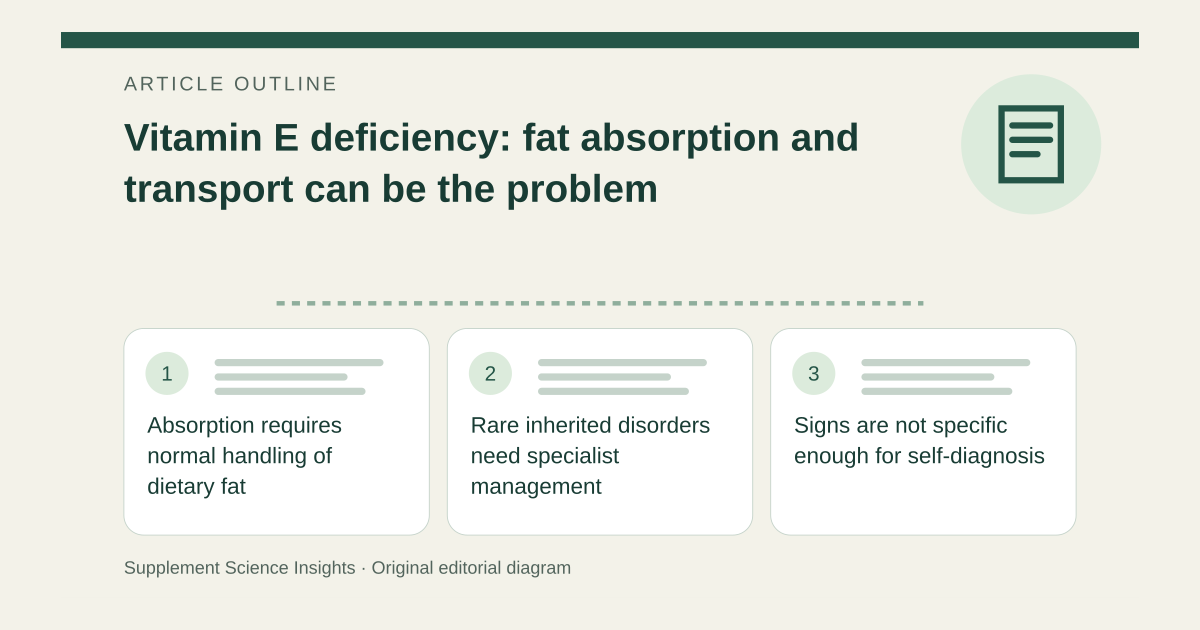
Absorption requires normal handling of dietary fat
Vitamin E is fat soluble, and the digestive tract needs fat-absorption mechanisms to take it up. People with disorders that impair this process are more likely to develop deficiency than otherwise healthy people with a low estimated dietary intake. [1]
ODS identifies conditions such as cystic fibrosis, Crohn’s disease and impaired bile delivery as relevant settings. In these circumstances, changing food intake alone may not solve the absorption problem. [1]
Rare inherited disorders need specialist management
Some inherited conditions interfere with fat transport or the liver’s alpha-tocopherol transfer protein. ODS describes severe deficiency in these settings, with neurological and other consequences. [1]
Specialist treatment for such conditions can involve preparations and amounts very different from routine nutrition. Those regimens should not be copied by a person who simply wants more vitamin E. [1]
Signs are not specific enough for self-diagnosis
Vitamin E deficiency can involve peripheral neuropathy, impaired coordination, muscle problems, retinal changes and impaired immune response. These findings can also have other causes. [1]
A neurological symptom plus a low food estimate does not establish the diagnosis. The medical and digestive history, appropriate testing and specialist interpretation matter. [1]
A full menu does not prove normal absorption
Imagine someone with a fat-malabsorption disorder eats vitamin-E-containing foods but develops concerning symptoms. The presence of the nutrient in the menu does not demonstrate that it was absorbed and transported normally.
A clinician can assess the underlying condition and replacement needs. The example explains the mechanism without providing a home dosing protocol.
| Observation | Interpretation |
|---|---|
| Low estimated intake | A dietary question |
| Fat malabsorption | An uptake problem |
| Inherited transport disorder | A distinct specialist condition |
Sources for this article
- NIH ODS — Vitamin E: Health Professional Fact Sheet
Source consulted: 2026-09-17. This is a reference resource, not a claim that we conducted the studies or tested a product.