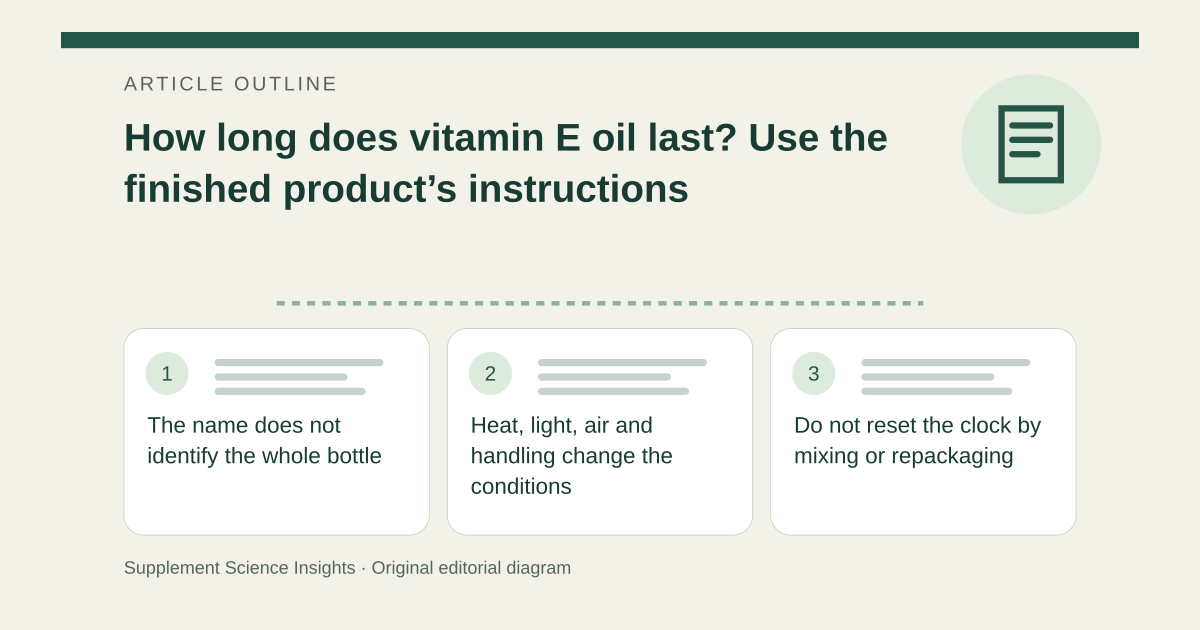
The name does not identify the whole bottle
A preparation may contain vitamin E in a carrier oil or a more complex cosmetic formulation. FDA explains that cosmetic shelf life varies with product type, storage and use. A general number assigned to the nutrient cannot establish the usable life of every product carrying its name. [1]
Heat, light, air and handling change the conditions
FDA notes that temperature changes and exposure to sunlight and air can alter cosmetics, and that handling can introduce microorganisms. Keep the container closed and clean and follow its storage directions. An unusual smell, color or texture is a reason to question the product, but an unchanged appearance is not a laboratory safety test. [1][2]
Do not reset the clock by mixing or repackaging
Imagine an old oil is poured into a fresh cream. The new container does not renew the old ingredient or establish the mixed product’s stability. Ask the manufacturer about an unclear date or storage excursion; without that information, a precise remaining shelf life would be speculation. [1]
| Situation | What it means |
|---|---|
| Unopened versus repeatedly opened | Different handling histories |
| Heat exposure | Can affect stability |
| Mixing into another product | Does not establish a new expiry |
Sources for this article
- Shelf Life and Expiration Dating of Cosmetics | FDA
Source consulted: 2026-09-20. This is a reference resource, not a claim that we conducted the studies or tested a product. - Microbiological Safety and Cosmetics | FDA
Source consulted: 2026-09-20. This is a reference resource, not a claim that we conducted the studies or tested a product.