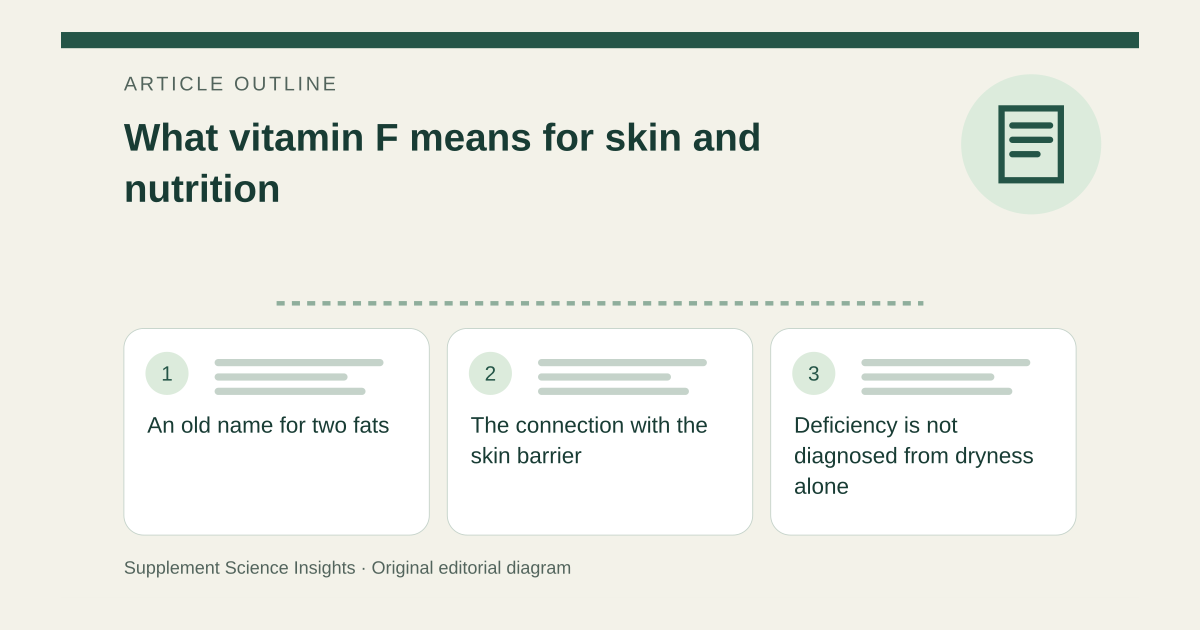
An old name for two fats
Vitamin F usually refers to linoleic acid and alpha-linolenic acid. Linoleic acid belongs to the omega-6 family; alpha-linolenic acid belongs to the omega-3 family. These are essential fatty acids, not a newly added letter in the modern vitamin list. [1][2]
The body needs them from dietary sources. Oils, nuts and seeds can supply these fats in different proportions. A product labeled vitamin F does not therefore have one automatically standardized composition. [1][2]
The connection with the skin barrier
Fatty acids are relevant to normal skin function, and lipid-containing skin-care formulations can help moisturize the skin and support its barrier. That general role does not establish that every vitamin F serum treats acne, eczema or aging to the same degree. [1][2]
A topical oil and an oral supplement also have different routes and purposes. Evidence about dietary deficiency cannot simply be converted into a clinical claim for a particular cream, and a cream is not a substitute for obtaining essential nutrients through the diet. [1][2]
Deficiency is not diagnosed from dryness alone
NIH explains that essential-fatty-acid deficiency can cause rough, scaly skin and dermatitis. It also notes that classical deficiency is very uncommon in healthy people eating ordinary diets. Dry skin has many possible explanations, so its presence is not proof that a person needs a fatty-acid supplement. [2][1]
For a skin product, consider the actual ingredients and tolerability. For a nutritional concern, assess the diet and relevant medical factors. The shared vitamin F name does not merge those two assessments into one. [2][1]
A hypothetical product comparison
Imagine an oil blend describes itself as vitamin F while another lists its linoleic-acid and alpha-linolenic-acid composition. The second provides more specific chemical information, but neither description alone establishes a clinical skin benefit. Compare the intended route, formulation and evidence for the actual goal. [1][2]
| Term | Meaning |
|---|---|
| Linoleic acid | Essential omega-6 fatty acid |
| Alpha-linolenic acid | Essential omega-3 fatty acid |
| Vitamin F on a cosmetic | A label that still requires formulation details |
Sources for this article
- Vitamin F: Sources, Uses & Benefits
Source consulted: 2026-09-20. This is a reference resource, not a claim that we conducted the studies or tested a product. - Omega-3 Fatty Acids - Health Professional Fact Sheet
Source consulted: 2026-09-20. This is a reference resource, not a claim that we conducted the studies or tested a product.