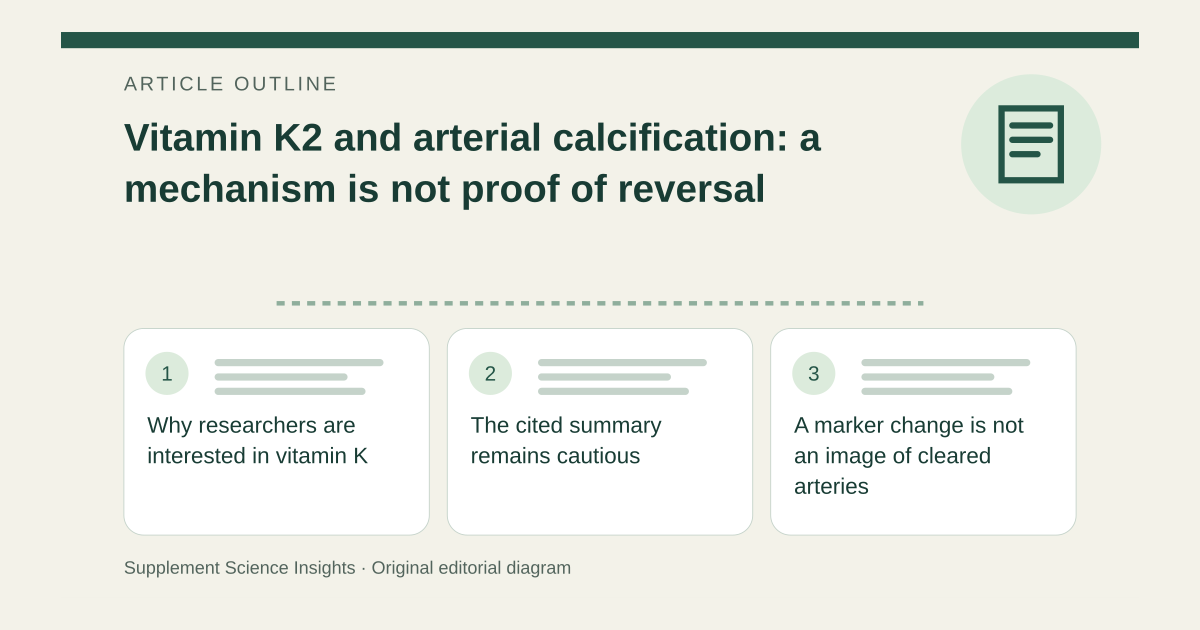
Why researchers are interested in vitamin K
Matrix Gla-protein is a vitamin-K-dependent protein present in vascular tissue. Its potential role in limiting abnormal calcification is one reason researchers investigate vitamin K in cardiovascular health. [1]
A mechanism can explain a hypothesis without demonstrating that an oral supplement reverses deposits already present. Reversal, slower progression and fewer heart attacks are three different claims. [1]
The cited summary remains cautious
The ODS fact sheet, updated in 2021, describes the role of different vitamin K forms in arterial calcification and coronary disease as unclear. It discusses observational findings and trials with differing results rather than a confirmed reversal treatment. [1]
Observational associations may reflect other dietary or health differences. A trial’s result also depends on its preparation, participants and measured outcome. This page reports that scoped source assessment and does not claim an exhaustive review of later trials. [1]
A marker change is not an image of cleared arteries
Imagine a product advertisement shows a change in a vitamin-K-related blood marker and describes it as removal of arterial calcium. The marker does not directly measure whether deposits shrank or cardiovascular events declined.
Those claims would require the corresponding imaging or clinical outcome evidence. A biological explanation cannot supply measurements that were not made.
| Point | Interpretation |
|---|---|
| Protein or blood-marker change | A biochemical endpoint |
| Less calcification progression | Requires appropriate imaging comparison |
| Fewer heart events | A separate clinical outcome |
Keep cardiovascular and kidney care in view
The source identifies particular research interest in chronic kidney disease, where vascular calcification is common. That interest is not an instruction for every kidney patient to self-supplement K2. [1]
Discuss the exact product with the clinical team, especially when taking warfarin or similar anticoagulants. Do not change established cardiovascular treatment based on a supplement’s calcification claim. [1]
Sources for this article
- NIH ODS — Vitamin K: Health Professional Fact Sheet
Source consulted: 2026-09-17. This is a reference resource, not a claim that we conducted the studies or tested a product.