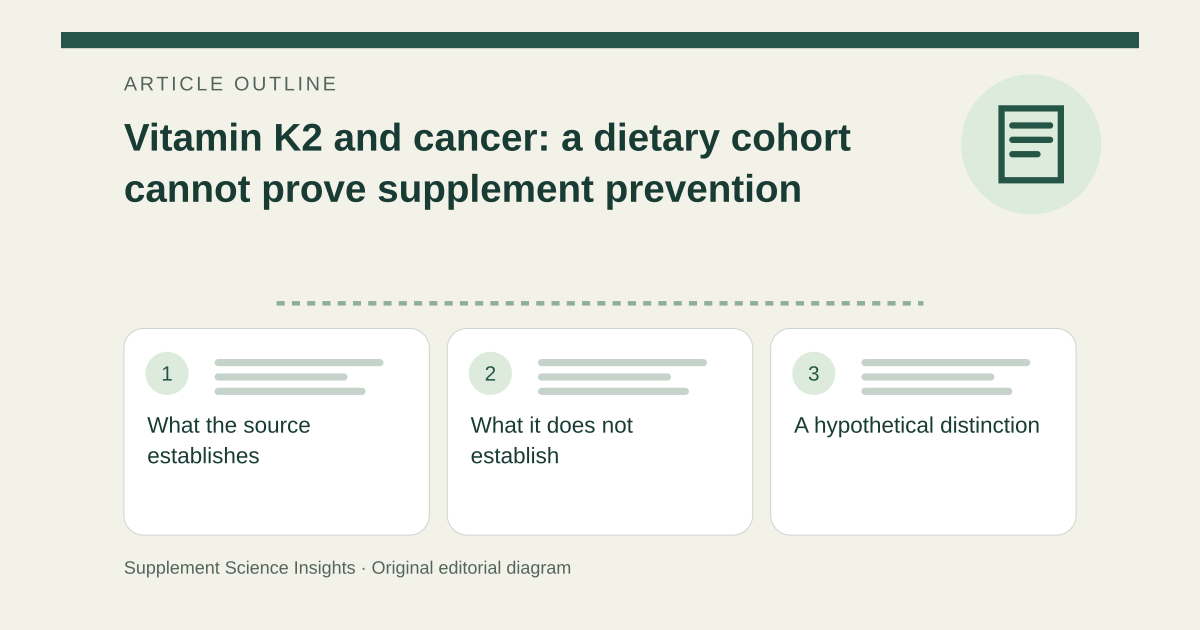
What the source establishes
EPIC-Heidelberg estimated vitamin K intake using food-frequency questionnaires and followed participants for more than a decade. It compared subsequent cancer outcomes across dietary-intake categories. [1]
Higher menaquinone intake was associated with lower cancer mortality. The overall cancer-incidence comparison did not reach statistical significance, and vitamin K1 intake showed no association. [1]
What it does not establish
Dietary patterns and other participant differences can confound observational associations despite adjustment. Cheese contributed substantially to estimated menaquinone intake; that does not isolate the nutrient’s effect. Funding and conflicts were not established from the abstract. [1]
A hypothetical distinction
Imagine people with different nutrient intakes also eat different foods and have different habits. An outcome association cannot identify which difference caused it without stronger causal evidence.
| Detail | Interpretation |
|---|---|
| Diet questionnaires | Estimated exposure |
| Observational association | Not randomized treatment |
| K2 supplement prevention | Not established |
Sources for this article
- Dietary vitamin K intake in relation to cancer incidence and mortality: results from the Heidelberg cohort of the European Prospective Investigation into Cancer and Nutrition (EPIC-Heidelberg) - PubMed
Source consulted: 2026-09-19. This is a reference resource, not a claim that we conducted the studies or tested a product.