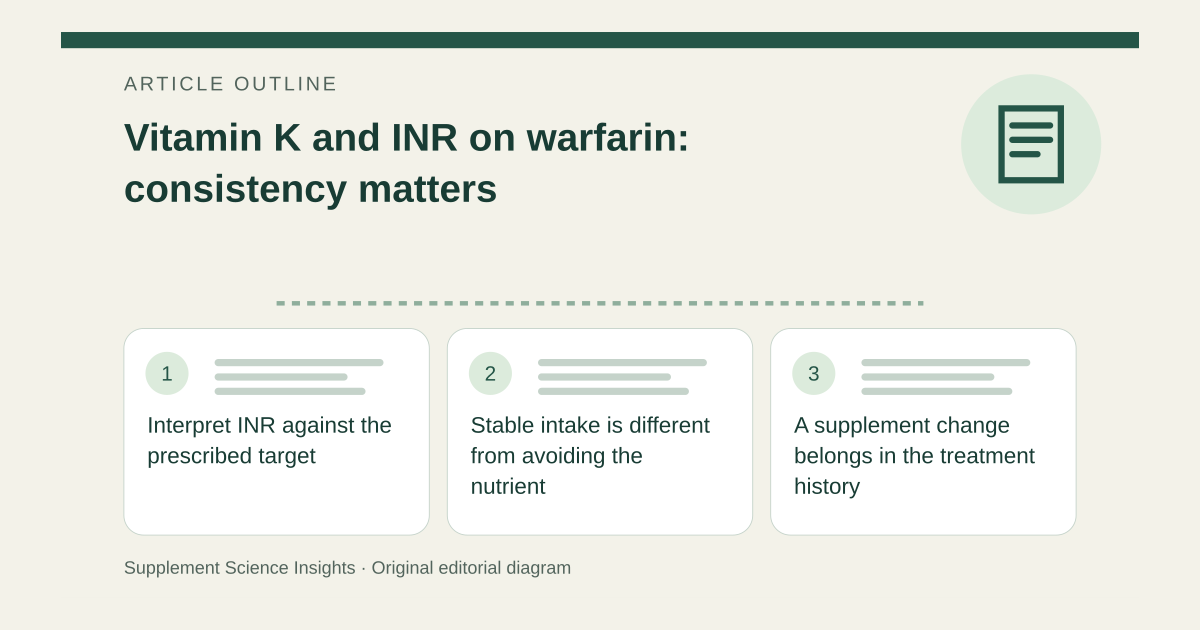
Interpret INR against the prescribed target
MedlinePlus explains that an INR that is too high can indicate greater bleeding risk, while one that is too low during treatment can indicate insufficient protection against clots. Vitamin K opposes the pathway affected by warfarin, so changes in intake can change the anticoagulant response. [1][2]
A laboratory result needs the prescribed target and clinical context. It should not be translated into a personal dose of vitamin K or an unsupervised change in warfarin. [1][2]
Stable intake is different from avoiding the nutrient
ODS advises consistent vitamin K intake from foods and supplements for people taking warfarin or similar medicines. Abruptly adding a K2 product or removing usual vegetables can disturb that pattern. [1][2]
There is no fixed food-based timetable for reversing a high INR. The urgency and management depend on the result, bleeding, medicines and clinical circumstances. Contact the anticoagulation team for abnormal results rather than trying to correct them with a large portion of greens. [1][2]
A supplement change belongs in the treatment history
Imagine someone starts a daily vitamin K capsule while keeping the warfarin prescription unchanged. The additional exposure can matter even if the product is sold without a prescription. Report the change to the treating team.
| Detail | Interpretation |
|---|---|
| High INR | Potential bleeding risk |
| Low INR on treatment | Potential clotting risk |
| Vitamin K intake | Keep consistent; review changes |
Sources for this article
- Vitamin K - Health Professional Fact Sheet
Source consulted: 2026-09-17. This is a reference resource, not a claim that we conducted the studies or tested a product. - Prothrombin Time Test and INR (PT/INR): MedlinePlus Medical Test
Source consulted: 2026-09-17. This is a reference resource, not a claim that we conducted the studies or tested a product.