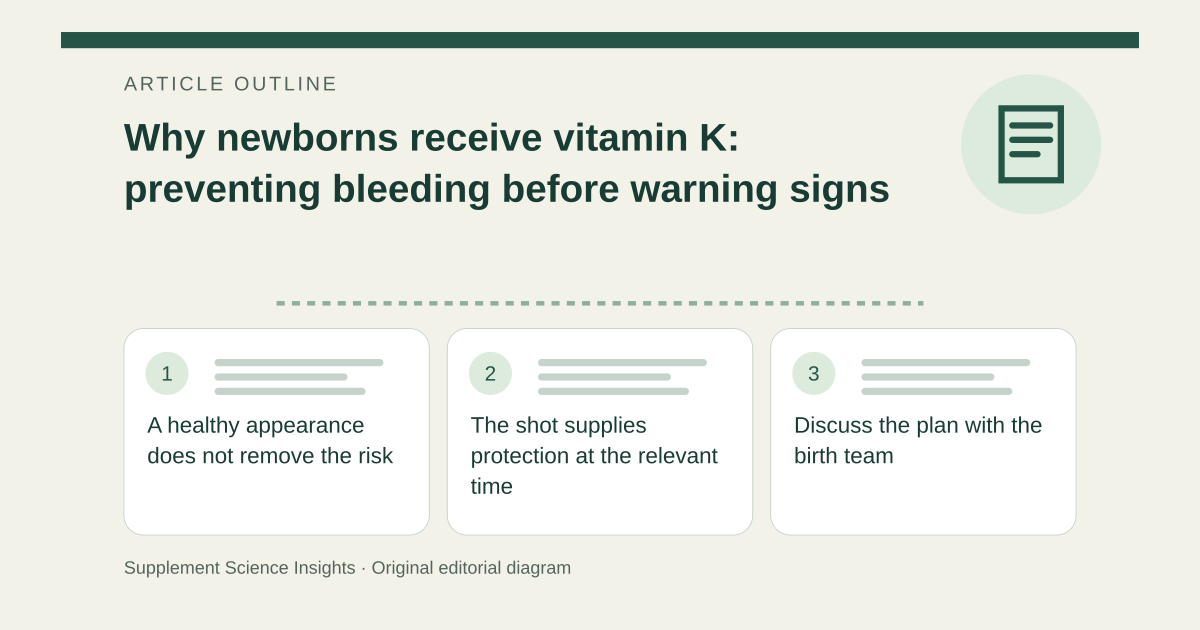
A healthy appearance does not remove the risk
Babies are born with little stored vitamin K because transfer across the placenta is limited. Their intestinal bacteria are not yet supplying the vitamin, and breast milk contains relatively little. These normal newborn circumstances create a specific deficiency risk. [1]
Vitamin K deficiency bleeding can occur inside the body, including the intestines or brain. CDC warns that there are often no warning signs before a serious event. Waiting to see visible bleeding is therefore not an effective preventive strategy. [1]
The shot supplies protection at the relevant time
CDC identifies a single vitamin K injection into the thigh muscle after birth as the preventive intervention. It protects against bleeding caused by the deficiency during the vulnerable period. [1]
The vitamin K shot is a newborn medical intervention, not the same question as whether a healthy adult should buy an extra vitamin supplement. Maternal food choices or an adult product should not be assumed to replace the newborn plan. [1]
Discuss the plan with the birth team
CDC states that the shot can be delayed up to six hours after birth to allow immediate bonding and contact. The clinical team can explain administration and answer questions about the intervention. [1]
The CDC page also reports that studies support the shot’s safety. This overview does not provide an alternative oral regimen or instructions for parents to administer a product themselves. [1]
Plan prevention before symptoms
Imagine parents want to wait because their newborn looks well. The important distinction is that prophylaxis prevents a problem that may begin internally without an obvious early sign.
Discussing questions with the birth team before delivery allows an informed plan without relying on appearance to predict which baby will bleed.
| Point | Interpretation |
|---|---|
| Low stores at birth | A normal newborn vulnerability |
| No visible bleeding | Does not exclude impending internal bleeding |
| Birth-team discussion | Clarifies preventive care before symptoms |
Sources for this article
- CDC — About Vitamin K Deficiency Bleeding
Source consulted: 2026-09-17. This is a reference resource, not a claim that we conducted the studies or tested a product.