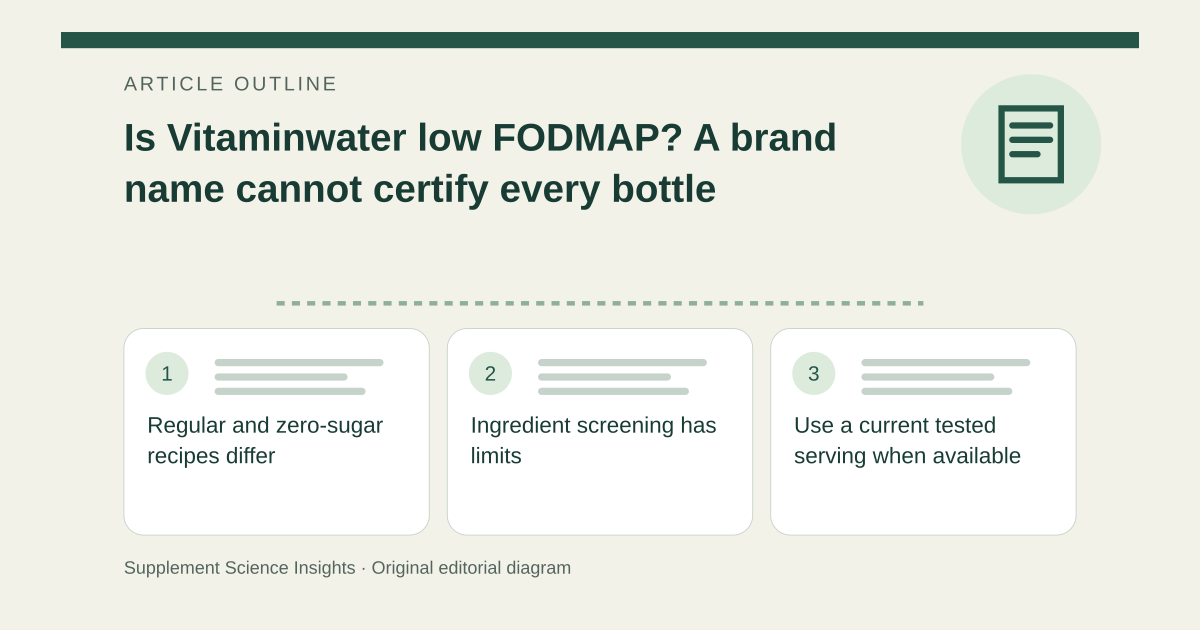
Regular and zero-sugar recipes differ
The inspected US regular XXX recipe lists crystalline fructose and cane sugar, while its zero-sugar counterpart lists stevia and monk fruit extracts. These are materially different ingredient lists. Older labels or another country’s formulation should not be substituted for the product you have. [1][2]
Ingredient screening has limits
Monash explains that excess fructose and some polyols can be relevant to IBS symptoms, with dose and absorption affecting tolerance. A listing of fructose does not provide the finished drink’s measured fructose-to-glucose balance. Likewise, the absence of a familiar trigger is not a laboratory low-FODMAP certification. [3]
Use a current tested serving when available
Imagine a diet plan specifies a tested low-FODMAP product and portion. Match that exact version rather than extending it to the whole brand. If no verified serving is available, discuss an alternative with the dietitian guiding the trial; do not infer that all sweeteners or every zero-sugar drink behave identically. [3]
| Label detail | Interpretation |
|---|---|
| Zero sugar | Not a FODMAP test |
| Fructose ingredient | Does not reveal the final ratio |
| Dietitian-guided plan | Use exact tested portions where available |
Sources for this article
- vitaminwater® flavors, ingredients, & nutrition facts | Coca-Cola US
Source consulted: 2026-09-20. This is a reference resource, not a claim that we conducted the studies or tested a product. - vitaminwater® zero sugar flavors, ingredients, & nutrition facts | Coca-Cola US
Source consulted: 2026-09-20. This is a reference resource, not a claim that we conducted the studies or tested a product. - Sweeteners and Low FODMAP Diet Guide - Monash Fodmap
Source consulted: 2026-09-20. This is a reference resource, not a claim that we conducted the studies or tested a product.