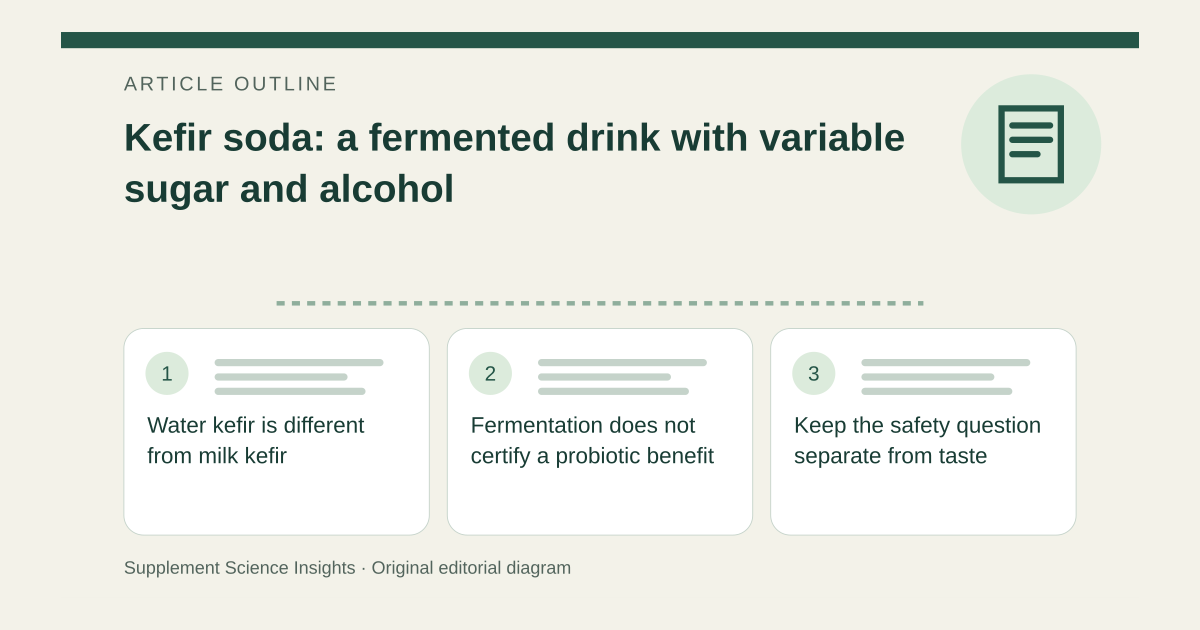
Water kefir is different from milk kefir
Water kefir cultures ferment a sweetened water or juice base using bacteria and yeasts. The result can be acidic and carbonated, with some alcohol. Milk kefir starts with milk; the two names do not establish equivalent protein, calcium or lactose content. [1]
Fermentation does not certify a probiotic benefit
A live-culture drink needs organism-specific evidence before it can be treated as a probiotic intervention. Bubbles or sourness alone do not identify the strains or prove a benefit. Check the finished beverage for serving size and carbohydrate rather than assuming the starting sugar has all disappeared. [2][3]
Keep the safety question separate from taste
BCCDC guidance emphasizes validated preparation, refrigeration and alcohol control. If avoiding alcohol completely, do not assume a homemade ferment is alcohol-free because it is sold or described as soda. Imagine choosing a bottle for its flavor: ask about its storage instructions and final alcohol specification as well as the sugar panel. [1]
| Situation | Interpretation |
|---|---|
| Fizzy and tart | Describes fermentation, not clinical efficacy |
| Sugar in starting recipe | Not a measurement of final carbohydrate |
| Alcohol avoidance | Verify the finished product |
Sources for this article
- Safety of Fermented Foods: Kefir — BCCDC December 2024
Source consulted: 2026-09-20. This is a reference resource, not a claim that we conducted the studies or tested a product. - Probiotics - Health Professional Fact Sheet
Source consulted: 2026-09-20. This is a reference resource, not a claim that we conducted the studies or tested a product. - How to Understand and Use the Nutrition Facts Label | FDA
Source consulted: 2026-09-20. This is a reference resource, not a claim that we conducted the studies or tested a product.