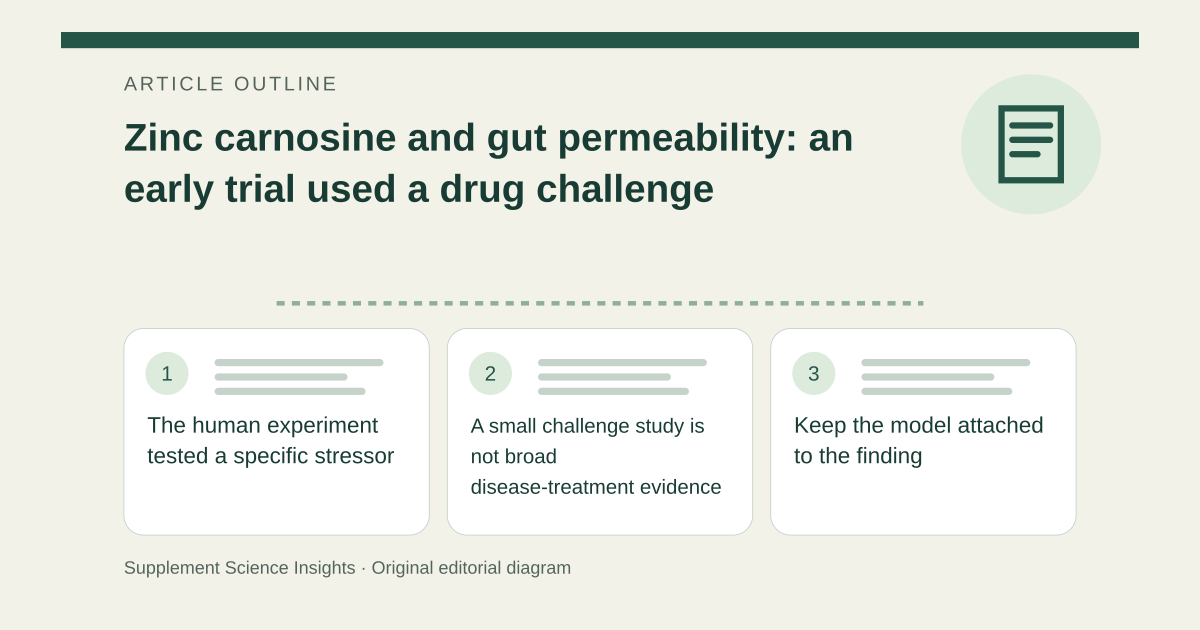
The human experiment tested a specific stressor
Healthy volunteers took indomethacin for five days with zinc carnosine or placebo in a randomized crossover study. Investigators measured intestinal permeability using a lactulose-to-rhamnose test. [1]
Permeability increased during the control condition but did not increase significantly when zinc carnosine was coadministered. The paper also included cell and animal experiments, which must remain separate from the human result. [1]
A small challenge study is not broad disease-treatment evidence
Ten volunteers and a brief exposure cannot establish treatment of IBS, inflammatory bowel disease or every symptom described as a leaky gut. The measured ratio is not a direct demonstration that a chronic illness has resolved. [1]
The report disclosed that an investigator had provided evidence at a hearing concerning extended zinc-carnosine health claims; funding was not established from the abstract. The trial does not justify starting the drug challenge or copying its supplement regimen outside clinical oversight. [1]
Keep the model attached to the finding
Imagine a supplement changes a test after an experimentally administered medicine. That result does not establish the same benefit in people whose ongoing digestive symptoms have another cause.
| Detail | Interpretation |
|---|---|
| Ten healthy volunteers | Small human sample |
| Drug-challenge permeability | Specific endpoint |
| Chronic digestive disease | Not established |
Sources for this article
- Zinc carnosine, a health food supplement that stabilises small bowel integrity and stimulates gut repair processes - PubMed
Source consulted: 2026-09-19. This is a reference resource, not a claim that we conducted the studies or tested a product.