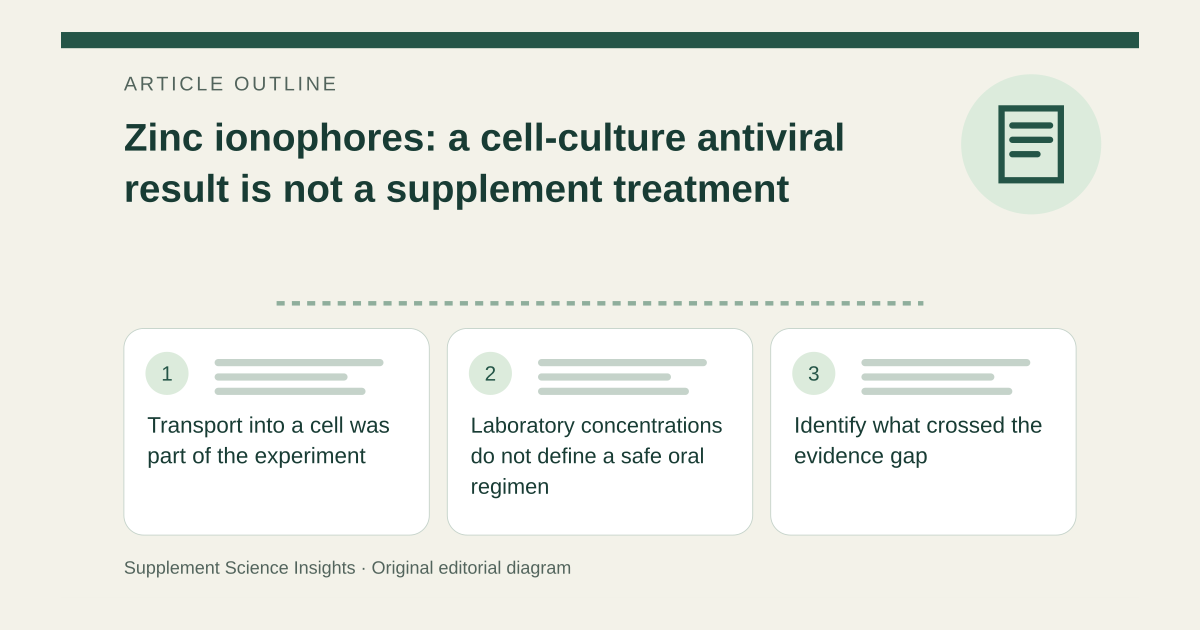
Transport into a cell was part of the experiment
The investigators combined zinc with the ionophore pyrithione in cell cultures studying SARS-CoV and equine arteritis virus. An ionophore can facilitate movement of ions across a membrane, changing their location and concentration. [1]
The researchers also tested isolated replication complexes and purified viral polymerases. Zinc inhibited RNA-synthesizing activity in those laboratory systems, helping identify a possible molecular target. [1]
Laboratory concentrations do not define a safe oral regimen
The experiments did not test patients, prevent infections or establish a clinical dose. The SARS coronavirus studied in 2010 was not SARS-CoV-2. A similar name does not make the experiment a COVID-19 treatment trial. [1]
The authors declared no competing interests; funding was not established from the abstract. Neither taking extra zinc nor ingesting a topical zinc-pyrithione product is justified by this work. The experimental transport mechanism must not be presented as demonstrated immune enhancement in humans. [1]
Identify what crossed the evidence gap
Imagine a compound inhibits an isolated viral enzyme. A separate clinical trial is still needed to show that an appropriate preparation reaches the target safely and improves outcomes in people.
| Detail | Interpretation |
|---|---|
| Cell culture and purified enzymes | Experimental setting |
| SARS-CoV | Not SARS-CoV-2 |
| Human treatment benefit | Not established |
Sources for this article
- Zn(2+) inhibits coronavirus and arterivirus RNA polymerase activity in vitro and zinc ionophores block the replication of these viruses in cell culture - PubMed
Source consulted: 2026-09-19. This is a reference resource, not a claim that we conducted the studies or tested a product.