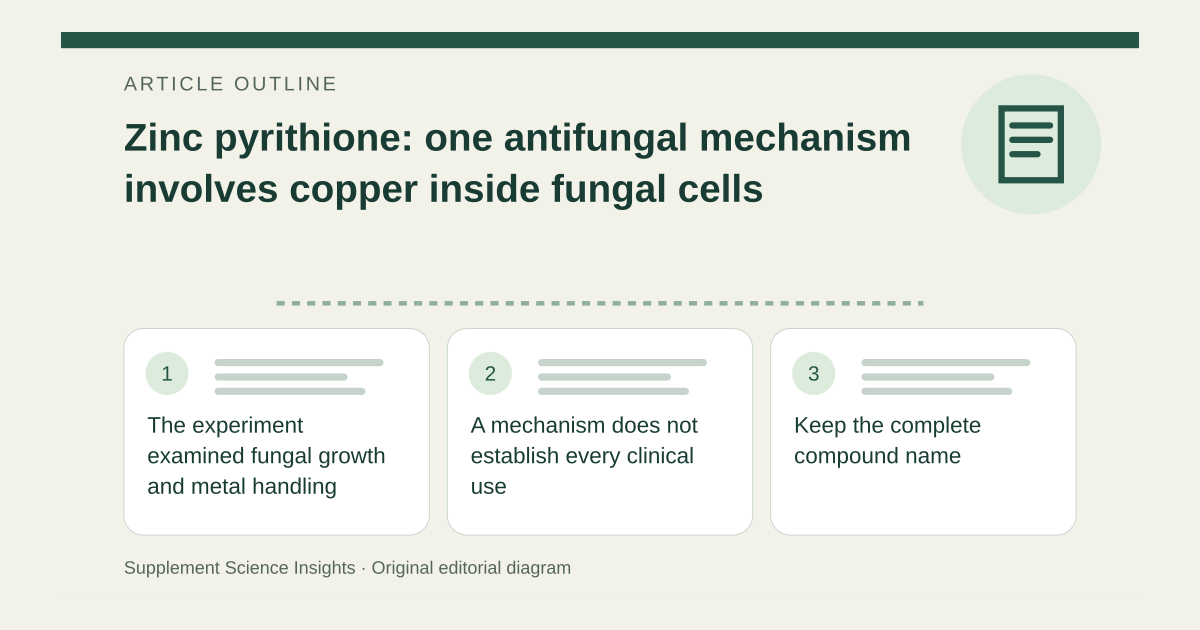
The experiment examined fungal growth and metal handling
Researchers combined genetic screening, expression analysis and biochemical measurements to study zinc pyrithione. They found that increased copper within fungal cells disrupted iron-sulfur proteins needed for metabolism. [1]
This is a mechanism involving a particular compound, not a demonstration that all zinc salts or zinc-containing foods have the same effect. The paper’s author affiliation included Procter & Gamble. [1]
A mechanism does not establish every clinical use
The study did not determine an oral zinc regimen for a fungal infection, establish effectiveness at every body site or certify a current product’s legal availability. Formulation, delivery and the organism being treated remain relevant. [1]
Full funding and conflict details were not established from the abstract. The appropriate interpretation is that laboratory evidence can explain a compound’s activity while still leaving clinical effectiveness and safety questions for the actual preparation and use. [1]
Keep the complete compound name
Imagine two products both contain zinc but bind it in different compounds. Shared elemental content does not establish identical transport, antimicrobial activity or suitability for the same body site.
| Detail | Interpretation |
|---|---|
| Zinc pyrithione | Specified compound |
| Cellular copper | Mechanistic finding |
| Ordinary oral zinc | Not an equivalent tested treatment |
Sources for this article
- The antifungal mechanism of action of zinc pyrithione - PubMed
Source consulted: 2026-09-19. This is a reference resource, not a claim that we conducted the studies or tested a product.