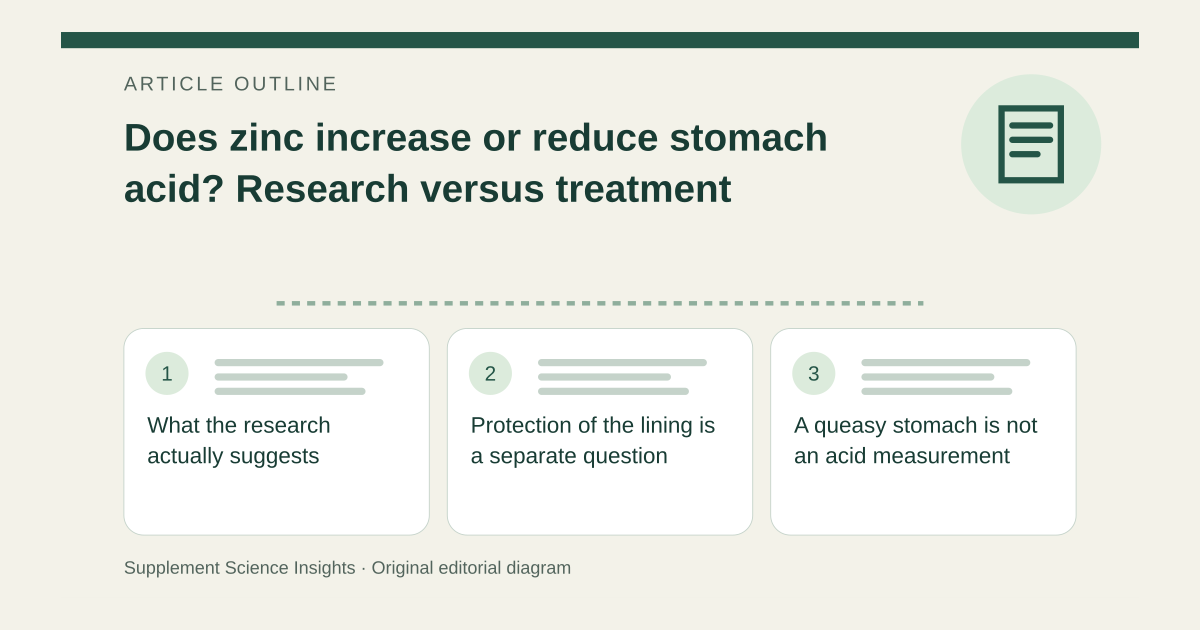
What the research actually suggests
A gastrointestinal review describes animal and limited human experimental findings in which zinc reduced stimulated gastric acid secretion. It explicitly says that effectiveness of oral zinc for treating gastroesophageal reflux disease remains to be determined. Experimental changes in acidity are not the same outcome as sustained symptom control or healing. [1]
Protection of the lining is a separate question
Zinc and zinc-carnosine have been investigated for mucosal protection. That research should not be reduced to a claim that all zinc tablets work like an acid-suppressing medicine. Different compounds, doses and study conditions can produce different findings. [1]
A queasy stomach is not an acid measurement
NIH lists nausea, vomiting and gastric distress among adverse effects of excessive zinc. These symptoms cannot tell you whether stomach acid is high or low. Review the elemental amount, other products and timing rather than using discomfort as a diagnosis. [2]
Do not reverse the acid-suppression relationship
Some studies reviewed found reduced zinc absorption during acid-suppressing treatment, while others disagreed. This does not mean everyone taking such medicine needs a zinc supplement, or that stopping prescribed treatment is appropriate. Nutritional evaluation and reflux treatment answer different questions. [1]
Apply the distinction to a supplement choice
Imagine a person replaces a prescribed reflux medicine with zinc because an experiment showed reduced acid secretion. That skips the missing clinical evidence. Discuss continuing symptoms and any nutritional concern with the treating clinician instead of assuming the two products are interchangeable. [1][2]
| Observation | What it establishes |
|---|---|
| Experimental reduction in acid secretion | A research finding under specified conditions |
| Nausea after a tablet | A symptom, not a measurement of acidity |
| Mucosal-protection research | Not automatic equivalence to reflux medicine |
Sources for this article
- Zinc and gastrointestinal disease - PMC
Source consulted: 2026-09-21. This is a reference resource, not a claim that we conducted the studies or tested a product. - Zinc - Health Professional Fact Sheet
Source consulted: 2026-09-21. This is a reference resource, not a claim that we conducted the studies or tested a product.