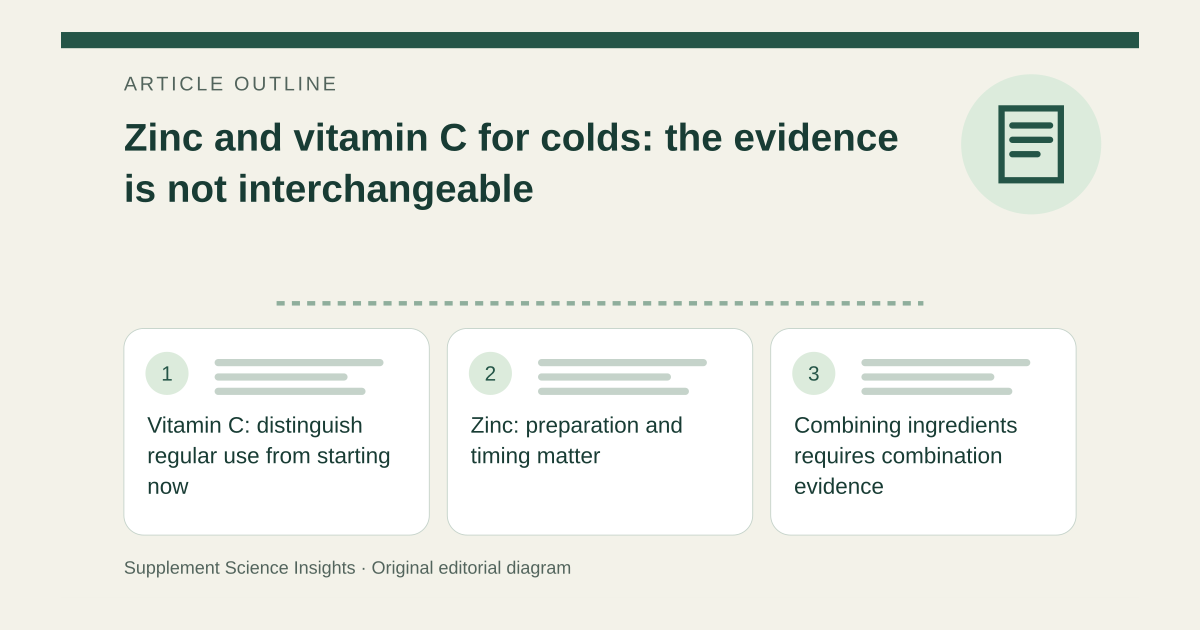
Vitamin C: distinguish regular use from starting now
ODS reports modest duration benefits from regular vitamin C use, with no general-population prevention benefit. Starting after cold symptoms develop does not show the same benefit. A person already sick should not assume a study of ongoing supplementation tested their proposed sick-day routine. [1]
Zinc: preparation and timing matter
ODS summarizes mixed findings, with some lozenge or syrup preparations taken early shortening symptoms. This cannot be transferred automatically to an ordinary swallowed multivitamin, every zinc formulation or every respiratory virus. A duration signal also does not guarantee a milder illness or a fixed number of days saved. [2]
Combining ingredients requires combination evidence
Evidence about each ingredient separately does not establish an added benefit from taking them together. Read the full formula and serving size, including any other cold remedies. This guide does not prescribe the high short-term amounts used in particular zinc studies as a daily nutritional regimen. [2][1]
Account for tolerability and the actual illness
Vitamin C can cause digestive effects at high intake; excessive zinc can cause nausea and interfere with copper status. Influenza is a separate infection with antiviral treatment considerations. Severe or worsening symptoms need assessment, not repeated supplement escalation. [1][2][3]
A combined label does not answer a clinical question
Imagine a product contains both nutrients and advertises immune support. Ask whether evidence addresses that finished preparation, the start time and the desired outcome. A ingredient list alone cannot establish prevention, faster recovery or superiority to simpler care. [2][1]
| Ingredient | Key distinction |
|---|---|
| Vitamin C | Regular use versus after onset |
| Oral zinc | Preparation, timing and variable findings |
| Combination | Separate evidence does not prove added benefit |
Sources for this article
- Vitamin C - Health Professional Fact Sheet
Source consulted: 2026-09-21. This is a reference resource, not a claim that we conducted the studies or tested a product. - Zinc - Health Professional Fact Sheet
Source consulted: 2026-09-21. This is a reference resource, not a claim that we conducted the studies or tested a product. - Treatment of Flu | Influenza (Flu) | CDC
Source consulted: 2026-09-21. This is a reference resource, not a claim that we conducted the studies or tested a product.