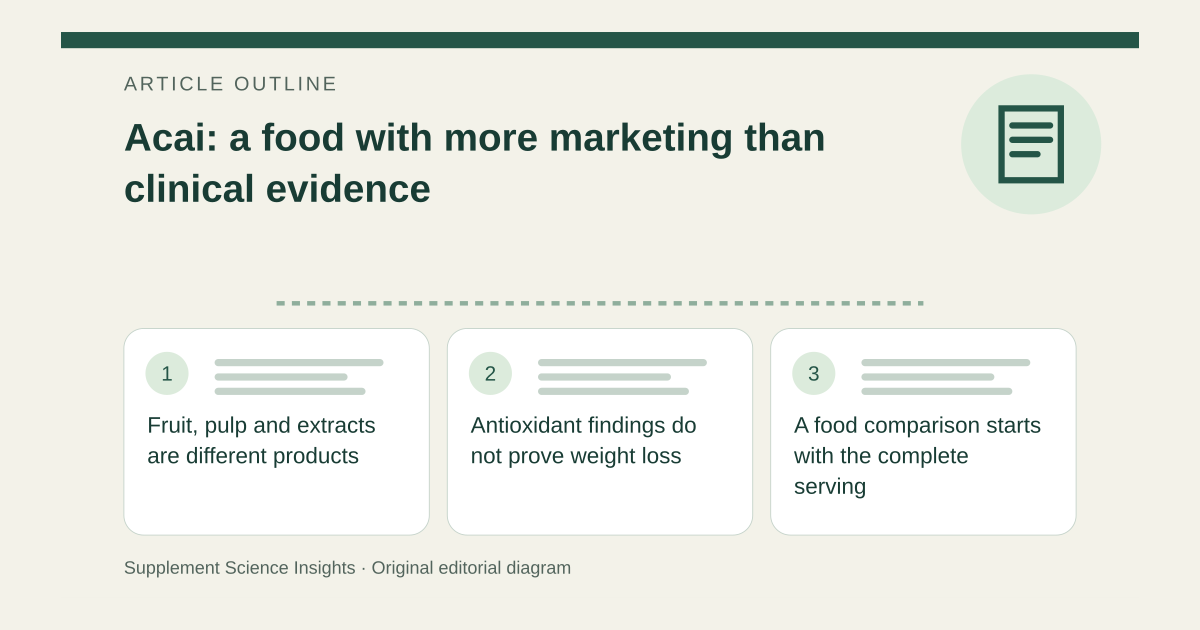
Fruit, pulp and extracts are different products
Acai is the dark fruit of palms native to tropical parts of the Americas. It is eaten as food and sold as juice, pulp, powder and concentrated supplements. Those preparations are not interchangeable: a serving of sweetened juice and a small extract capsule have different compositions. [1]
The relevant question is what the actual product contains and what it is meant to accomplish. A history of food use helps describe the ingredient, but it cannot establish the efficacy of a concentrated product for a medical purpose. [1]
Antioxidant findings do not prove weight loss
NCCIH finds too little reliable human evidence to establish acai for a health condition. Small studies have examined antioxidant-related measures, but those results do not demonstrate sustained weight loss, fewer cardiovascular events or improved athletic performance. [1]
A laboratory antioxidant result is especially easy to overinterpret. It may show chemical activity under test conditions without showing what happens after digestion or whether a person feels or functions better. The outcome in the study should remain the outcome in the claim. [1]
A food comparison starts with the complete serving
For juice or a prepared bowl, compare the whole nutrition panel and serving size, including any added ingredients. For a powder, ask whether it is fruit powder or an extract and whether the label identifies the amount of each ingredient.
A colorful photograph of berries cannot resolve that distinction. Neither can the term “superfood,” which gives no usable information about a clinical endpoint, a study population or the product's composition.
Food handling and medical context still matter
Raw acai juice has occasionally been linked to parasite contamination and Chagas disease. NCCIH also notes that acai can affect gastrointestinal MRI interpretation and may affect blood-glucose control. People preparing for imaging or taking diabetes medicines should discuss use with their care team. [1]
Safety information on concentrated products, pregnancy and breastfeeding is limited. The fact that pulp has been used in short studies is not a lifetime safety assessment of every extract. [1]
Two equal numbers may describe different ingredients
Imagine Label A lists 500 mg acai fruit powder. Label B lists a 500 mg blend of acai, another berry and a sweetener, without individual quantities. Only A establishes an acai amount from that declaration.
Do not enter 500 mg of acai for B or divide the blend into equal shares. This fictional comparison does not rank either product; it identifies the information available before a benefit claim can be assessed.
| Label | Acai quantity established? |
|---|---|
| A: 500 mg fruit powder | Yes, as declared |
| B: 500 mg mixed blend | No |
Choose food for food reasons
Acai can be evaluated as a food without promising a treatment effect. A supplement sold for weight loss requires evidence for that product and outcome. This overview does not provide that missing evidence or recommend a brand.
Sources for this article
- NCCIH — Acai: Usefulness and Safety
Source consulted: 2026-09-17. This is a reference resource, not a claim that we conducted the studies or tested a product.