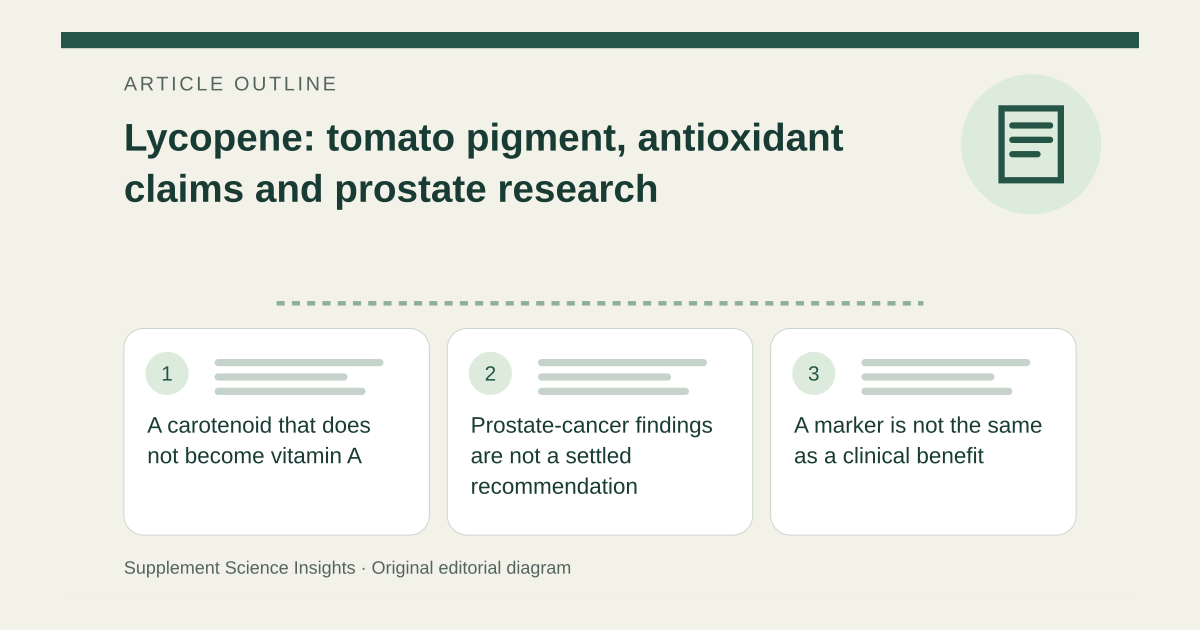
A carotenoid that does not become vitamin A
Lycopene is a red carotenoid found in tomatoes and some other foods. It is studied for antioxidant activity and possible relationships with disease risk. Unlike beta-carotene, lycopene is not converted into vitamin A, so the word “carotenoid” does not make the two nutritionally interchangeable. [1]
A food, a tomato extract and an isolated lycopene capsule also differ. The amount of lycopene, the surrounding food matrix and any additional ingredients must remain visible when a study is used to support a product claim. [1]
Prostate-cancer findings are not a settled recommendation
Memorial Sloan Kettering summarizes observational associations and clinical research, but concludes that evidence for supplemental lycopene in prostate-cancer prevention remains inconclusive. Findings from tomato-rich eating patterns do not establish that a capsule prevents cancer. [1]
People who eat differently can also differ in screening, smoking, activity and many other factors. An association can identify a research question without isolating lycopene as its cause. A randomized intervention addresses a different question and still needs an appropriate population and outcome. [1]
A marker is not the same as a clinical benefit
An antioxidant assay, a blood lycopene concentration and a cancer outcome answer different questions. A supplement can change exposure to the compound without demonstrating a meaningful benefit to the patient. A short-term change also cannot establish a long-term prevention effect.
When reading a prostate-health claim, identify whether researchers measured symptoms, a laboratory marker, diagnosis, progression or survival. Do not substitute one outcome for another simply because they concern the same organ. This is especially important when a headline says only that a result was “significant.”
Discuss supplements during cancer care
MSK notes that safety and usefulness depend on the setting and advises discussing herbal or dietary products with the healthcare team. Limited evidence of a benefit is not a reason to replace screening, delay assessment of urinary symptoms or change a cancer treatment plan. [1]
The rest of a combination product matters too. A favorable-sounding lycopene ingredient cannot provide a safety assessment for every other component. Bring the full label rather than only the ingredient most prominently advertised. [1]
An extract amount may not be a lycopene amount
Imagine Label A states “lycopene 10 mg.” Label B says “tomato extract 100 mg” and separately states that the extract contains 10 percent lycopene. Under that fictional declaration, B supplies 10 mg lycopene: 100 multiplied by 0.10.
If B gives no percentage or direct lycopene quantity, its amount is unknown. Equal declared lycopene does not establish equal formulation, quality or clinical effects. The arithmetic is a way to read a label, not evidence that either product prevents prostate disease.
| Label | Lycopene established |
|---|---|
| A: lycopene 10 mg | 10 mg |
| B: 100 mg extract, 10% lycopene | 10 mg |
| Extract weight without composition | Unknown |
Keep food choices and treatment claims separate
Tomatoes can be part of an ordinary varied diet without making a medicinal claim about them. Choosing a concentrated supplement for prevention is a different decision and needs evidence about the supplement itself.
For an advertised outcome, ask for the exact preparation, comparator and measured result. For symptoms or cancer care, ask the treating team. This article is a reference to the evidence boundary, not a systematic review, product ranking or individualized prevention plan.
Sources for this article
- Memorial Sloan Kettering — Lycopene
Source consulted: 2026-09-17. This is a reference resource, not a claim that we conducted the studies or tested a product.