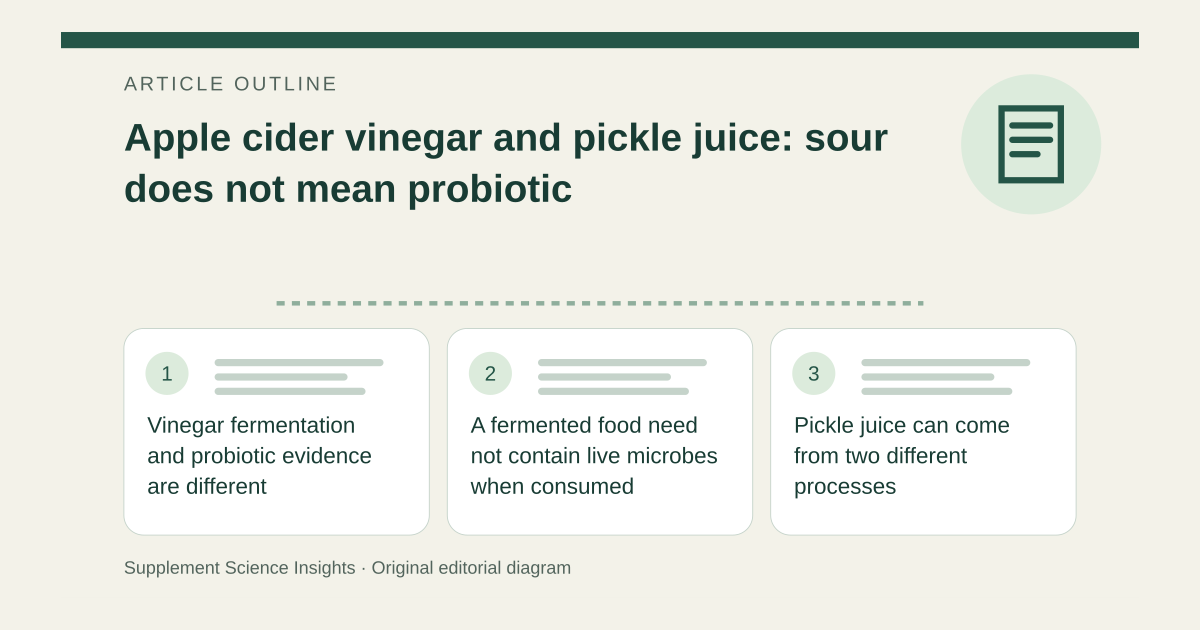
Vinegar fermentation and probiotic evidence are different
Penn State Extension describes unfiltered apple cider vinegar’s mother as material containing yeast and bacterial cells from fermentation. This describes how vinegar is made and what may be present; it does not establish a standardized probiotic identity, viable amount or demonstrated effect for the finished bottle. [1][2]
A fermented food need not contain live microbes when consumed
ISAPP’s definition depends on microbial growth and transformations during manufacture, not on guaranteed viability at the time of eating. Filtering, heating and other processing can change the finished product. Raw or unfiltered wording does not by itself supply a clinical probiotic claim. [3][1][2]
Pickle juice can come from two different processes
The National Center for Home Food Preservation distinguishes quick-process vinegar pickles from fermented pickles. The liquid from a vinegar-acidified jar is not automatically a cultured probiotic drink. Brine from a fermented product also requires organism, viability and benefit evidence before being treated as a therapeutic dose. [4][2]
Do not change a preservation recipe to chase live cultures
Use tested acid concentrations and processes. Penn State cautions that vinegar acidity matters for safe preservation. Reducing vinegar or changing the method to encourage microbes can undermine food safety and does not establish a useful probiotic product. [1][4]
Use labels to answer the actual question
Imagine two sour jars, one vinegar-pickled and one fermented. Their similar taste cannot establish equal organisms or benefits. Check the process, storage instructions and whole nutrition label, including sodium where relevant, rather than assuming a daily drink of brine is required for gut health. [4][2][5]
| Description | What remains unknown |
|---|---|
| Vinegar with mother | Studied strains and effective viable amount |
| Quick-process pickle juice | Not automatically fermented |
| Fermented brine | Clinical benefit of the finished serving |
Sources for this article
- Advice about Vinegar
Source consulted: 2026-09-21. This is a reference resource, not a claim that we conducted the studies or tested a product. - Probiotics - Health Professional Fact Sheet
Source consulted: 2026-09-21. This is a reference resource, not a claim that we conducted the studies or tested a product. - Creating a scientific definition of 'fermented foods' - International Scientific Association for Probiotics and Prebiotics (ISAPP)
Source consulted: 2026-09-21. This is a reference resource, not a claim that we conducted the studies or tested a product. - General Information on Pickling - National Center for Home Food Preservation
Source consulted: 2026-09-21. This is a reference resource, not a claim that we conducted the studies or tested a product. - How to Understand and Use the Nutrition Facts Label | FDA
Source consulted: 2026-09-21. This is a reference resource, not a claim that we conducted the studies or tested a product.