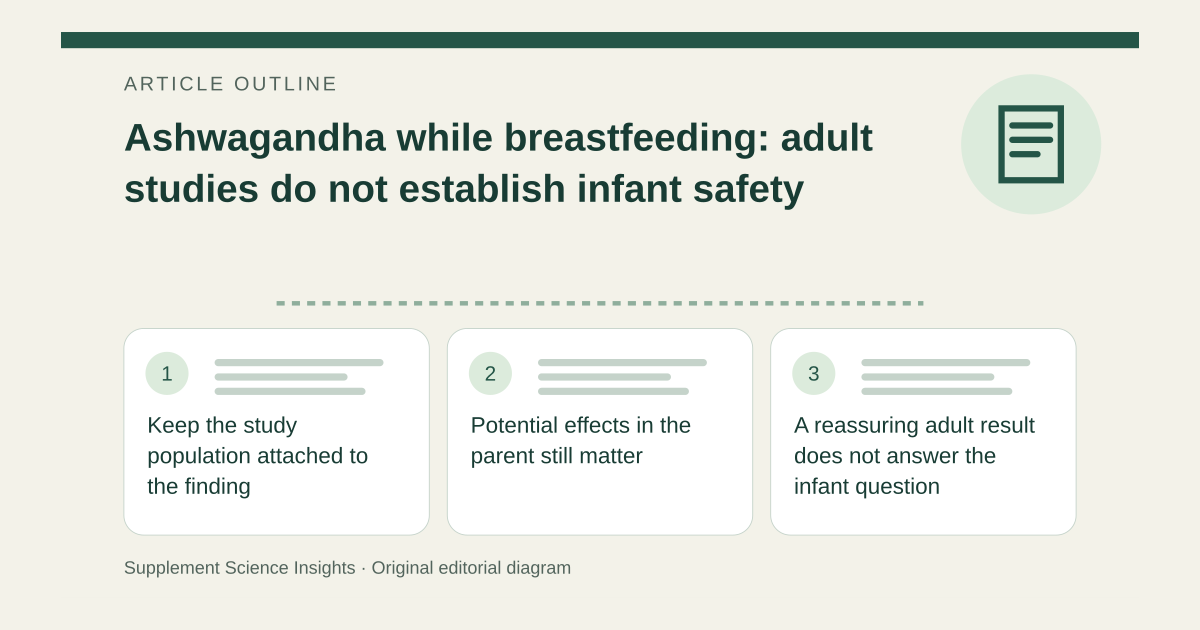
Keep the study population attached to the finding
A study of stress or sleep in adults addresses the preparation, duration and participants actually studied. It does not automatically evaluate transfer into breast milk, infant exposure or developmental outcomes. Calling an herb traditionally used does not fill those evidence gaps. [1]
NCCIH’s guidance specifically says ashwagandha should not be used while breastfeeding. Its discussion of possible short-term tolerability in other adults should therefore not be read as a lactation safety clearance. [1]
Potential effects in the parent still matter
Ashwagandha may cause drowsiness, digestive symptoms and, rarely, liver injury. NCCIH also identifies potential interactions with medicines including sedatives, thyroid hormone and some medicines for blood pressure or diabetes. The full preparation and medication list matter. [1]
There is no safe lactation dose or waiting interval established by this overview. Taking a smaller amount or timing it after a feed cannot be assumed to remove uncertainty. A sleep or stress concern deserves assessment without relying on that unverified workaround. [1]
A reassuring adult result does not answer the infant question
Imagine a product cites an eight-week adult stress study but provides no lactation data. That citation cannot establish that the product is suitable while breastfeeding. Review alternatives with the clinician rather than extending the study beyond its population.
| Situation | Interpretation |
|---|---|
| Adult stress study | Different population |
| After-feed timing | No established safety workaround |
| NCCIH guidance | Do not use while breastfeeding |
Sources for this article
- NCCIH: Ashwagandha
Source consulted: 2026-09-17. This is a reference resource, not a claim that we conducted the studies or tested a product.