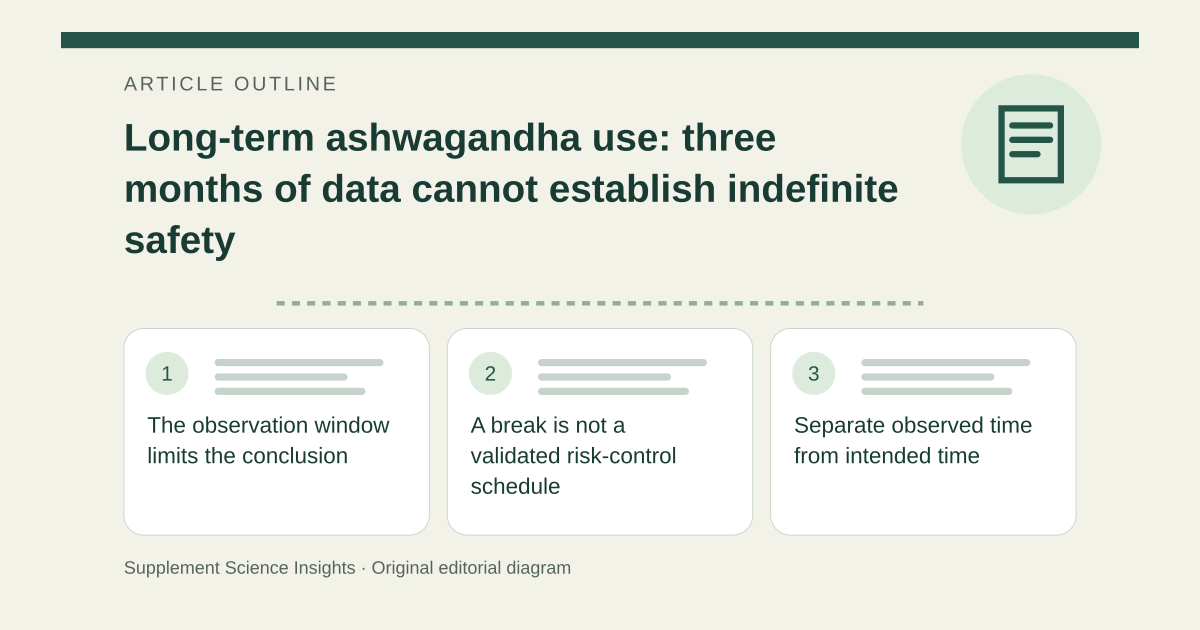
The observation window limits the conclusion
ODS describes ashwagandha as generally well tolerated in studies lasting up to about three months, while noting that longer-term safety is not established. Common reported effects include stomach upset, loose stools, nausea and drowsiness. Liver and thyroid concerns also matter. [1]
A small study may be too short or too small to identify uncommon harms. Participants who tolerate a preparation for several weeks do not establish that everyone can use it indefinitely, particularly when a retail extract differs from the one studied. [1]
A break is not a validated risk-control schedule
The reviewed evidence does not identify a standard number of days on and off that prevents liver injury, thyroid effects or interactions. An invented cycling schedule cannot repair a missing long-term study. [1]
Duration belongs in a periodic review alongside the reason for use, actual benefit, adverse effects and changes in medicines or health. The relevant question is whether continued use still has a defensible benefit–risk balance, not simply whether a calendar reminder has been followed. [1]
Separate observed time from intended time
Imagine an extract was studied for eight weeks but a buyer plans to take it for two years. The trial covers only a small part of the proposed exposure period. Calling the longer course established safe would add evidence the study did not collect.
| Observation | Interpretation |
|---|---|
| Eight-week trial | Observed duration |
| Two-year plan | Much longer exposure |
| Scheduled breaks | Not proof of long-term safety |
Sources for this article
- NIH ODS: Ashwagandha — Health Professional Fact Sheet
Source consulted: 2026-09-17. This is a reference resource, not a claim that we conducted the studies or tested a product.