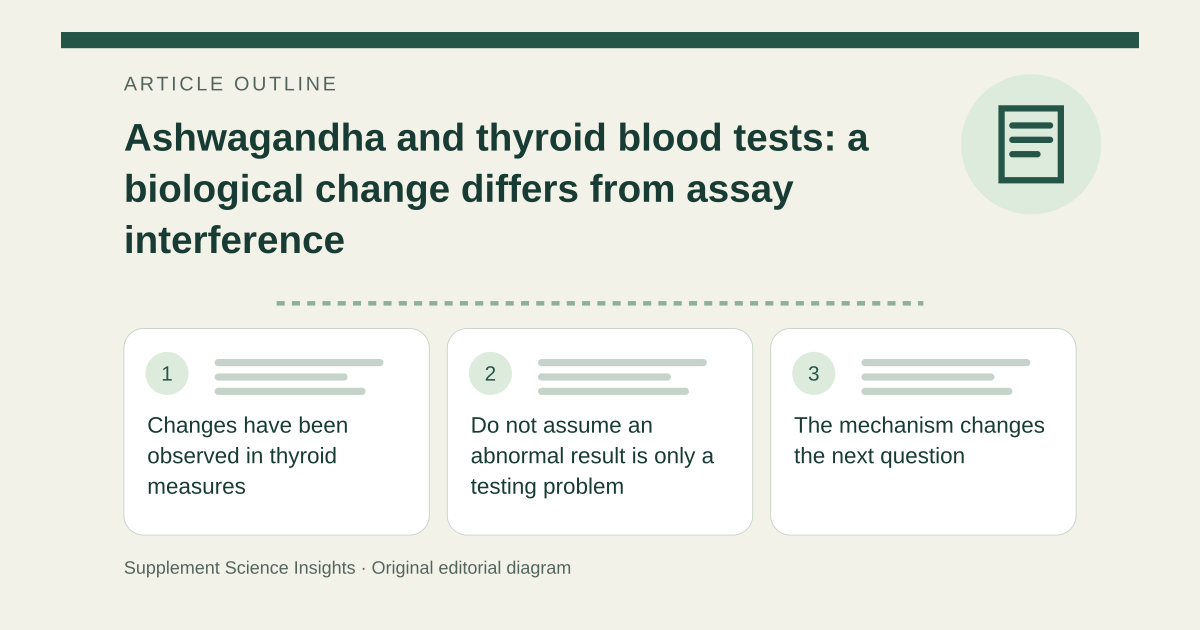
Changes have been observed in thyroid measures
ODS describes a small trial in 50 people with subclinical hypothyroidism in which an ashwagandha extract changed TSH and thyroid-hormone measurements over eight weeks. It also describes case reports of thyrotoxicosis, a state of excess thyroid-hormone effect, during use. [1]
This is not enough to establish ashwagandha as a thyroid treatment. The small trial’s specific population and preparation cannot define safe use for someone with a different thyroid condition, normal thyroid function or prescribed thyroid hormone. [1]
Do not assume an abnormal result is only a testing problem
A substance can affect laboratory results by changing physiology or by interfering with the measurement itself. The thyroid concern described here includes potential biological effects; it does not establish a universal analytical-interference mechanism or a fixed washout interval. [1]
Tell the clinician interpreting the results about the complete product, timing of use and thyroid medicines. ODS flags possible interactions with thyroid-hormone treatment. Do not independently adjust that medicine or disregard abnormal results because a supplement might be involved. [1]
The mechanism changes the next question
Imagine a thyroid result changes after a supplement is started. The clinician needs to consider actual thyroid activity, the assay and other explanations. Calling the result false before evaluating those possibilities could conceal a real physiological change.
| Observation | Interpretation |
|---|---|
| Physiological effect | The body’s state changes |
| Assay interference | The measurement is distorted |
| Abnormal result alone | Does not identify which explanation applies |
Sources for this article
- NIH ODS: Ashwagandha — Health Professional Fact Sheet
Source consulted: 2026-09-17. This is a reference resource, not a claim that we conducted the studies or tested a product.