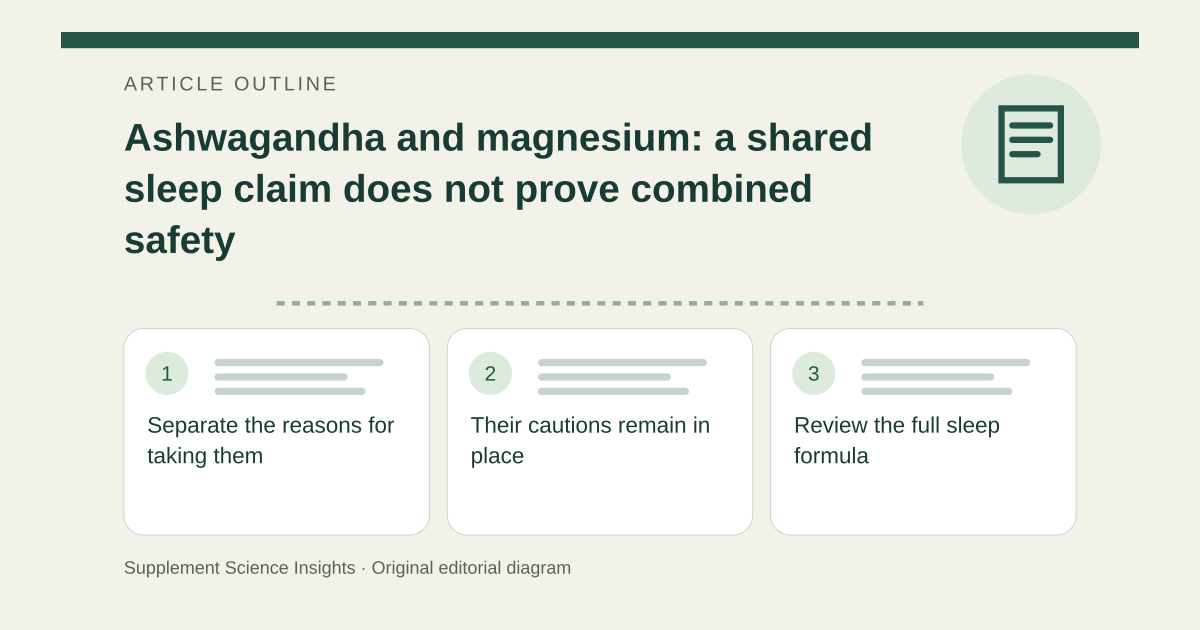
Separate the reasons for taking them
Magnesium is an essential mineral; ashwagandha is a botanical preparation. A dietary magnesium gap and a trial of an herb for stress are different questions. Evidence about either ingredient alone does not establish the effectiveness or safety of every combined retail product. [1][2]
Their cautions remain in place
Supplemental magnesium can cause gastrointestinal effects and is a particular concern with impaired kidney function. Ashwagandha can cause drowsiness or digestive effects and has its own contraindications and medicine interactions. Combining them does not remove those issues, and both can complicate interpretation if symptoms start. [1][2]
Review the full sleep formula
Imagine a blend also contains melatonin and additional herbs. A question limited to magnesium plus ashwagandha omits the rest of the exposure. Bring the complete label and medicine list for review, especially with sedating medicines or relevant medical conditions. A formula name is not a substitute for an ingredient-level assessment. [3][2]
| Illustration | Meaning |
|---|---|
| Magnesium intake gap | A nutrient question |
| Ashwagandha preparation | A separate botanical question |
| Multi-ingredient sleep blend | Evaluate every component |
Is ashwagandha or magnesium better for anxiety?
The reviewed studies do not provide a direct winner. A 2022 ashwagandha meta-analysis included 12 trials and reported lower anxiety and stress scores, but rated certainty low and found large differences between studies. Magnesium reviews likewise describe small, heterogeneous studies, selected anxiety-vulnerable populations and sometimes additional active ingredients. [4][5]
Comparing the size of a score change across these separate reviews would not be a head-to-head test: populations, scales, preparations and durations differ. The available evidence supports comparing those limitations and the person’s safety context, not declaring that one ingredient is universally stronger or that taking both is proven better. Their existing medicine, thyroid, liver and kidney cautions still apply. [4][5]
Sources for this article
- Magnesium - Health Professional Fact Sheet
Source consulted: 2026-09-20. This is a reference resource, not a claim that we conducted the studies or tested a product. - Ashwagandha: Usefulness and Safety | NCCIH
Source consulted: 2026-09-20. This is a reference resource, not a claim that we conducted the studies or tested a product. - Questions and Answers on Dietary Supplements | FDA
Source consulted: 2026-09-20. This is a reference resource, not a claim that we conducted the studies or tested a product. - Akhgarjand et al. — Ashwagandha for anxiety and stress: systematic review and meta-analysis
Source consulted: 2026-10-28. This is a reference resource, not a claim that we conducted the studies or tested a product. - Rawji et al. — Supplemental magnesium, self-reported anxiety and sleep quality
Source consulted: 2026-10-28. This is a reference resource, not a claim that we conducted the studies or tested a product.