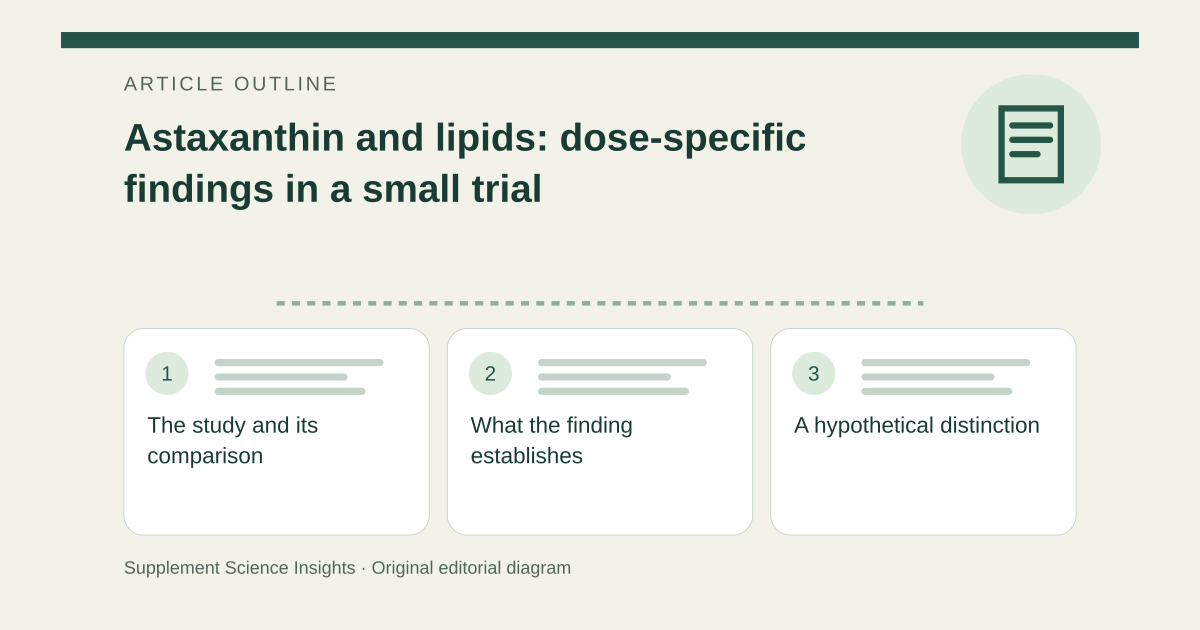
The study and its comparison
Sixty-one non-obese adults with mildly elevated triglycerides and without diabetes or hypertension were randomized to placebo or 6, 12 or 18 mg astaxanthin daily for twelve weeks. [1]
Reported multiple comparisons favored triglycerides at 12 and 18 mg and HDL at 6 and 12 mg. LDL and BMI were unchanged. Adiponectin changes correlated with HDL changes. [1]
What the finding establishes
A correlation does not establish the mechanism, and not every dose improved every endpoint. These are lipid measurements, not cardiovascular events. Funding and conflicts were not established from the abstract. The trial does not demonstrate a substitute for indicated lipid treatment. [1]
A hypothetical distinction
Imagine the middle dose improves two measures. This does not prove that progressively higher doses work better.
| Detail | Interpretation |
|---|---|
| Measured outcome | Keep the endpoint specific |
| Study preparation | Not every retail product |
| Remaining uncertainty | Not resolved by a mechanism |
Sources for this article
- Administration of natural astaxanthin increases serum HDL-cholesterol and adiponectin in subjects with mild hyperlipidemia.
Source consulted: 2026-09-19. This is a reference resource, not a claim that we conducted the studies or tested a product.