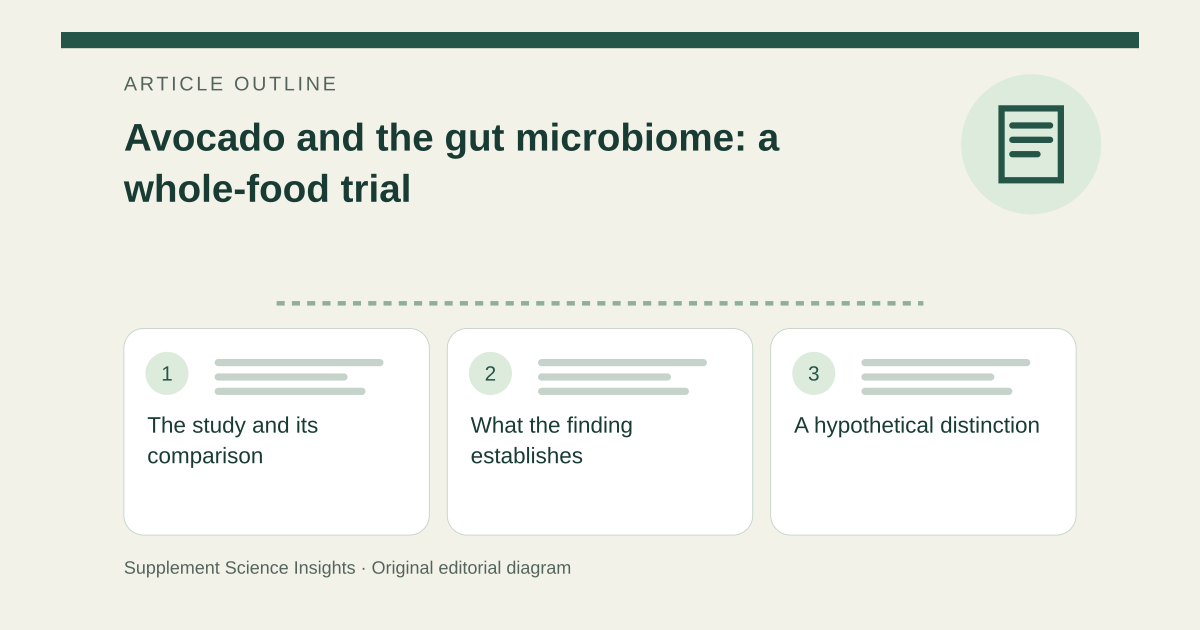
The study and its comparison
The PATH study enrolled 163 adults with overweight or obesity in a 12-week comparison of energy-matched meals with or without avocado. Microbiota and fecal metabolites were secondary outcomes. [1]
Avocado consumption changed bacterial relative abundances and several fecal fatty-acid and bile-acid measurements. These findings show an effect of the food intervention, without isolating fiber from its other components. [1]
What the finding establishes
A stool association is not direct evidence of fewer digestive illnesses or a benefit from adding live organisms. Hass Avocado Board and USDA funding supported the research; three authors disclosed board grant support. The results do not establish that all prebiotic claims for every serving are clinically proven. [1]
A hypothetical distinction
Imagine a food supplies both fiber and fats. Its combined effect cannot be assigned to fiber alone.
| Detail | Interpretation |
|---|---|
| Measured outcome | Keep the endpoint specific |
| Study preparation | Not every retail product |
| Remaining uncertainty | Not resolved by a mechanism |
Sources for this article
- Avocado Consumption Alters Gastrointestinal Bacteria Abundance and Microbial Metabolite Concentrations among Adults with Overweight or Obesity: A Randomized Controlled Trial - PMC
Source consulted: 2026-09-19. This is a reference resource, not a claim that we conducted the studies or tested a product.