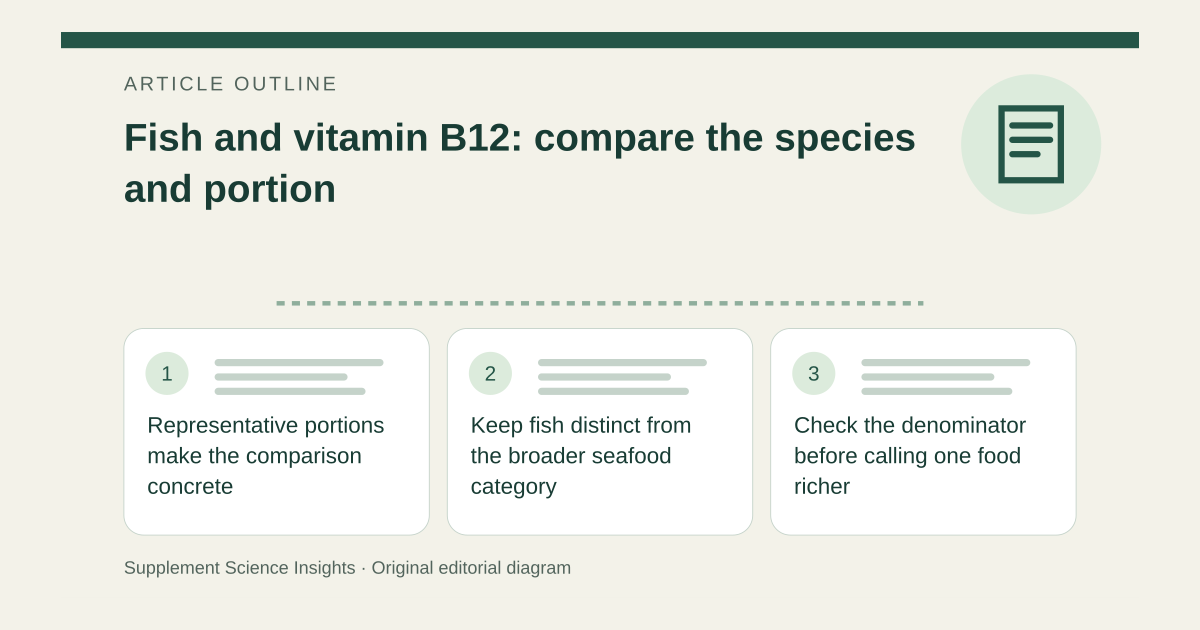
Representative portions make the comparison concrete
The NIH ODS table lists 2.6 micrograms of B12 in three ounces of cooked Atlantic salmon and 2.5 micrograms in three ounces of light tuna canned in water. These are representative food-composition entries, not tests of particular retail packages. [1]
For context, the adult RDA outside pregnancy and lactation is 2.4 micrograms daily. The food amounts describe what is eaten, not an individually measured absorbed quantity. A slightly higher table value does not establish a clinically superior fish. [1]
Keep fish distinct from the broader seafood category
The same ODS table lists a much higher B12 value for cooked clams, but clams are shellfish rather than fish. A list titled fish can become misleading if it silently changes the food category or compares unequal portions. [1]
Food-derived B12 also depends on normal digestion and absorption. Eating a B12-rich serving does not by itself resolve an absorption disorder or replace a prescribed deficiency-treatment plan. The food question and the treatment question need separate answers. [1]
Check the denominator before calling one food richer
Imagine one entry is per three ounces and another per six ounces. The larger nutrient amount may simply reflect twice the portion. Convert to comparable edible portions before ranking the numbers, then retain the uncertainty about preparation and actual product content.
| Finding | Interpretation |
|---|---|
| Species and preparation | Must be stated |
| Equal edible portions | Needed for the comparison |
| Absorbed amount | Not measured by a food table |
Sources for this article
- NIH ODS: Vitamin B12
Source consulted: 2026-09-17. This is a reference resource, not a claim that we conducted the studies or tested a product.