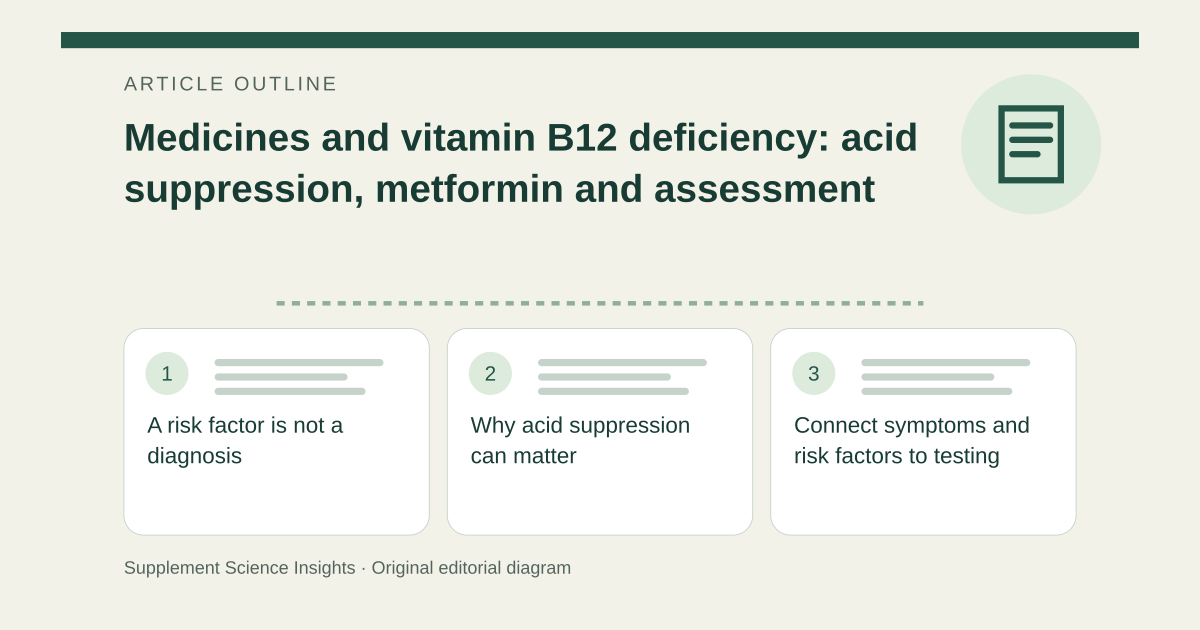
A risk factor is not a diagnosis
NIH ODS identifies gastric acid inhibitors and metformin as medicines that can affect vitamin B12 status. Taking one of these drugs does not establish that a person is deficient. Diet, gastrointestinal conditions and other factors can contribute as well. [1][2]
The exact drug and the reason it is being used matter. A medication list is useful context for assessment, not a reason to assume that every symptom is caused by a vitamin problem. [1][2]
Why acid suppression can matter
Vitamin B12 in food is bound to protein and must be released during digestion. Proton pump inhibitors and histamine-2 receptor antagonists suppress stomach acid, which can interfere with that release. B12 added to supplements and fortified foods is already in free form, although further absorption steps still matter. [1]
Metformin affects B12 through a different medication context and is covered in the related metformin article. Neither mechanism supplies a universal replacement dose or proves that a particular commercial form is superior. [1]
Connect symptoms and risk factors to testing
NICE recommends considering symptoms and risk factors together when evaluating suspected B12 deficiency in people aged 16 and over. Deficiency can occur without anemia or an enlarged red-cell size, so a normal blood count alone does not exclude it. [2]
A clinician may need to interpret B12 testing and additional markers in context. Starting replacement before assessment can affect results, although treatment should not be delayed in situations where neurological or other serious features require prompt care. [2]
Bring a complete medicine history
Imagine someone taking long-term acid suppression develops unexplained tingling and fatigue. Instead of discontinuing the prescription or assuming a supplement will settle the issue, they bring the drug name, duration and symptoms to the appointment.
The assessment can consider B12 alongside other possible explanations and review whether the medicine remains needed. The example does not diagnose the symptoms.
| Observation | Interpretation |
|---|---|
| Exact medicine and duration | Establish the relevant exposure |
| Symptoms and diet | Add context beyond the prescription |
| B12 results and clinical review | Guide cause-specific management |
Review treatment without abandoning it
NICE addresses B12 replacement and review of the causative medicine when deficiency is medicine-induced. The decision about continuing a necessary prescription belongs with its prescriber, while the deficiency and its cause are addressed. [2][1]
Do not apply one fixed monitoring interval to every medicine and patient from this overview. The need for testing or follow-up depends on the clinical context and the specific drug guidance. [2][1]
Sources for this article
- NIH ODS — Vitamin B12: Health Professional Fact Sheet
Source consulted: 2026-09-17. This is a reference resource, not a claim that we conducted the studies or tested a product. - NICE NG239 — Vitamin B12 deficiency: recommendations
Source consulted: 2026-09-17. This is a reference resource, not a claim that we conducted the studies or tested a product.