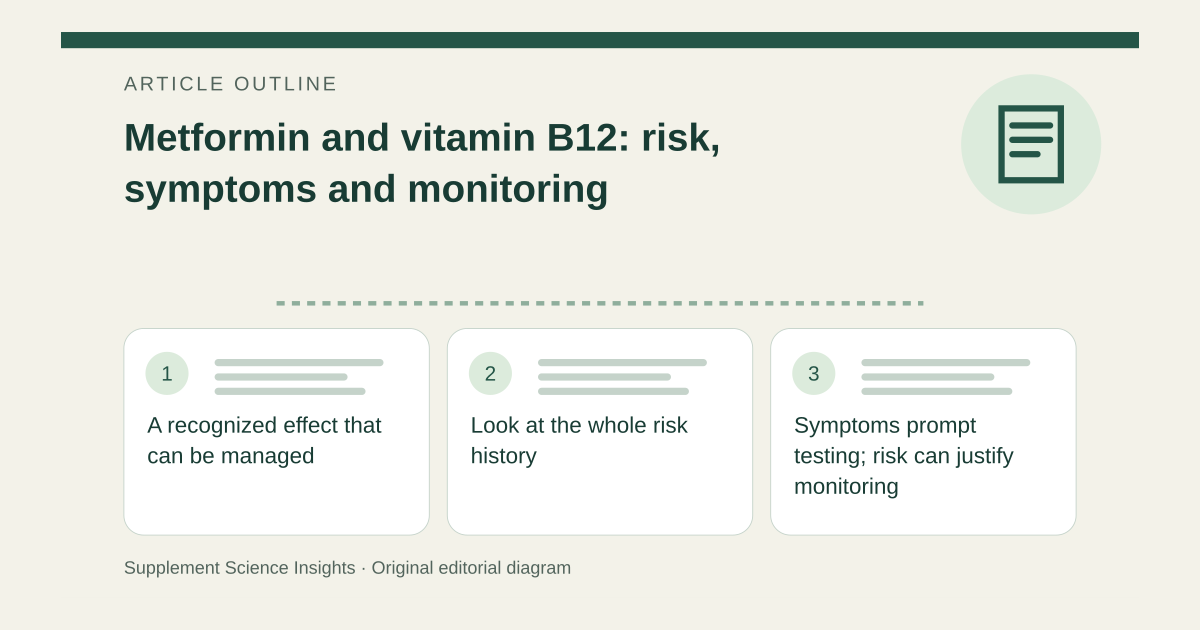
A recognized effect that can be managed
Metformin can reduce vitamin B12 absorption and lead to deficiency. The UK medicines regulator, MHRA, describes reduced B12 as a common adverse reaction and says the risk increases with higher doses, longer treatment and existing risk factors. This does not mean everyone taking metformin becomes deficient or needs the same supplement. [1][2]
The practical response is to recognize the possibility and assess it when appropriate. MHRA advises continuing metformin while B12 deficiency is corrected, provided the medicine remains tolerated and otherwise appropriate. Do not stop a useful diabetes treatment because of a supplement warning. [1][2]
Look at the whole risk history
A low-normal starting B12 level, a diet with few reliable B12 sources, gastrointestinal disease or surgery, and other medicines that impair absorption can add to the concern. Older adults may have several of these factors at once. Dose and duration matter, but there is no single treatment anniversary on which deficiency becomes inevitable. [2]
The mechanism is not simply that metformin removes B12 from food. MHRA describes several possible contributors, including changes in intestinal movement, bacterial overgrowth and reduced small-intestinal uptake. This helps explain why eating more B12-rich food is not a complete answer for every patient. [2]
Symptoms prompt testing; risk can justify monitoring
New pins and needles, unusual tiredness, a sore red tongue or pale or yellow skin should be discussed with the treating clinician. These findings can have other causes, including diabetes itself. Neither assuming all tingling is diabetic neuropathy nor assuming it is all B12 deficiency is a reliable diagnosis. [2]
MHRA recommends checking B12 when deficiency is suspected and considering periodic monitoring when risk factors are present. Its advice does not set one interval or one preventive dose for all metformin users. The clinician can decide what tests and follow-up fit the symptoms, previous results and medical history. [2]
Turn a vague concern into a useful appointment
Imagine someone has taken metformin for several years, recently developed tingling in both feet and also uses an acid-suppressing medicine. A useful appointment record includes when the tingling started, the exact medicines and doses, dietary changes and any B12 products already taken. The record supports an assessment; it does not identify which factor caused the symptom.
Another person taking the same metformin dose has no symptoms and different dietary and medical risks. The first person’s investigation schedule should not automatically become the second person’s schedule.
| Observation | Why record it? |
|---|---|
| New tingling after years of treatment | Needs assessment; timing alone does not establish cause |
| Metformin plus an acid-suppressing medicine | Both belong in the medication review |
| B12 supplement already started | May affect interpretation and treatment planning |
Keep treatment and cause-finding together
If deficiency is found, the cause and its persistence help determine replacement and monitoring. Bring the supplement container or label to the appointment so the clinician knows what has already been used. Correcting a blood result without reviewing the symptoms and continuing risk is an incomplete plan. [2][1]
This explanation follows the MHRA safety communication and NIH summary. It does not independently reanalyse the metformin trials or prescribe a replacement regimen. No retail B12 product is selected because the monitoring question does not establish an appropriate formulation for an individual. [2][1]
Sources for this article
- NIH ODS — Vitamin B12: Health Professional Fact Sheet
Source consulted: 2026-09-17. This is a reference resource, not a claim that we conducted the studies or tested a product. - MHRA — Metformin and reduced vitamin B12 levels: monitoring patients at risk
Source consulted: 2026-09-17. This is a reference resource, not a claim that we conducted the studies or tested a product.