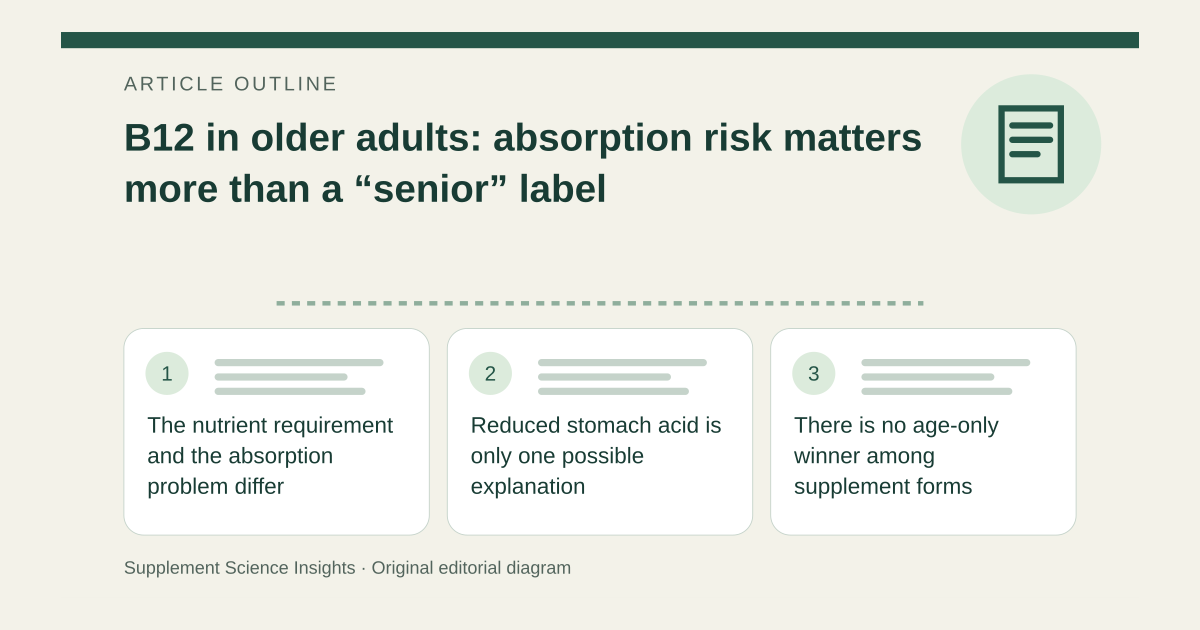
The nutrient requirement and the absorption problem differ
The U.S. adult B12 RDA remains 2.4 micrograms with older age outside pregnancy and lactation. Aging does not automatically create a new high-dose nutritional target. It can, however, bring conditions and medicine use that make a sufficient food intake less reliable as a guarantee of B12 status. [1]
NIH ODS identifies older adults as a group at increased risk of inadequacy, particularly when conditions such as atrophic gastritis affect stomach function. A product called “senior B12” does not reveal which problem, if any, is present. [1]
Reduced stomach acid is only one possible explanation
Some people have difficulty freeing B12 from food protein. B12 already present in free form in fortified foods and supplements does not require that release step. But loss of intrinsic-factor function or relevant gastrointestinal surgery presents a different problem and may need a different replacement approach. [1][2]
Diet can also become less varied because of difficulty shopping, preparing meals, eating particular foods or affording them. NICE includes these practical barriers among relevant risk factors. An assessment should consider access and intake as well as physiology. [1][2]
There is no age-only winner among supplement forms
ODS reports no evidence that absorption rates differ among supplemental B12 forms and no demonstrated efficacy difference between oral and sublingual preparations in its summary. Those findings do not choose the correct treatment route for someone with a specific malabsorption disorder. [1][2]
NICE bases replacement decisions on causes and clinical circumstances, including whether malabsorption is present. Preference, ability to use a preparation and follow-up also matter. “Methylated,” “high strength” and “under the tongue” should not replace that reasoning. [1][2]
Similar diets do not guarantee similar B12 status
Imagine two older adults eat similar breakfasts containing animal foods. One has no known absorption disorder; the other has a history of stomach surgery. The menu alone does not establish equivalent absorption or justify identical advice. [2][1]
For the second person, the operation history and existing treatment plan are essential information. For either person, persistent numbness, imbalance or unexplained fatigue deserves assessment rather than an assumption that symptoms are simply aging. [2][1]
| Information | Why it matters |
|---|---|
| Difficulty obtaining varied food | May reduce dependable dietary B12 |
| Past stomach or intestinal surgery | Can change absorption and replacement needs |
| New neurological symptoms without anemia | Still warrants clinical assessment |
Avoid both dismissal and indiscriminate supplementation
B12-related neurological symptoms can occur without anemia. Conversely, memory changes or fatigue are not specific enough to prove B12 deficiency. Bring symptoms, medicines, operations and supplements into the clinical discussion so testing can answer the relevant question. [1][2]
This page does not promise memory improvement from B12 in people with adequate status or prescribe a dose for all older adults. It explains why a cause-based assessment is more useful than selecting a product by its age-related marketing. [1][2]
Sources for this article
- NIH ODS — Vitamin B12: Health Professional Fact Sheet
Source consulted: 2026-09-17. This is a reference resource, not a claim that we conducted the studies or tested a product. - NICE NG239 — Vitamin B12 deficiency in over 16s: recommendations
Source consulted: 2026-09-17. This is a reference resource, not a claim that we conducted the studies or tested a product.