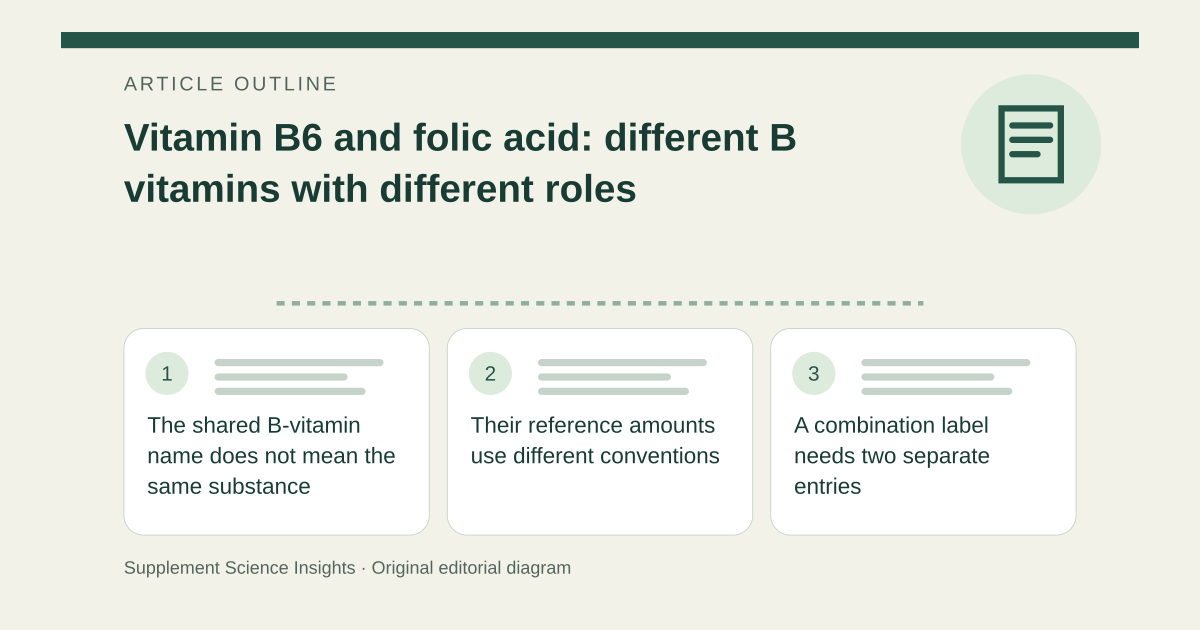
The shared B-vitamin name does not mean the same substance
Vitamin B6 includes compounds such as pyridoxine and the active coenzyme PLP. Folate is vitamin B9; folic acid is a form used in supplements and fortified foods. They are separate nutrients even when supplied in one B-complex product. [1][2]
B6 coenzymes participate in many reactions, especially amino acid metabolism. Folate participates in one-carbon transfer reactions needed for processes including DNA synthesis. Both have important functions, but one does not replace the other. [1][2]
Their reference amounts use different conventions
B6 intake is commonly expressed in milligrams. Folate recommendations use micrograms of dietary folate equivalents, or DFE, which account for differences in availability between food folate and folic acid. [1][2]
A direct comparison of the printed numbers is therefore misleading unless the nutrient and unit remain attached. A larger number on the folate line does not mean it is a larger mass or a more powerful version of B6. [1][2]
A combination label needs two separate entries
Imagine a product lists B6 in milligrams and folate in micrograms DFE. Adding those two displayed numbers into one B-vitamin total would erase both the unit difference and the fact that they are different substances.
Record each nutrient separately. The table can describe intake, but it does not choose which nutrient a person needs for an unexplained symptom.
| Observation | Interpretation |
|---|---|
| B6 amount | Usually recorded in mg |
| Folate amount | May be expressed as mcg DFE |
| A common product | Does not make the nutrients interchangeable |
More of either is not a substitute for diagnosis
Excess B6 can damage sensory nerves. Large folate amounts can improve anemia associated with B12 deficiency without correcting its neurological injury, complicating a symptom-led approach to supplementation. [1][2]
A suspected deficiency or anemia needs assessment of the cause. This comparison does not authorize substituting folic acid for prescribed B6 or adding both at high amounts because they share a vitamin group. [1][2]
Sources for this article
- NIH ODS — Vitamin B6: Health Professional Fact Sheet
Source consulted: 2026-09-17. This is a reference resource, not a claim that we conducted the studies or tested a product. - NIH ODS — Folate: Health Professional Fact Sheet
Source consulted: 2026-09-17. This is a reference resource, not a claim that we conducted the studies or tested a product.