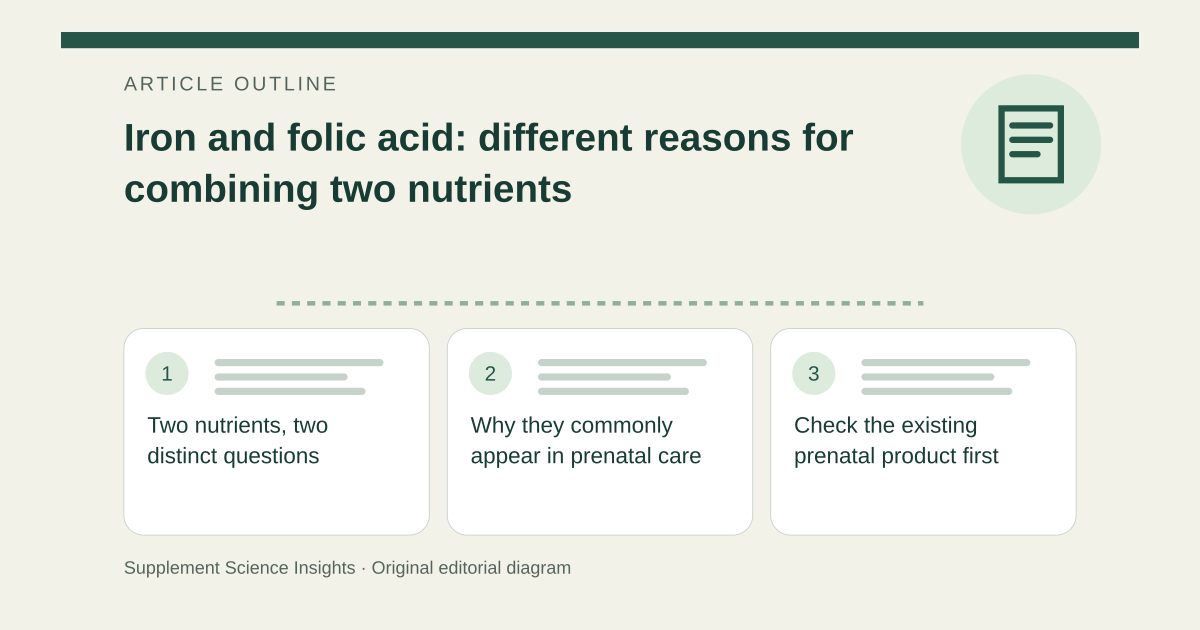
Two nutrients, two distinct questions
Iron supports hemoglobin and oxygen transport, while folate is involved in DNA synthesis and cell division. Deficiency of either can contribute to anemia, but a shared effect on blood formation does not make them interchangeable treatments. [1][2]
A combined product does not establish which nutrient is needed or why. Fatigue alone cannot determine whether iron deficiency, folate deficiency, another condition or no nutrient deficiency is present. [1][2]
Why they commonly appear in prenatal care
Pregnancy increases nutrient demands. ODS lists a pregnancy iron requirement of 27 mg per day and a folate requirement of 600 micrograms dietary folate equivalents per day. These are intake references, not instructions to add those amounts on top of an existing prenatal regimen. [1][2]
Folic acid also has a specific role before and very early in pregnancy in reducing neural tube defect risk. ODS describes 400 micrograms daily from supplements or fortified foods for women of childbearing age, in addition to food folate. Micrograms of folic acid and micrograms of dietary folate equivalents are not identical units. [1][2]
Check the existing prenatal product first
Imagine someone taking a prenatal supplement considers adding a combined iron-and-folic-acid tablet after reading about pregnancy requirements. The first step is to identify what the prenatal already supplies and why the maternity clinician recommended it.
Adding a second product without that check can duplicate both ingredients. If testing has identified anemia, the appropriate treatment may also differ from the amounts used for routine nutritional support.
| Observation | Interpretation |
|---|---|
| Current prenatal label | Count existing iron and folic acid |
| Dietary reference amount | Not automatically an additional dose |
| Diagnosed anemia | Needs a cause-specific treatment plan |
Do not use the combination to bypass assessment
Excess iron can cause harm, and iron-containing products require secure storage away from children. Folate can improve the anemia caused by vitamin B12 deficiency without correcting its neurological damage, which is another reason not to diagnose the cause of anemia from symptoms alone. [1][2]
Pregnancy, a prior affected pregnancy, malabsorption or a diagnosed deficiency may require specific professional guidance. This page explains nutrient roles and intake terminology; it does not choose a treatment dose or substitute one country’s prenatal protocol for another. [1][2]
Sources for this article
- NIH ODS — Iron: Health Professional Fact Sheet
Source consulted: 2026-09-17. This is a reference resource, not a claim that we conducted the studies or tested a product. - NIH ODS — Folate: Health Professional Fact Sheet
Source consulted: 2026-09-17. This is a reference resource, not a claim that we conducted the studies or tested a product.