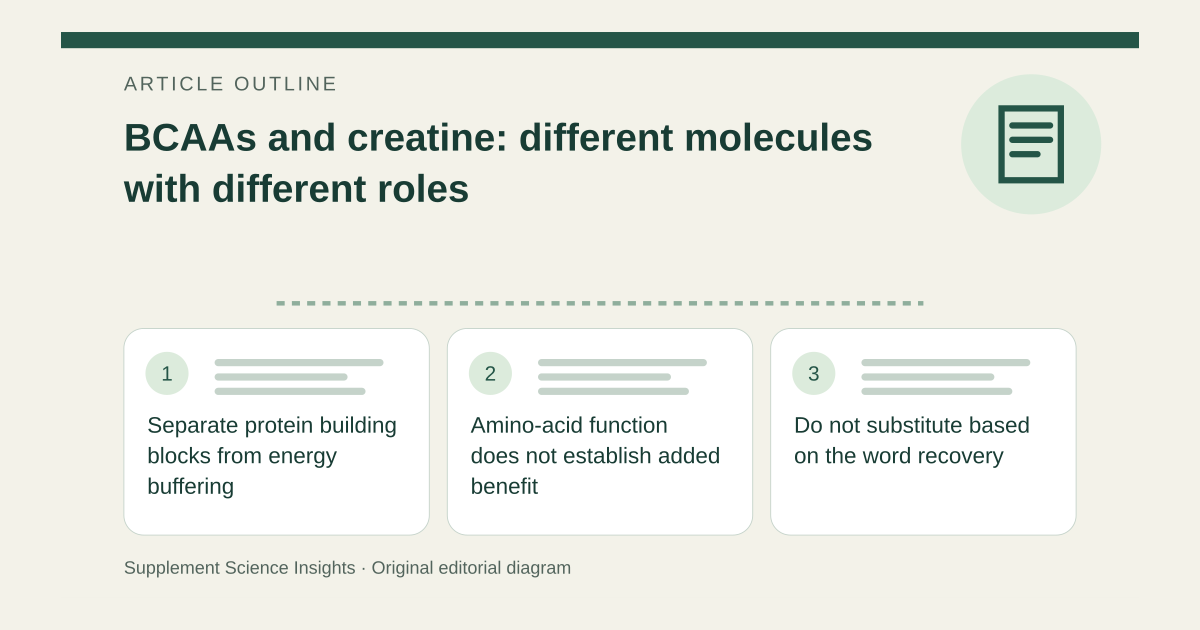
Separate protein building blocks from energy buffering
The BCAA name describes the branched chemical structures of those three amino acids. They are constituents of proteins and have metabolic roles. Creatine’s phosphocreatine system instead helps rapidly regenerate ATP from ADP. [1][2]
Both categories can appear in sports products, but sharing a marketing context does not make their chemical identities or functions the same. [1][2]
Amino-acid function does not establish added benefit
NIH ODS describes inconsistent evidence that extra BCAAs stimulate muscle protein synthesis beyond sufficient high-quality dietary protein. That question is different from evaluating creatine for a defined exercise task. [1]
A combined product cannot borrow every claimed benefit from both categories without evidence for its actual formulation. The relevant comparison should include diet, training and the outcome being measured. [1]
Do not substitute based on the word recovery
Imagine a shopper replaces creatine with a BCAA product because both mention recovery. The new product supplies different molecules and does not reproduce the same physiological intervention.
| Detail | Interpretation |
|---|---|
| BCAAs | Three essential amino acids |
| Creatine | Different compound |
| Shared sports claim | Not interchangeability |
Sources for this article
- Dietary Supplements for Exercise and Athletic Performance - Health Professional Fact Sheet
Source consulted: 2026-09-17. This is a reference resource, not a claim that we conducted the studies or tested a product. - 10.3 Muscle Fiber Contraction and Relaxation - Anatomy and Physiology 2e | OpenStax
Source consulted: 2026-09-17. This is a reference resource, not a claim that we conducted the studies or tested a product.