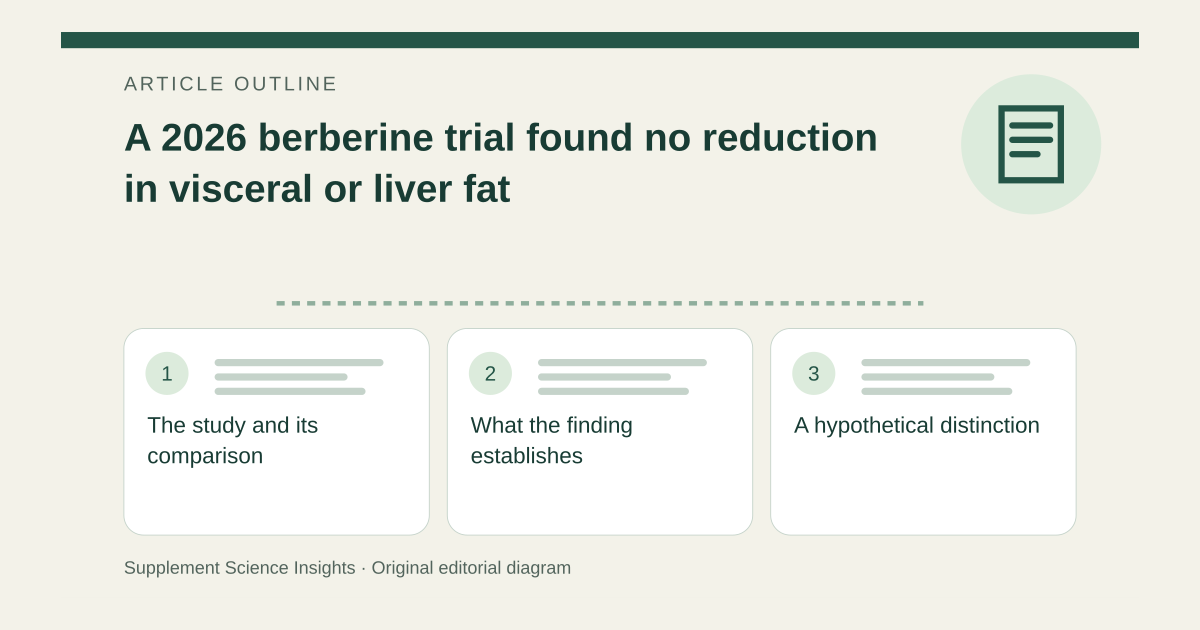
The study and its comparison
A randomized trial included 337 participants. The study population was diabetes-free adults with obesity and metabolic dysfunction-associated steatotic liver disease. Researchers compared berberine 1 g daily versus placebo, with follow-up over six months. [1]
Neither visceral-fat area nor liver-fat content improved significantly compared with placebo. LDL cholesterol, apolipoprotein B and high-sensitivity C-reactive protein declined more with berberine, while adverse-event incidence was similar. [1]
What the finding establishes
The two primary fat outcomes deserve priority over selected secondary markers. The study neither measured muscle growth as its main question nor established weight-loss equivalence to medicines. Participants were selected for obesity and fatty liver without diabetes. Authors reported no conflicts; full funding was not established from the abstract. [1]
A hypothetical distinction
Imagine cholesterol improves but an imaging measure of abdominal fat does not. Calling the intervention a demonstrated fat-loss treatment would conflate separate endpoints.
| Detail | Interpretation |
|---|---|
| Measured outcome | Keep the endpoint specific |
| Study preparation | Not every retail product |
| Remaining uncertainty | Not resolved by a mechanism |
Sources for this article
- Berberine and Adiposity in Diabetes-Free Individuals With Obesity and MASLD: A Randomized Clinical Trial.
Source consulted: 2026-09-19. This is a reference resource, not a claim that we conducted the studies or tested a product.