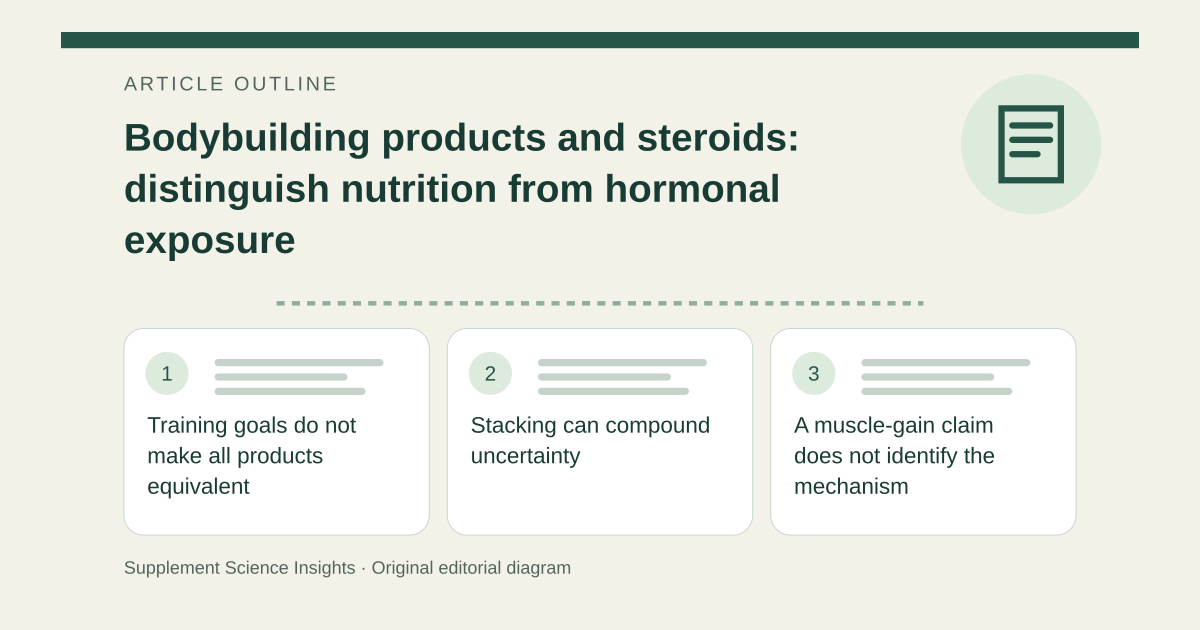
Training goals do not make all products equivalent
Protein supplies amino acids, and creatine has a role in muscle energy metabolism. Steroid-like products can act through hormonal pathways and involve a different risk profile. Grouping everything sold for muscle gain under supplements can conceal those distinctions. [1][2]
FDA has found products labeled as dietary supplements that illegally contain steroids or related substances. Marketing about hormone modification or steroid alternatives deserves particular scrutiny. [1][2]
Stacking can compound uncertainty
FDA warns that combining multiple bodybuilding products can increase serious risks, especially with hidden ingredients or false liver-protection claims. Reported harms include liver injury and cardiovascular or clotting complications. [2]
If using a product claiming steroids or steroid-like substances, FDA advises immediate consultation with a health professional, including because abrupt discontinuation can create withdrawal problems. Do not devise a taper or add a detox product from a seller’s instructions. [2]
A muscle-gain claim does not identify the mechanism
Imagine a protein powder and a hormone-modifying capsule are sold side by side. Their shared training goal does not make them equivalent exposures or justify combining them without understanding the contents.
| Detail | Implication |
|---|---|
| Protein or creatine | Nutritional or energy-related role |
| Steroid-like substance | Different pharmacology and risks |
| Stopping suspected steroid use | Seek clinical guidance |
Sources for this article
- NIH ODS: Dietary Supplements for Exercise and Athletic Performance
Source consulted: 2026-09-17. This is a reference resource, not a claim that we conducted the studies or tested a product. - FDA: Caution — Bodybuilding Products Can Be Risky
Source consulted: 2026-09-17. This is a reference resource, not a claim that we conducted the studies or tested a product.