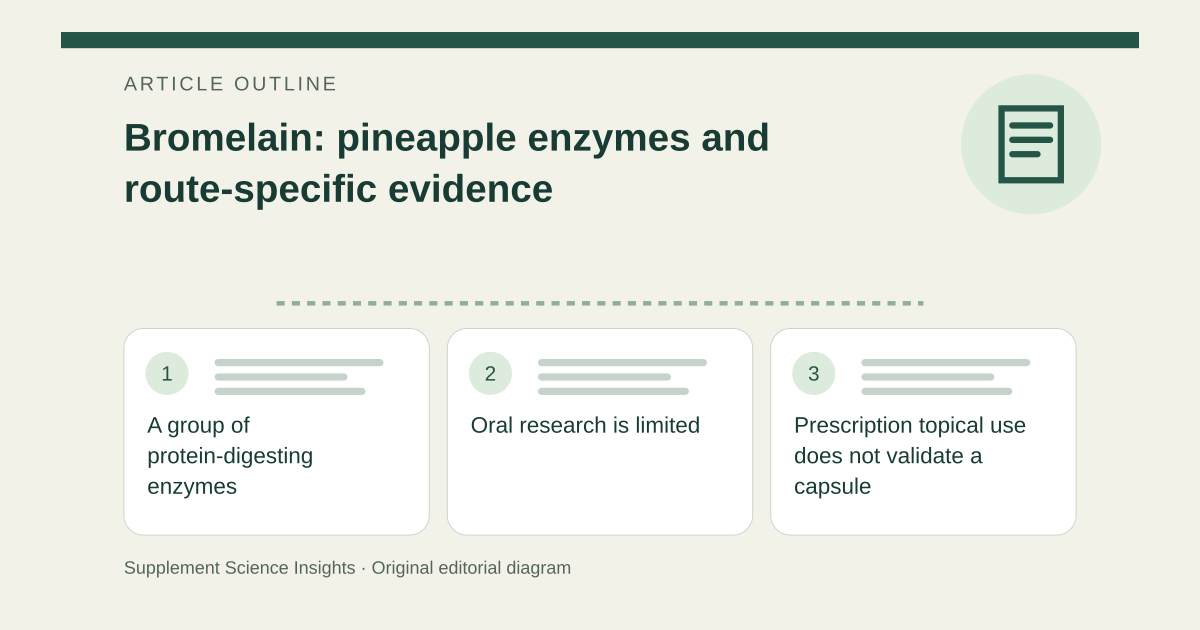
A group of protein-digesting enzymes
Bromelain refers to enzymes obtained from pineapple, including its stem and fruit. Supplements are often promoted for swelling, recovery, sinus symptoms or digestion. The source of an enzyme does not establish that eating the fruit produces the same exposure as a concentrated preparation. [1]
A useful label identifies the preparation and, when provided, enzyme activity. Product mass and catalytic activity are different measurements. Neither should be silently substituted for the other. [1]
Oral research is limited
NCCIH describes some research suggesting benefit for certain symptoms after wisdom-tooth surgery, but finds insufficient high-quality evidence to recommend oral bromelain for sinusitis. For other uses, studies may be sparse or concern multi-ingredient products. [1]
A postoperative outcome needs its timing and co-treatment context. Pain on one day, swelling and time to normal activity are different endpoints. Results cannot automatically be transferred to chronic joint pain or routine exercise recovery. [1]
Prescription topical use does not validate a capsule
A bromelain-containing prescription product is used by health professionals to remove damaged tissue from severe burns. That is a specific topical treatment, not evidence that an oral supplement heals burns or can replace specialist burn care. [1]
The distinction is a useful general lesson: the same ingredient name can appear in products with very different formulation, delivery and clinical purposes. Route is part of the intervention, not an optional detail. [1]
Tolerance and procedure planning matter
Oral bromelain can cause stomach upset and diarrhea. Information on use during pregnancy or breastfeeding is limited, and people taking medicines should discuss potential interactions with the care team. [1]
If a product is being considered around dental surgery or another procedure, tell the clinician what it contains and when it is used. An article should not invent a universal preoperative stopping interval or assume that a supplement is harmless because it is derived from food. [1]
Milligrams do not reveal enzyme activity
Imagine Label A lists 250 mg bromelain and separately declares activity under a named assay. Label B lists the same mass but gives no activity measure. Their weights match, but their declared catalytic activities cannot be compared.
If two labels use different activity units, do not convert them without a valid assay-specific relationship. A familiar numeric ratio is not enough. This fictional example concerns reporting quality and does not recommend a product or treatment amount.
| Fictional label | What it establishes |
|---|---|
| 250 mg plus named activity assay | Mass and declared activity |
| 250 mg only | Mass; activity unresolved |
| Different assay units | No assumed conversion |
Match the exact use before evaluating a claim
Ask whether the evidence concerns oral use, a topical prescription product or a combination formula. Then check the population, symptom and timing. This reference explains the evidence boundary without treating all pineapple-enzyme claims as one established benefit. Enzyme activity belongs beside the assay name so that an apparently larger number is not mistaken for greater potency.
Sources for this article
- NCCIH — Bromelain: Usefulness and Safety
Source consulted: 2026-09-17. This is a reference resource, not a claim that we conducted the studies or tested a product.