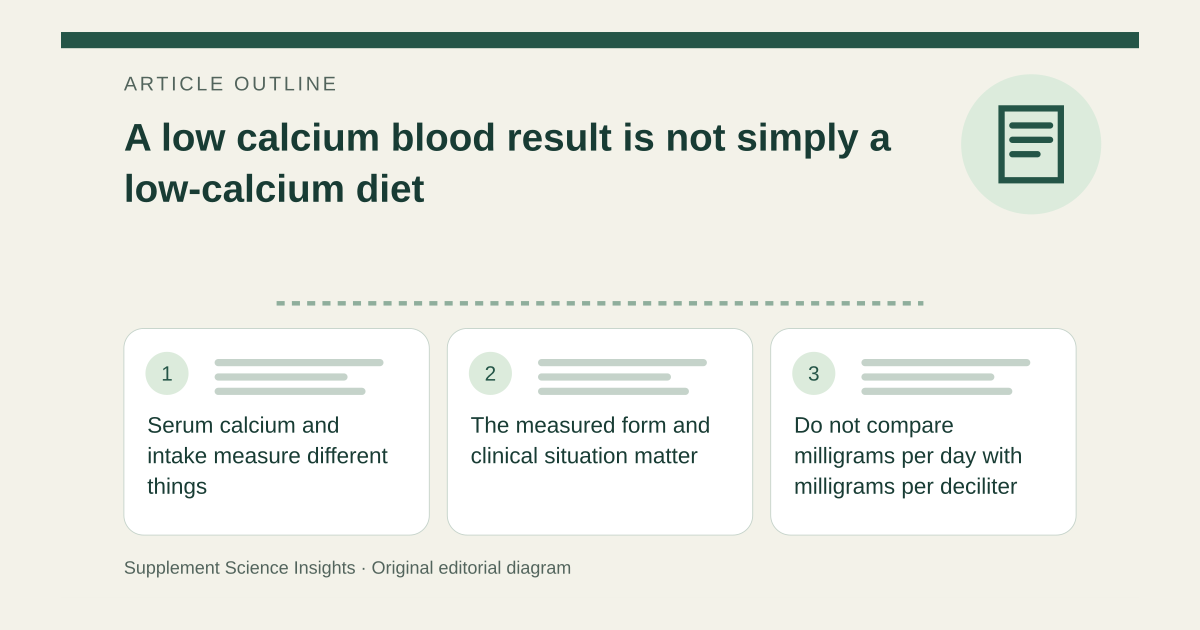
Serum calcium and intake measure different things
Most body calcium is stored in bones and teeth. The body regulates blood calcium closely, so ODS cautions that serum calcium does not reliably reflect nutritional calcium status. A normal blood result does not prove that long-term intake or bone health is adequate. [1]
Conversely, a low result can have explanations beyond food intake. ODS lists vitamin D or magnesium deficiency, impaired parathyroid hormone function, critical illness and some medicines among causes of hypocalcemia. [1]
The measured form and clinical situation matter
Laboratories may report total calcium or ionized calcium. These are different measurements with different reference ranges. Preserve the exact test, units and laboratory interpretation instead of comparing its number with a dietary milligram target. [1]
Hypocalcemia may be asymptomatic or may involve tingling, muscle spasms and more serious manifestations such as seizures. Such symptoms need clinical assessment; this page provides neither a home correction schedule nor a method to diagnose the cause from symptoms alone. [1]
Do not compare milligrams per day with milligrams per deciliter
Imagine a diet record lists calcium in mg/day and a laboratory report lists it in mg/dL. One describes consumed mass over time and the other concentration in blood. There is no direct subtraction that converts the laboratory shortfall into a supplement dose.
| Detail | Interpretation |
|---|---|
| Diet: mg/day | Intake over time |
| Blood: mg/dL | Concentration |
| Personal replacement dose | Cannot be calculated by subtracting them |
Sources for this article
- NIH ODS: Calcium
Source consulted: 2026-09-17. This is a reference resource, not a claim that we conducted the studies or tested a product.