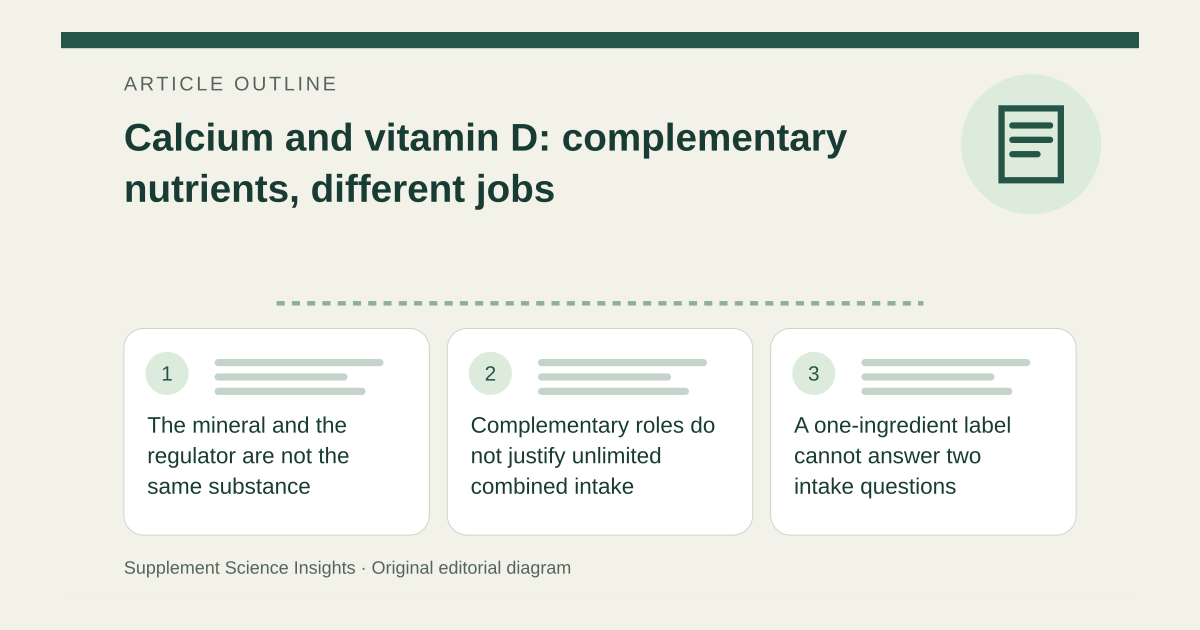
The mineral and the regulator are not the same substance
Calcium and phosphate form much of the mineral structure of bones and teeth. Calcium also participates in muscle and nerve function. Vitamin D promotes intestinal calcium absorption and helps maintain calcium and phosphate concentrations needed for normal mineralization. [1][2]
This explains why both nutrients appear in bone-health discussions. It does not mean vitamin D supplies calcium, or that a calcium tablet can replace a lack of vitamin D. Each has its own intake reference and clinical assessment. [1][2]
Complementary roles do not justify unlimited combined intake
Low vitamin D can impair normal mineralization even when a diet contains calcium. Yet adding both nutrients beyond need does not follow from their cooperation. Clinical evidence for a combination must still specify the population and outcome. [1][2]
Record the amount of each nutrient separately, including foods and combination products. The reference units differ, and the front-label presence of one nutrient does not tell you whether the other is included. A combined product is a delivery format, not proof of a suitable balance. [1][2]
A one-ingredient label cannot answer two intake questions
Imagine a product declares calcium but no vitamin D. Its calcium entry contributes to the calcium record; it cannot be used to infer a vitamin D contribution. If a second product supplies both, record each declared nutrient in its own column before considering the total plan.
| Detail | Interpretation |
|---|---|
| Calcium | Record in its own intake column |
| Vitamin D | Separate amount and units |
| Shared bone role | Does not make their amounts interchangeable |
Sources for this article
- NIH ODS: Calcium
Source consulted: 2026-09-17. This is a reference resource, not a claim that we conducted the studies or tested a product. - NIH ODS: Vitamin D
Source consulted: 2026-09-17. This is a reference resource, not a claim that we conducted the studies or tested a product.