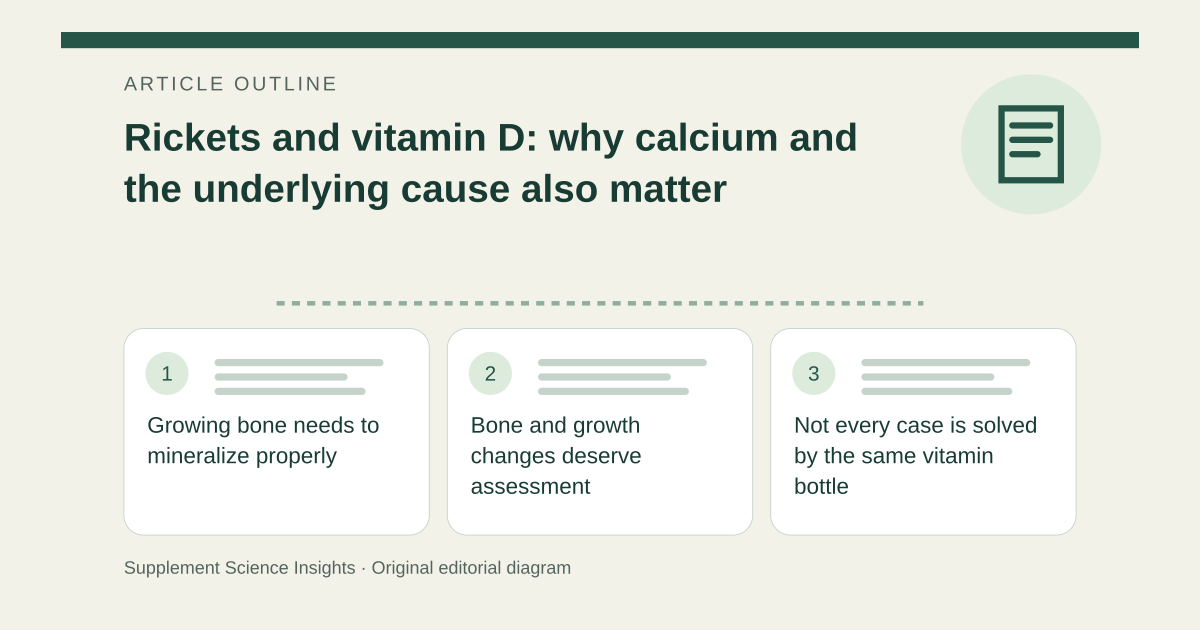
Growing bone needs to mineralize properly
Rickets is a disorder in which a child’s growing bones become inadequately mineralized, soft and weak. Vitamin D helps calcium absorption and supports mineral balance, so inadequate vitamin D can contribute. Insufficient calcium also matters; the NHS describes low vitamin D or calcium as usual nutritional causes. [1][2]
In adults, defective mineralization is called osteomalacia. These terms are not interchangeable with every case of low bone density or osteoporosis. Identifying the actual disorder guides the investigation and treatment. [1][2]
Bone and growth changes deserve assessment
Possible features include bowed legs, bone pain, weakness, changes in walking, fractures and impaired growth. The NHS advises seeing a clinician if rickets or osteomalacia is suspected. A photograph or an online symptom list cannot establish the cause. [2][1]
Assessment may include vitamin D and calcium testing and, when appropriate, urine tests, imaging or specialist review. Severe vitamin D deficiency can have additional consequences, so the problem should not be treated as purely cosmetic. [2][1]
Not every case is solved by the same vitamin bottle
Nutritional intake and absorption are part of the history. Kidney-related mineral and bone disorder can also cause growth and skeletal problems in children, as NIDDK explains. A child with an underlying condition needs care directed at that condition and its mineral abnormalities. [3][2]
Prevention and treatment are different decisions. A preventive supplement recommendation for a healthy infant does not tell a parent how to treat established rickets, and a treatment dose should not be copied to siblings without assessment. [3][2]
Keep the cause question open
Imagine two children are referred for bone changes. One has a history suggesting inadequate nutrition; the other has known chronic kidney disease. Both need assessment, but the same visible finding does not prove that their vitamin D handling or treatment needs are identical. The useful record includes feeding, supplements, growth and medical history.
| Observation | Meaning |
|---|---|
| Possible dietary gap | Assess intake and relevant mineral status |
| Known kidney disease | Assess kidney-related mineral and hormone balance |
| Preventive drops already used | Record concentration and actual amount |
Use pediatric instructions with the exact preparation
Infant vitamin drops have specific concentrations and serving instructions. Check the exact product with the pediatric team rather than transferring a volume from another bottle. ODS also advises against using direct sun exposure as an infant supplementation strategy. [1][2]
This article explains the condition and why evaluation matters. It does not prescribe treatment, supply a universal infant dose schedule or promise that supplements alone reverse every established bone deformity. [1][2]
Sources for this article
- NIH ODS — Vitamin D: Health Professional Fact Sheet
Source consulted: 2026-09-17. This is a reference resource, not a claim that we conducted the studies or tested a product. - NHS — Rickets and osteomalacia
Source consulted: 2026-09-17. This is a reference resource, not a claim that we conducted the studies or tested a product. - NIDDK — Mineral and Bone Disorder in Chronic Kidney Disease
Source consulted: 2026-09-17. This is a reference resource, not a claim that we conducted the studies or tested a product.