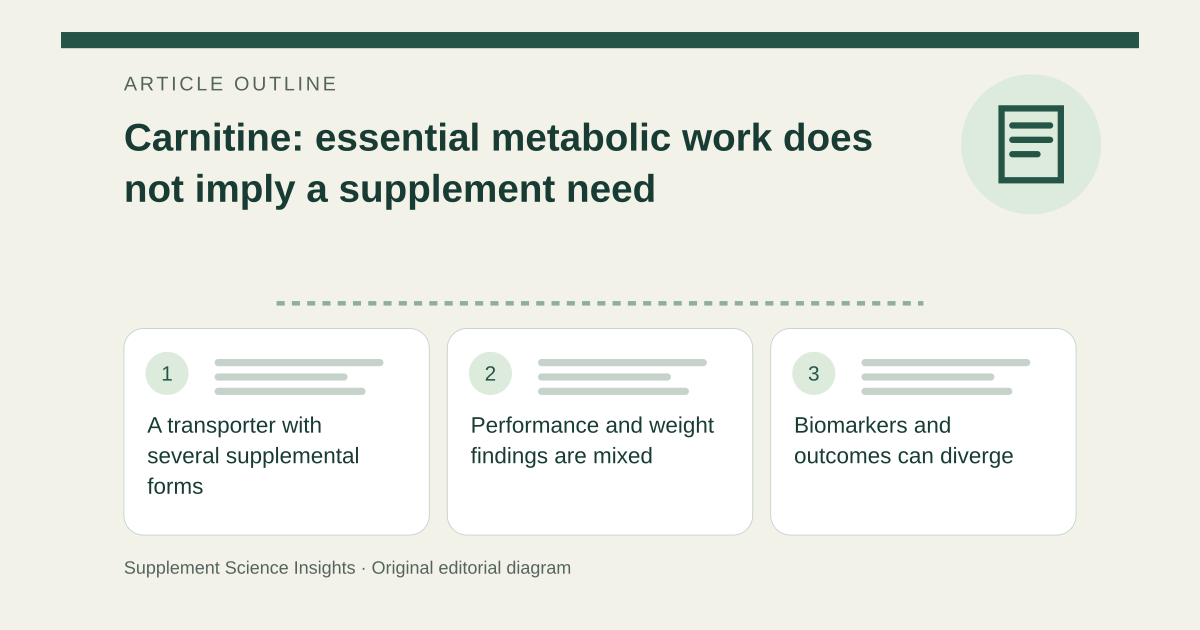
A transporter with several supplemental forms
Carnitine helps transport fatty acids for energy metabolism. Supplements include L-carnitine, acetyl-L-carnitine and other forms that should retain their identity when research is summarized. A study involving one form does not automatically establish the effect of another. [1]
NIH ODS notes that healthy people generally synthesize enough carnitine. It is not classified as an essential dietary nutrient for healthy adults and children, and no dietary reference intake has been established. That differs from clinical situations involving deficiency or altered metabolism. [1]
Performance and weight findings are mixed
Research on exercise performance has produced inconsistent results across activities and study populations. A role in fat metabolism is not proof that supplementation increases endurance, reduces body fat or improves recovery for a particular athlete. [1]
Weight studies also differ in background diet, medicines and participant health. A small average change in one setting should not become a predictable weight-loss promise. Clinical deficiency treatment and routine supplementation in otherwise healthy people answer different questions. [1]
Biomarkers and outcomes can diverge
Carnitine research spans many clinical settings. A change in a blood marker, sperm parameter or exercise physiology measure should not be treated as the same endpoint as improved symptoms, pregnancy, survival or better athletic performance.
For a useful summary, name the outcome actually measured and the population that produced the result. The treatment route and concurrent care also matter. A clinical intervention delivered under supervision does not supply a do-it-yourself protocol for a retail supplement.
More exposure is not automatically better
Higher supplemental amounts can cause nausea, cramps, diarrhea and a fishy odor. Kidney disease and seizure disorders require particular clinical consideration. Some medicines can affect carnitine status, so treatment-related use should remain with the care team. [1]
Research has raised questions about gut-microbial production of TMAO from carnitine and cardiovascular implications. The overall clinical meaning remains uncertain; it should not be described either as proven harm for every user or as irrelevant. ODS calls for further research. [1]
A physiological change is not a finishing-time result
Imagine a fictional cycling study finds a change in a blood metabolite but no improvement in completion time. The accurate conclusion reports the metabolite change and the unchanged performance result.
If a product claims faster cycling based on that study, it has crossed from a measured intermediate outcome to an unsupported practical outcome. The example uses invented results and does not identify a useful carnitine dose.
| Hypothetical result | Interpretation |
|---|---|
| Metabolite changed | Physiological finding |
| Completion time unchanged | No measured speed benefit |
| Different carnitine form | Applicability needs checking |
The reason for use determines the evidence needed
A normal metabolic role can explain scientific interest without establishing routine need. This reference does not recommend carnitine for weight loss, fertility or exercise. Identify the form, population and meaningful outcome before using a study to support a supplement claim.
Sources for this article
- NIH ODS — Carnitine: professional fact sheet
Source consulted: 2026-09-17. This is a reference resource, not a claim that we conducted the studies or tested a product.