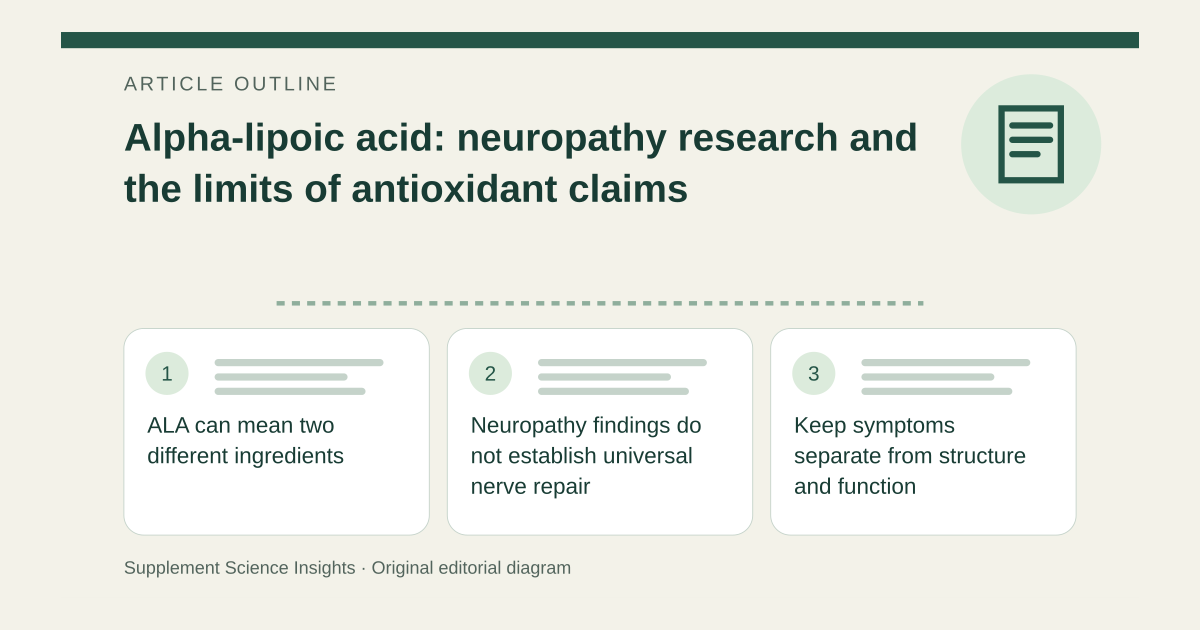
ALA can mean two different ingredients
Alpha-lipoic acid is a compound involved in cellular metabolism and is sold as a supplement. Its abbreviation, ALA, is also used for alpha-linolenic acid, an omega-3 fatty acid. Those are different molecules and should not share a comparison column. [1]
Write out the full name before interpreting a label or study. A chemical's normal role in the body does not establish that supplemental exposure improves every process involving that chemical. [1]
Neuropathy findings do not establish universal nerve repair
Memorial Sloan Kettering describes research involving oral and intravenous preparations for diabetic neuropathy and other conditions. Findings vary by setting, and symptom improvement should not be equated with reversal of nerve damage. [1]
Other metabolic and weight findings remain limited or mixed. Antioxidant mechanisms cannot establish a general treatment for fatigue, pain or disease prevention. A result from an intravenous clinical preparation is not automatically evidence for a retail oral capsule. [1]
Keep symptoms separate from structure and function
A neuropathy study might measure pain ratings, sensory tests, walking or nerve-conduction findings. Each endpoint answers a different question. A lower pain score can matter without proving that damaged nerves regenerated or that every symptom improved.
Check the original population and background treatment. Diabetes-related symptoms and treatment-related neuropathy should not be treated as interchangeable merely because both involve nerves. The duration of follow-up also determines whether a study can speak to a brief symptom change or a sustained functional improvement.
Glucose lowering and treatment interactions deserve attention
Alpha-lipoic acid can contribute to low blood glucose; rare autoimmune hypoglycemia has also been reported. Gastrointestinal effects can occur, and excessive or accidental ingestion can cause serious toxicity, particularly in children. [1]
People using glucose-lowering treatment or receiving cancer therapy should discuss the exact preparation with their care team. Potential antioxidant interactions during cancer treatment are a reason for professional assessment, not a basis for self-adjusting treatment. This page provides no intravenous or overdose-treatment instructions. [1]
An abbreviation is not an ingredient match
Imagine two fictional labels: one lists 500 mg alpha-lipoic acid and the other lists 500 mg alpha-linolenic acid. Both may abbreviate the ingredient ALA, but the printed quantities describe different compounds.
A comparison should show the full names and retain each ingredient's own evidence. Adding the amounts together as 1,000 mg of one ingredient would be chemically misleading. Neither quantity in this example is a recommended dose.
| Fictional label | Identity |
|---|---|
| Alpha-lipoic acid | Metabolic compound |
| Alpha-linolenic acid | Omega-3 fatty acid |
| ALA abbreviation | Insufficient for matching |
Read the outcome rather than the antioxidant category
A useful alpha-lipoic-acid claim specifies the formulation, route, condition and measured result. This overview does not recommend it as universal nerve support or a replacement for diabetes care. Biological activity and clinical usefulness remain separate questions that need separate evidence.
Sources for this article
- Memorial Sloan Kettering — Alpha-lipoic acid
Source consulted: 2026-09-17. This is a reference resource, not a claim that we conducted the studies or tested a product.