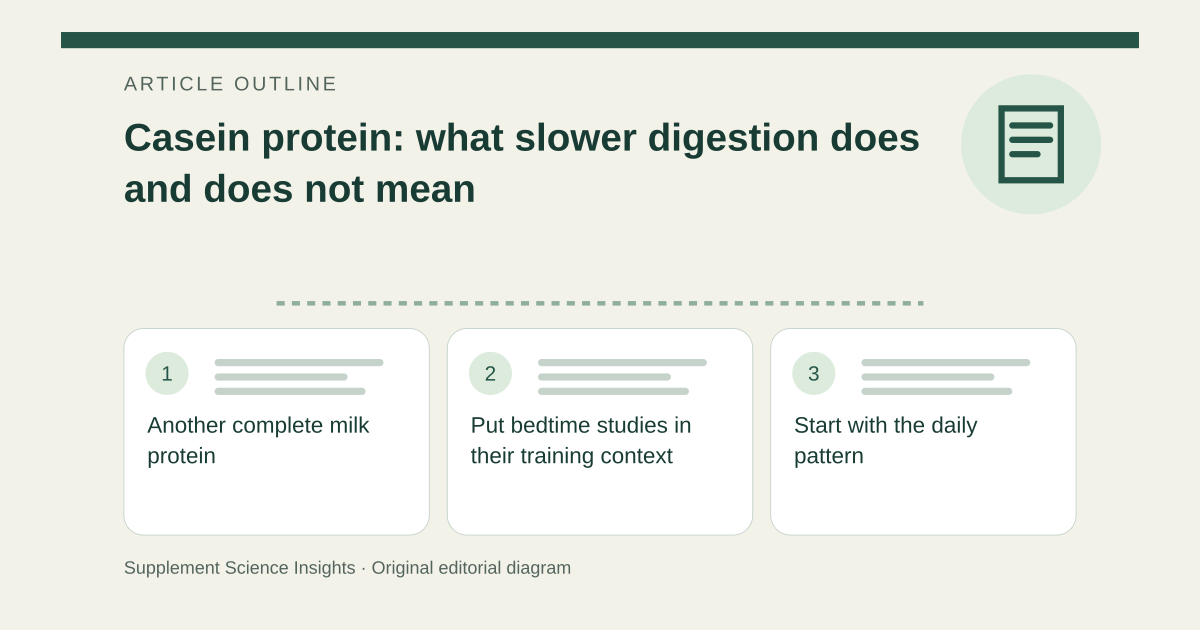
Another complete milk protein
Casein is one of the main proteins in milk and supplies all nine essential amino acids. It digests more slowly than whey. That characteristic explains interest in using casein when food will not be eaten for several hours, including overnight. [1]
Slower digestion describes the timing of amino-acid availability. It is not, by itself, proof that one powder produces more muscle or that everyone should add an extra feeding before bed. [1]
Put bedtime studies in their training context
The NIH Office of Dietary Supplements discusses studies of protein consumed near sleep as part of resistance-training research. The relevant context includes the exercise program, total protein intake, energy intake and comparison diet. An improvement when extra protein is added does not automatically establish that bedtime was the decisive ingredient. [1]
When comparing a timing claim, ask whether both study groups received the same total amount of protein. If one received more, the study cannot cleanly separate timing from quantity. Also distinguish an overnight measurement of protein synthesis from sustained changes in strength or body composition. [1]
Start with the daily pattern
A bedtime shake may be convenient for some schedules, but convenience is a personal reason rather than evidence of a universal nutritional requirement. Review the whole day before adding another serving simply because a package calls itself a nighttime formula.
For a useful comparison, write down the protein supplied by the proposed serving and the foods it would replace or accompany. If it is an addition, count it as an addition. If it replaces a snack, compare the two actual options rather than treating the powder as nutritionally invisible.
A lactose claim does not remove milk protein
Casein remains a milk protein. Milk allergy and lactose intolerance are different conditions, so a low-lactose or lactose-free statement does not establish suitability for someone with milk allergy. Check the ingredient and allergen information, not just a front-label digestion claim. [2][1]
People following a medically prescribed protein intake should ask their care team before adding a daily supplement. Exercise studies in generally healthy participants cannot establish safety for every medical circumstance. [2][1]
Count the change, not just the shake
Suppose a hypothetical daily menu supplies 90 grams of protein and a casein serving adds 25 grams. If nothing else changes, the new total is 115 grams. If the shake replaces a snack supplying 15 grams, the new total is 100 grams.
The same shake creates two different dietary changes. Neither calculation establishes a personal target or proves a special bedtime effect; it simply makes the comparison honest. A useful label comparison should distinguish a serving suggestion from evidence about the timing of intake.
| Scenario | Calculation | Daily total |
|---|---|---|
| Add the shake | 90 + 25 g | 115 g |
| Replace a 15 g snack | 90 − 15 + 25 g | 100 g |
Sources for this article
- NIH ODS — Exercise and Athletic Performance, professional fact sheet
Source consulted: 2026-09-17. This is a reference resource, not a claim that we conducted the studies or tested a product. - NIDDK — Definition and Facts for Lactose Intolerance
Source consulted: 2026-09-17. This is a reference resource, not a claim that we conducted the studies or tested a product.