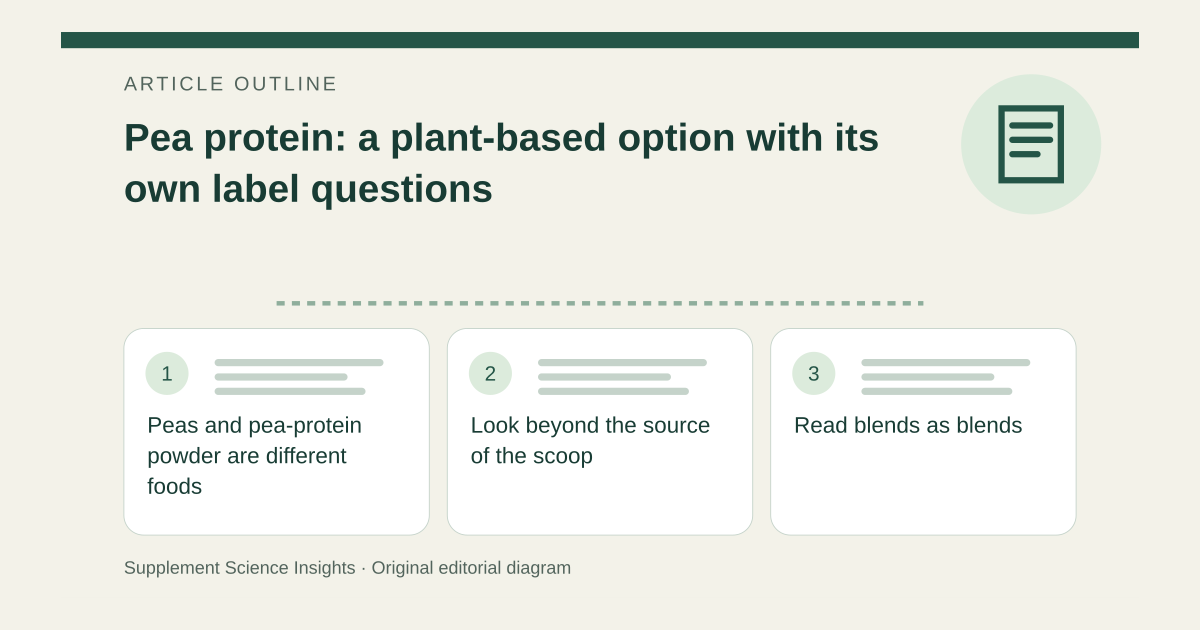
Peas and pea-protein powder are different foods
Pea protein is generally made from yellow peas. Processing concentrates protein into a powder; the resulting product should not be assumed to retain the same fiber, vitamins or overall nutrient profile as a serving of whole peas. [1]
An isolate, a concentrate and a blend can have different compositions. Read the nutrition panel for the finished product rather than assigning it every attribute associated with the original legume. [1]
Look beyond the source of the scoop
Protein supports muscle repair and adaptation, but the question is whether a particular product helps meet an individual's needs within their diet. Training, total intake and the full amino-acid supply matter when interpreting performance claims. A plant-based label does not establish superiority over another adequate protein source. [2]
A trial comparing pea and whey should be assessed for the amounts provided, participants' baseline diets, training program and outcomes. Equivalent scoop weights do not necessarily mean equivalent protein intakes. Without those details, a headline about one source being better offers little help in choosing a serving. [2]
Read blends as blends
If a product combines pea protein with another protein, its total protein figure belongs to the finished mixture. Unless the label separately states each contribution, do not assign all of that protein to peas or infer the ratio from ingredient names.
Likewise, a serving described as containing 30 grams of powder is not automatically a 30-gram protein serving. Check whether a front-label number refers to powder mass, protein, servings per container or a preparation that includes added milk.
Plant-based does not mean allergy-free
Health Canada warns that some people with peanut allergy may also react to pea protein. Peanuts and peas are legumes, and concentrated pea protein can create an exposure different from eating a small amount of peas. This does not mean every person with peanut allergy will react. [3]
Someone with a relevant allergy should discuss a new concentrated protein with their allergist and inspect the full ingredient list. Do not interpret a dairy-free statement as protection against unrelated allergens. [3]
Compare the protein actually supplied
Imagine one scoop weighs 32 grams and contains 24 grams of protein. A second product uses a 40-gram scoop containing 20 grams of protein. The smaller scoop supplies four more grams of protein, despite containing less total powder.
If comparing cost, divide the purchase price by the number of servings first, then compare equal protein quantities. Keep that calculation separate from preference, tolerance and suitability. No arithmetic can establish that a product is safe for a person with an allergy. The relevant comparison is the finished serving you would actually consume.
| Hypothetical label | Powder mass | Protein |
|---|---|---|
| Product A | 32 g | 24 g |
| Product B | 40 g | 20 g |
Sources for this article
- Cleveland Clinic — Pea Protein
Source consulted: 2026-09-17. This is a reference resource, not a claim that we conducted the studies or tested a product. - NIH ODS — Exercise and Athletic Performance, professional fact sheet
Source consulted: 2026-09-17. This is a reference resource, not a claim that we conducted the studies or tested a product. - Health Canada — Pea Protein and Peanut Allergy
Source consulted: 2026-09-17. This is a reference resource, not a claim that we conducted the studies or tested a product.