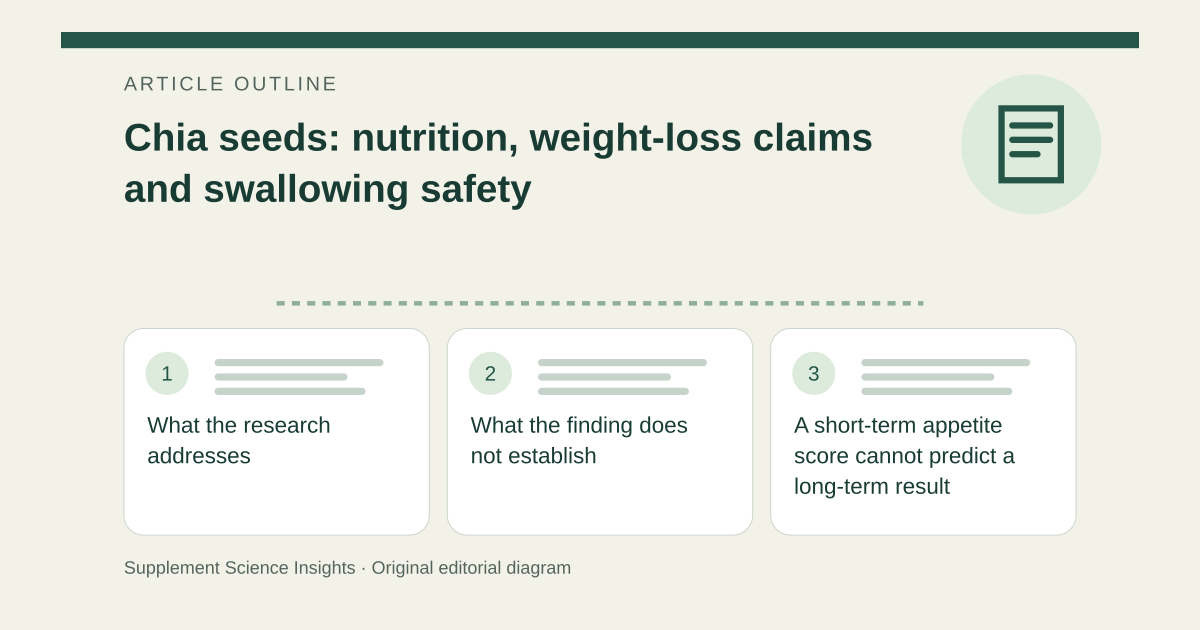
What the research addresses
Chia seeds contain fiber and the plant omega-3 fat alpha-linolenic acid. MSK describes small studies of satiety and metabolic measures, but reviews found mostly nonsignificant or modest effects with low-quality evidence. Nutrient content does not establish a reliable weight-loss treatment. [1]
What the finding does not establish
Feeling fuller after a meal is not the same as sustained weight loss. Results in people with a particular metabolic condition also do not automatically apply to everyone adding chia to a diet. [1]
A short-term appetite score cannot predict a long-term result
Imagine a study measures fullness for a few hours after a snack. That answers a short-term question. To support a lasting weight-loss claim, researchers would need to observe weight and tolerability over a relevant period and account for the rest of the diet.
Also consider what a food replaces. Adding a new item and replacing another item are different dietary changes. A product headline that ignores this context may make a study look more directly applicable than it is. A practical comparison keeps the overall eating pattern in view.
| Hypothetical finding or choice | What it means |
|---|---|
| Fullness after one snack | A short-term outcome |
| Weight change over months | A separate study question |
| Dry seeds swallowed before water | An avoidable expansion and blockage hazard |
Safety and treatment considerations
Do not swallow dry chia seeds on their own. They absorb liquid and expand; esophageal blockage has been reported. MSK advises preparing them with sufficient liquid so expansion occurs before consumption, with particular caution for people who have swallowing difficulties. [1]
A practical next step
This article does not prescribe a chia dose or rank seed products. Treat chia as a food choice rather than a guaranteed metabolic intervention, and follow safe preparation practices instead of a dry-seed challenge.
Sources for this article
- Memorial Sloan Kettering Cancer Center — Chia
Source consulted: 2026-09-17. This is a reference resource, not a claim that we conducted the studies or tested a product.